
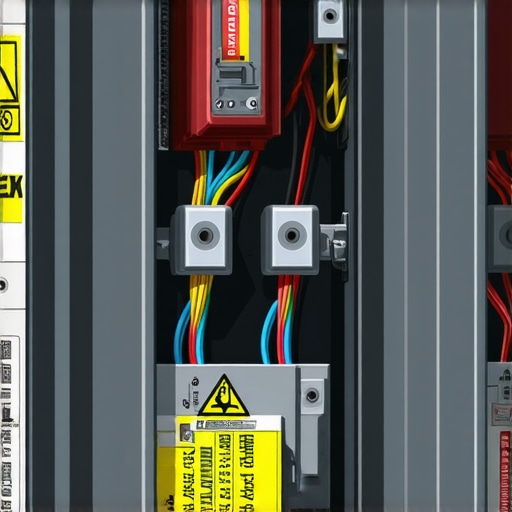
The Ghost in the Wall: A Forensic Electrician’s Warning
I’ve spent 35 years smelling things people shouldn’t smell in their homes. Usually, it starts with a faint whiff of ozone—that sharp, metallic tang—or the sickly-sweet scent of melting plastic. By the time I get the call, a homeowner is complaining that their lights flicker when the microwave runs, or a specific outlet feels ‘warm’ to the touch. But as a forensic inspector, I know the truth is much uglier. I remember my journeyman back in the late 80s; he was a crusty old guy who’d seen the transition from copper to aluminum during the Vietnam War shortages. One afternoon, he caught me using a standard utility knife to strip a conductor. He didn’t just correct me; he practically took my head off. ‘You nick that copper, you create a hot spot,’ he growled. ‘But you nick aluminum, and you’ve just signed a death warrant for that house.’ He was right. Aluminum isn’t just copper’s cheaper cousin; it’s a chemically different animal that requires a specific set of rules. As we head into 2026, the houses built between 1965 and 1973 are reaching a critical failure point. The ‘Time Bomb’ isn’t just a metaphor anymore—it’s a physical reality dictated by the laws of thermodynamics and metallurgy.
The Physics of Failure: Why Aluminum Moves When You Aren’t Looking
To understand why your mid-century home is at risk, you have to understand Cold Creep. Unlike copper, aluminum is incredibly malleable. It undergoes significant thermal expansion. Every time you turn on your architectural lighting or start your dryer, current flows through the wire, heating it up. The aluminum expands. Because it’s trapped under a steel or brass screw in a standard outlet, it has nowhere to go. It actually deforms, squeezing out from under the connection. When the load turns off, the wire cools and contracts. But it doesn’t ‘spring back’ to its original shape. It stays compressed. Over hundreds of cycles, a gap forms between the wire and the terminal. This gap creates resistance. Resistance creates heat. Heat creates more oxidation. It’s a feedback loop that ends in a fire. This isn’t just my opinion; it’s documented science.
“Aluminum wire connections can overheat and cause a fire without tripping the circuit breaker.” – CPSC Safety Alert 516
The second enemy is the oxidation layer. The moment you strip aluminum, it begins to form an aluminum oxide film. While copper oxide is relatively conductive, aluminum oxide is a literal insulator. It resists the flow of electricity, which, again, generates heat. If your home hasn’t had a specialized electrical panel upgrade to handle these specific properties, you are running a 1970s engine with 2026 high-performance fuel.
Risk 1: The Modern Load vs. The Brittle Alloy
The first hidden risk is the sheer volume of power we demand today. In the 70s, a ‘heavy load’ was a color TV and a toaster. Today, we are talking about microgrid integration, high-speed data closet organization, and constant charging for multiple EVs. When we perform a drone thermography scan on these older systems, the results are terrifying. The heat signatures at the junction boxes look like glowing embers. The old aluminum alloy (1350 series) wasn’t designed for the continuous high-amperage draw of modern life. We are seeing failures at the meter socket replacement stage where the service entrance cables have literally fused to the lugs. Using augmented reality troubleshooting, we can now overlay the original wiring diagrams with real-time heat maps, revealing that the ‘Home Run’ lines—the ones carrying the most current—are often the most compromised. If you’re adding a PA system installation or a dedicated server room, you are putting a 10-ton load on a 1-ton bridge.
Risk 2: The Infrastructure Decay and ‘Handyman Specials’
The second risk is the ‘repairs’ done by people who don’t know a Wiggy from a Tick Tracer. I’ve walked into ‘renovated’ homes where a handyman simply twisted copper and aluminum together with a standard wire nut. This is a recipe for a Galvanic Reaction. Because copper and aluminum are dissimilar metals, the presence of any moisture (even humidity) creates a miniature battery. The metals start to eat each other through electrolysis. I’ve seen wires that have turned into a white, powdery dust inside the wall.
“Each device shall be used with the type of conductors for which it is identified… Connectors and terminals for use with aluminum shall be marked.” – NEC 110.14
When we do a rough-in or a trim-out on an aluminum remediation job, we use specialized AlumiConn connectors or COPALUM crimps. These are the only methods I trust to sleep at night. I’ve seen too many ‘purple wire nuts’ fail because they don’t address the cold creep issue. They just mask it for a few years until the oxidation takes over again. If you’re not seeing your electrician use a torque screwdriver to hit exact inch-pound specifications, they aren’t doing it right.
Risk 3: AI Fault Detection and the Invisible Arc
The third risk is the most insidious: Arcing. Aluminum wiring failures often don’t trip standard breakers. A loose aluminum connection can sizzle at 2,000 degrees Fahrenheit without ever drawing enough current to pop a 20-amp fuse. This is where AI fault detection comes in. Modern AFCI (Arc-Fault Circuit Interrupter) breakers are designed to ‘listen’ to the electrical signature of the wire. They can distinguish between the normal spark of a vacuum cleaner motor and the dangerous signature of an aluminum connection micro-arcing. If you haven’t performed an electrical panel upgrade to include these smart breakers, your walls could be on fire for twenty minutes before you even see smoke. We are also seeing a massive increase in insurance companies refusing to renew policies for homes with un-remediated aluminum. They’ve done the math, and the math says your house is a liability. They want to see proof of professional remediation, often involving trenching electrical conduit for new copper feeders or a complete house rewire.
The Solution: Forensic Remediation
Don’t let some ‘pro’ tell you that a little Monkey Shit (duct seal) or generic anti-oxidant paste is enough. You need a forensic approach. This means identifying every Widow Maker circuit in the house. It means ensuring your meter socket replacement is done with stainless steel components if you’re anywhere near the coast to prevent salt-air corrosion. It means ensuring that your data closet organization isn’t just pretty, but thermally isolated from old aluminum branch circuits. We use Dikes to cut out the old, brittle ends of the aluminum and start fresh with copper pigtails and UL-listed connectors. Electricity isn’t a hobby, and it isn’t a place to save a few bucks. It’s a force of nature trapped in your walls. Treat it with respect, or it will find a way out.