
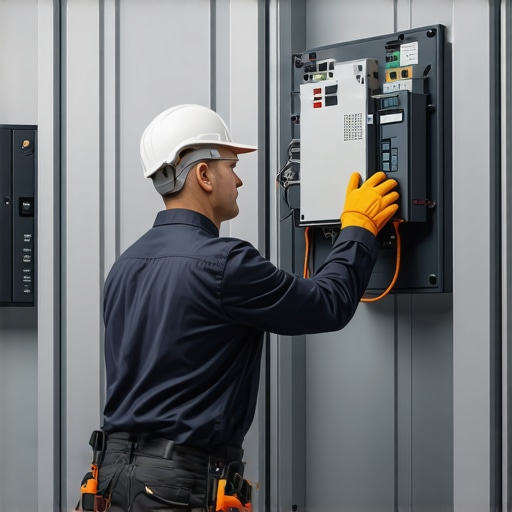
The Invisible Tick of the Residential Time Bomb
You probably think your house is safe because the lights turn on when you flip the switch. That is the kind of logic that keeps forensic investigators like me in business. I have spent thirty-five years pulling back the layers of ‘renovated’ homes only to find a chaotic mess of heat-scarred copper and brittle insulation. We are heading into 2026, and your electrical system is likely groaning under a load it was never designed to carry. If your home was built between 1960 and 1980, you are not just living in a house; you are living inside a slow-motion chemical reaction. Most of these mid-century builds are riddled with aluminum wiring or the infamous Federal Pacific Electric (FPE) panels. These components do not just ‘wear out’; they fail through a process called Cold Creep. Aluminum expands and contracts at a much higher rate than the brass or copper terminals it is screwed into. Every time you run your toaster or a hair dryer, that wire heats up, pushes against the screw, and then shrinks when it cools. Eventually, you have a loose connection. A loose connection creates resistance. Resistance creates heat. Heat creates a fire. This is not theory; it is physics.
I remember my journeyman back in the late 80s. He was a man who didn’t believe in safety glasses but believed deeply in the integrity of a conductor. I was using a pocket knife to strip the jacket off some 12/2 Romex for a home run to a kitchen circuit. He saw me nick the copper—just a tiny silver scratch on the orange-red metal. He didn’t say a word; he just swung his heavy pliers and knocked my dikes right out of my hand. ‘You nick that copper, you create a hot spot,’ he growled. ‘That nick is a stress riser. Under load, that’s where the heat concentrates. You’re not an electrician; you’re an arsonist in training.’ He was right. Most of the fires I investigate today start at a point of physical damage or mechanical failure that a ‘handyman’ ignored.
“The termination of conductors shall be made in a manner that ensures a thoroughly good connection without damaging the conductors.” – NEC 110.14
Step 1: The Panel Forensic Audit and Torque Verification
The first step for 2026 is a deep dive into your service equipment. We aren’t just looking for ‘tripped’ breakers. We are looking for bus bar pitting and signs of thermal stress. If you have an FPE or Zinsco panel, my professional advice is simple: rip it out. These breakers are notorious for ‘jamming.’ They stay in the ‘on’ position even when a dead short occurs. I have seen the internal pivots of these breakers weld themselves shut because of the cheap alloys used during the mid-century manufacturing boom. For those with modern panels, maintenance means verifying torque. Every lug in that panel has a specific inch-pound requirement. Over-tightening is just as bad as under-tightening; it crushes the wire strands and reduces the surface area for current flow. When we perform commercial electrical services, we use calibrated torque wrenches to ensure that the three phase power services feeding a building aren’t going to vibrate loose under the harmonic distortions of modern LED drivers and server racks. If you haven’t had your lugs checked since 2010, they are loose. Period.
Step 2: Addressing the ‘Silent’ Loads (Saunas and Structured Wiring)
By 2026, the demand for high-draw luxury items like sauna heater installation and EV chargers will reach a breaking point for 100-amp and 200-amp residential services. A sauna heater isn’t just a heavy load; it is a continuous load, meaning it runs for hours. This creates a sustained thermal soak in your wiring. If your structured wiring panels are located near these high-heat conductors, you are going to see data degradation and insulation failure. When we look at speaker system setup and home automation, people forget that these sensitive electronics are the first to fry when a neutral wire begins to fail. A loose neutral is the ‘widow maker’ of the electrical world. It can send 240 volts through a 120-volt circuit, vaporizing your smart home hub in a millisecond. We recommend a full load calculation before adding any high-draw appliance. If your panel is full, don’t let a ‘trunk-slammer’ electrician use tandem breakers to cram more in. That is how you overheat the bus bar.
“Arc flash hazard analysis shall be updated when a major modification or renovation takes place.” – NFPA 70E Article 130.5
Step 3: Commercial-Grade Safety in the Home Office
With the permanent shift to remote work, residential rooms are being treated like commercial hubs. Your office lighting upgrades shouldn’t just be about aesthetics; they need to be about circuit segregation. Running a laser printer, a standing desk, three monitors, and a space heater on the same 15-amp circuit that powers your bedroom is a recipe for a 2:00 AM visit from the fire department. In a commercial setting, we use lockout tagout training to ensure that circuits are dead before they are touched. In a home, homeowners treat electricity like a hobby. 2026 is the year to implement commercial-grade protection, specifically Arc-Fault Circuit Interrupters (AFCI). These breakers have a tiny microprocessor that listens for the specific ‘signature’ of a spark. It can tell the difference between a vacuum cleaner motor sparking and a loose wire arcing inside your wall. It is the only thing that can stop a fire before it starts.
Step 4: Infrastructure Readiness and Emergency Access
Finally, you need to have a plan for when things go south. I have seen people wait three weeks for a repair because they didn’t prioritize weekend electrician services or same day service appointments until the smell of ozone was overwhelming. By then, the damage is often irreversible, requiring a full rewire rather than a simple component replacement. 2026 will see a surge in demand for qualified labor. Smart homeowners are looking into financing electrical upgrades now to beat the rush and the rising cost of copper. Whether it’s replacing a rotting service mast with a fresh coat of ‘monkey shit’ (duct seal) to keep out moisture, or upgrading a main breaker, these are not ‘optional’ repairs. They are the price of admission for living in the modern world. Grab your Wiggy or your tick tracer—or better yet, call a pro—and find out what’s actually happening behind your drywall before the choice is taken out of your hands.