
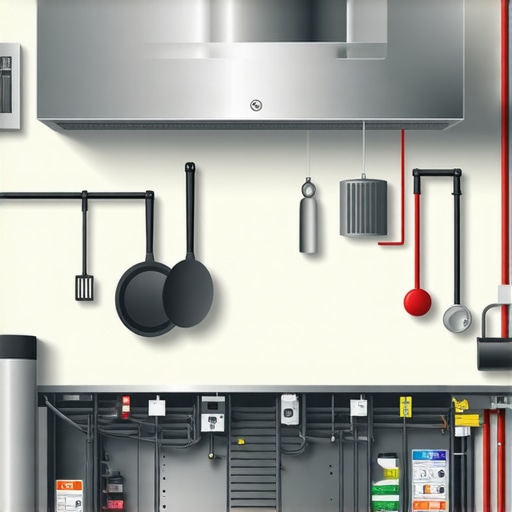
The Anatomy of a Kitchen Fire: Why Your Range Hood Wiring Is a Sleeping Giant
I’ve spent thirty-five years pulling burnt Romex out of stud bays, and if there is one thing I can tell you with absolute certainty, it’s that the kitchen is the most dangerous room in your house from an electrical standpoint. It isn’t just the stoves or the refrigerators; it is the range hood—the most neglected, improperly wired appliance in the modern American home. Most people see a range hood as a simple fan and a light. I see it as a high-vibration, grease-soaked enclosure that creates a perfect storm for electrical arcing if the installer was a hack. As we move toward 2026, the National Electrical Code (NEC) is tightening the screws on how these units are powered, and for good reason. If you’re planning a remodel, you need to understand that a range hood isn’t just a ‘plug and play’ device anymore. It is a critical piece of life-safety equipment that requires a bonded insured electrical professional to handle the rough-in.
The Lesson of the Nicked Copper: A Master’s Perspective
My old journeyman, a grizzly guy named Miller who could sniff out a ground fault from the driveway, used to lose his mind if he saw a kid using a utility knife to strip wire. I remember one humid July morning in 1989; we were working a kitchen trim-out. I had been a bit careless with my dikes, and I nicked the copper on a 14-gauge conductor for the hood fan. Miller grabbed my hand, pulled me back, and pointed at the tiny silver scar on the copper. ‘You think that’s nothing?’ he growled. ‘That nick is a stress riser. You’ve just reduced the circular mil area of that conductor. When that fan motor kicks on, the vibration is going to focus right there. Over five years, that wire will work-harden, crack, and start arcing inside the junction box while the homeowner is making pancakes. You don’t just wire for today; you wire for the next thirty years.’ He was right. Electricity doesn’t forgive, and it certainly doesn’t forget a lazy installation.
“Aluminum wire connections can overheat and cause a fire without tripping the circuit breaker.” – CPSC Safety Alert 516
Rule 1: The Mandate for a Dedicated Home Run
By 2026, the days of tapping into the nearest outlet for your range hood are officially over. Modern hoods, especially the high-CFM (cubic feet per minute) models used with induction cooktops, draw significantly more current than the old buzz-boxes of the 1970s. We are seeing motors that pull 5 to 8 amps alone, and when you add high-intensity LED lighting installation services into the mix, you’re pushing the limits of a shared circuit. The 2026 standards emphasize a dedicated 15-amp or 20-amp ‘home run’—a direct line from the panel to the hood. This prevents ‘nuisance tripping’ when you’re running the dishwasher and the hood at the same time. If your house is still running on an ancient 60 amp panel upgrade is not just a suggestion; it’s a prerequisite for modern appliances. You cannot expect a mid-century electrical skeleton to support a 21st-century kitchen load without something melting.
Rule 2: Managing the Vibration and Thermal Expansion
Range hoods are mechanical beasts. They vibrate. That vibration is the enemy of every electrical connection. In my forensic inspections, I often find wire nuts that have literally backed themselves off over a decade of use. This leads to a loose neutral, which creates high resistance. Resistance creates heat. Heat creates fire. This is where bonding jumper services become vital. Ensuring that the metal chassis of the hood is perfectly bonded to the equipment grounding conductor is the only thing standing between you and a ‘hot’ appliance cover. I always use my Wiggy to check for stray voltage on the stainless steel housing after an installation. If that needle moves even a hair, you’ve got a leakage current that could turn your range hood into a lethal conductor. For those with larger estates, we often integrate these systems into annual maintenance contracts to ensure that thermal imaging is performed on these high-load kitchen circuits annually.
Rule 3: AFCI and GFCI Integration for 2026
The 2026 code cycle is doubling down on Arc-Fault Circuit Interrupter (AFCI) protection. Because kitchen hoods are often located near water sources (sinks) and heat sources (stoves), the requirements for dual-function AFCI/GFCI protection are becoming the standard. An AFCI breaker is smart enough to ‘hear’ the specific signature of an electrical arc—like the one caused by that nicked wire I mentioned earlier—and shut down the circuit before the wood studs reach their ignition temperature. This is a far cry from the old ‘dumb’ breakers in a Zinsco or Federal Pacific panel that would stay closed until the bus bar literally melted. When performing office lighting upgrades or high-end residential kitchen work, we now treat the range hood with the same reverence as a sub-panel, ensuring the battery backup wiring is isolated if the hood is part of a smart-home smoke evacuation system.
“Fixed electric space-heating equipment shall be provide with a means for simultaneous disconnection from all ungrounded conductors.” – NEC Article 424.19
Rule 4: The Physics of Grease and Conductivity
Here is something they don’t teach you in the DIY videos: kitchen grease is surprisingly mobile. Over years of cooking, fine particulates of atomized fat find their way into the most ‘sealed’ junction boxes. Grease is not conductive by itself, but it is a ‘dust magnet.’ Once you get a layer of carbonized dust trapped in a layer of grease on top of a terminal block, you have created a semi-conductive path. This leads to ‘tracking,’ where electricity begins to crawl across the surface of the insulation. This is why the 2026 rules for rough-in focus heavily on the use of liquid-tight flexible conduit or specific Romex connectors that provide a superior seal. For our senior discount services clients, I often recommend a complete inspection of the hood’s internal wiring every five years, as older motors tend to run hotter, accelerating the breakdown of wire insulation.
Rule 5: Grounding and the Bonding Jumper
Grounding is not just about sticking a wire under a green screw. It’s about creating a low-impedance path back to the source. In many older homes, the ‘ground’ is just the armor of an old BX cable, which may have rusted through in a damp crawlspace. In 2026, we are looking for a continuous copper grounding conductor. If you are doing deck lighting services or network cable installation, you might think the kitchen is separate, but the entire grounding system of the house is an interconnected web. A failure in the kitchen grounding can cause ‘stray voltage’ to show up in the most unexpected places. This is why bonded insured electrical contractors are non-negotiable. We don’t just ‘hook up’ the fan; we verify the entire fault-current path. We ensure that the bonding jumper services are correctly applied to any gas lines feeding the stove below the hood, preventing a potential difference that could lead to a spark during a lightning strike or a power surge.
The Forensic Conclusion: Sleep Better with Torque-Verified Connections
At the end of the day, electricity is a lazy beast; it wants to find the easiest path to ground, and it doesn’t care if that path is through your kitchen cabinets or your heart. When we talk about the ‘5 Critical Rules,’ we are really talking about one thing: control. Controlling the heat, controlling the vibration, and controlling the path of the current. Whether you are looking for lighting installation services for a new aesthetic or a 60 amp panel upgrade to handle a growing family’s needs, don’t let the range hood be an afterthought. It is a high-performance machine that requires a master’s touch. I’ve seen enough ‘handyman specials’ where they used duct tape instead of wire nuts to know that ‘saving money’ on electrical work is just a down payment on a future disaster. Torque those lugs, verify your grounds, and keep your kitchen safe. That is the only way you—and I—can sleep at night.