
The Price of a Nicked Wire: Lessons from the Old Guard
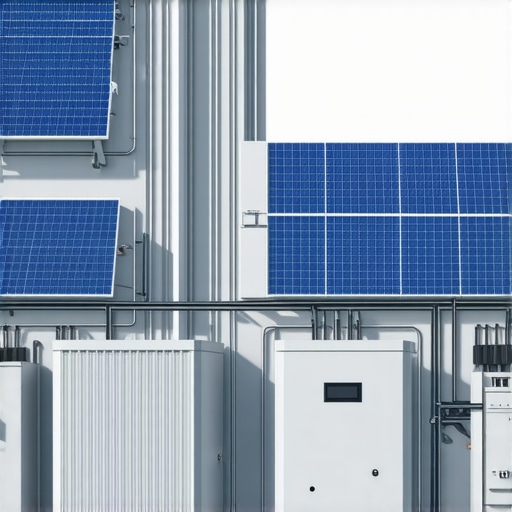
My journeyman used to smack my hand if I stripped a wire with a knife. ‘You nick the copper, you create a hot spot,’ he’d scream. He was right. That microscopic indentation isn’t just a cosmetic flaw; it’s a structural bottleneck for electrons. As the current forces its way through that narrowed passage, the resistance spikes, generating heat. In the 1970s, that heat might have just melted a little plastic. In 2026, when we are cycling thousands of watts through residential energy storage systems (ESS) to combat peak utility rates, that nicked wire becomes a localized heater that can reach 500 degrees Fahrenheit before you even finish your morning coffee. I have spent 35 years pulling ‘Widow Makers’ out of walls—faulty components that look fine on the surface but are chemically or physically destined for a catastrophic failure. If you are looking at your soaring utility bills and thinking a battery is a plug-and-play fix, you are half-right and dangerously wrong. To truly slash those bills, your infrastructure needs to be forensic-grade.
The Load Calculation Crisis: Why Your 1970s Panel is Screaming
Most mid-century homes are running on borrowed time. We see it every day during a virtual consultation wiring review. A homeowner wants to add ADU electrical services or a tiny home wiring project for a rental unit, but they are trying to hang those loads on an old 100-amp Federal Pacific or Zinsco panel. These brands are the pariahs of the electrical world for a reason: the ‘Stab-Lok’ design of FPE breakers is notorious for jamming. The breaker won’t trip even when the bus bar is literally melting. When you integrate energy storage systems, you are fundamentally changing the duty cycle of your electrical panel. Instead of intermittent bursts of power, the system is under constant load during discharge cycles.
“Aluminum wire connections can overheat and cause a fire without tripping the circuit breaker.” – CPSC Safety Alert 516
If your home was built between 1965 and 1978, you likely have aluminum branch circuit wiring. Aluminum has a high coefficient of thermal expansion. It undergoes ‘Cold Creep,’ where the wire expands when hot and contracts when cool, eventually backing itself out from under the terminal screws of your breakers or outlets. When you add the high-demand draw of a portable generator hookup or a battery discharge, those loose connections arc. This is why a comprehensive electrical panel upgrade isn’t a luxury; it’s the foundation of modern energy management. You can’t save money if your house is a crime scene.
Fix 1: Thermal Management and the ‘Monkey Shit’ Solution
One of the most overlooked fixes for ESS efficiency is the sealing of the conduit paths. We use what we call ‘Monkey Shit’—duct seal—to prevent air exchange between the battery enclosure and the main panel. Why? Because thermal fluctuations increase resistance. If your battery is working harder to cool its internal chemistry because of a drafty rough-in, you’re losing 3-5% efficiency right there. In 2026, with tiered pricing, that 5% is the difference between a ROI of seven years or twelve. We ensure every home run is sealed and every terminal is torqued to the specific inch-pounds required by the manufacturer. If you aren’t using a torque screwdriver, you aren’t doing electrical work; you’re guessing.
Fix 2: The Critical Loads Sub-Panel and ADU Integration
When we perform ADU electrical services, the goal is often to isolate the auxiliary unit’s power. However, the real fix for power bills is a ‘Critical Loads’ sub-panel. This allows your energy storage system to prioritize the essentials—refrigeration, security camera wiring, and medical devices—while shedding heavy loads like the HVAC during peak rate windows. This isn’t just about survival during a blackout; it’s about ‘Peak Shaving.’ By using your stored energy during the utility’s most expensive hours (usually 4 PM to 9 PM), you avoid the ‘Death Curve’ of modern energy pricing. If you’re building out a tiny home wiring plan, this isolation is even more critical because the square footage doesn’t allow for much thermal mass.
Fix 3: Grounding Path Integrity (More Than a Rusty Rod)
I’ve walked up to houses where the grounding electrode conductor was hanging by a thread, or worse, clamped to a painted water pipe. Your ESS needs a clean reference to ground to dissipate surges and manage the high-frequency switching noise from the inverters. When we provide free electrical estimates, the first thing I do is grab my Wiggy or a Tick Tracer to check for phantom voltages. If your ground is ‘dirty,’ your energy storage system’s sensitive electronics will degrade prematurely. We often install dual grounding rods, spaced six feet apart, to ensure the resistance to earth is below 25 ohms. This protects your investment from the doorbell camera install up to the massive LFP battery bank.
“The grounding electrode system shall be installed such that the resistance to ground is 25 ohms or less. If not, it shall be augmented by one additional electrode.” – NEC 250.53
Fix 4: RV Hookup Installation and Bidirectional Charging
By 2026, your ‘storage system’ might actually be on wheels. A proper RV hookup installation is no longer just for the weekend warrior. Modern EVs and RVs are moving toward V2H (Vehicle-to-Home) technology. If you have an RV or EV sitting in the driveway, that’s 60-100kWh of energy just sitting there. Integrating a bidirectional charger into your home’s infrastructure allows that vehicle to act as a secondary battery. This requires a heavy-duty portable generator hookup style interface with a manual or automatic transfer switch to prevent backfeeding the grid—which is a ‘Widow Maker’ for the utility lineworkers.
Fix 5: The Forensic Trim-Out for Security and Efficiency
The final fix involves the trim-out of all smart devices. Many homeowners install a doorbell camera install or security camera wiring without realizing these devices, when poorly powered, create constant parasitic drains. While small, when multiplied across 20-30 smart home devices, it adds up to ‘vampire loads.’ We recommend hardwiring these devices with high-efficiency transformers and ensuring the security camera wiring is shielded from AC interference, which can cause heat buildup in the signal cables. It’s about forensic precision—the kind you can’t get from a handyman with a pair of dikes and a roll of electrical tape.
Conclusion: Stop Playing with Fire
Electricity is the only trade where a mistake can wait ten years to kill you. You might save a few bucks today on a ‘handyman special’ for your energy storage systems, but when that aluminum wire finally gives up or that un-torqued lug starts to glow, those savings will vanish in a plume of ozone-scented smoke. Get a virtual consultation wiring audit. Get the electrical panel upgrade. If you want to slash your 2026 bills, you have to respect the physics of the wire. Sleep at night knowing your lugs are torqued and your system is forensic-grade.