
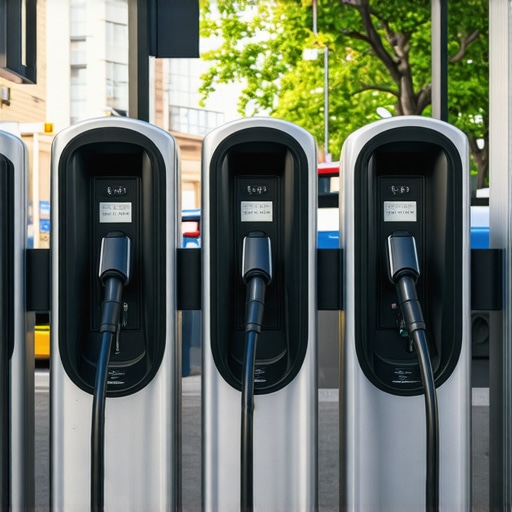
The Myth of Plug-and-Play: Why Your Garage is a Thermal Time Bomb
Everyone wants to talk about the sleek lines of their new electric vehicle, but nobody wants to talk about the copper crying for mercy inside their walls. We are heading toward a 2026 charging lag crisis where homeowners expect 48-amp continuous draws from infrastructure designed for a toaster and a few 60-watt bulbs. When you plug in a Level 2 charger, you aren’t just ‘using’ electricity; you are stress-testing every connection between your car and the utility transformer. I’ve spent 35 years watching what happens when physics meets optimism, and physics never loses.
I once walked into a ‘pristine’ garage where the homeowner complained of a faint ‘fishy’ smell every time he charged his SUV. I pulled my Wiggy out, checked the voltage drop, and then opened the sub-panel. A DIYer had used a piece of scrap 12-gauge wire for a 50-amp circuit, then buried the junction box behind a layer of heavy-duty shelving. The wire insulation hadn’t just melted; it had carbonized into a black crust that was actively arcing against the studs. He was five minutes away from a structure fire because he thought ‘wire is wire.’ It isn’t. Especially not when you’re pushing 240 volts for eight hours straight.
“Continuous loads, such as EV charging, shall be calculated at 125 percent of the maximum current of the equipment to ensure the circuit does not overheat.” – NEC Article 625.41
1. The 60-Amp Elephant in the Room: Service Upgrades
If you are living in a home built before 1970, there is a high probability you are running on a 60-amp or 100-amp service. Trying to run a Level 2 charger while your HVAC kicks on and the dryer is spinning is like trying to shove a fire hose through a soda straw. A 60 amp panel upgrade isn’t a luxury in 2026; it is a foundational requirement for modern life. When you overload a small panel, you aren’t just tripping breakers; you are inducing heat into the bus bars. This leads to ‘Cold Creep’—a phenomenon where the metal expands and contracts, eventually loosening the screws that hold your breakers in place. Once that connection is loose, resistance goes up, and resistance is just another word for fire.
2. Forensic Circuit Breaker Replacement
Not all breakers are created equal. A standard thermal-magnetic breaker relies on a bimetallic strip that bends when it gets too hot. Over years of use, that strip loses its ‘memory’ and starts to trip prematurely—or worse, it welds shut. For high-draw EV applications, a circuit breaker replacement should involve high-tier, industrial-grade components. I’ve seen cheap breakers from big-box stores fail to trip even when the casing was melting. You need breakers that can handle the 80% continuous load rule without fatiguing. If your breaker feels warm to the touch after two hours of charging, it’s already failing. Use a Tick Tracer to check for hotspots, but if you smell ozone, shut it down immediately.
3. Eradicating the Fuse Box Legacy
I still find homes where people have ‘pigtail’ chargers hooked up to old screw-in fuse blocks. This is a recipe for disaster. A fuse box to breaker conversion is the only way to ensure your home can handle the sophisticated demands of an EVSE (Electric Vehicle Supply Equipment). Fuses are great for fast-acting shorts, but they are terrible at managing the sustained thermal load of an EV. Furthermore, most insurance companies will drop you faster than a hot lead if they find out you’re charging a Tesla on a 1940s fuse panel. We’re moving toward a digital grid, and your 1940s tech cannot communicate with the car’s onboard computer, leading to ‘handshake’ errors and significant charging lag.
4. The ‘Home Run’ and Gauge Integrity
In the trade, we call the direct line from the panel to the device a ‘Home Run.’ For an EV charger, this cannot be a shared circuit. If I see a charger tapped into the same line as a ceiling fan or recessed lighting installation, I know I’m looking at a future insurance claim. To stop 2026 charging lag, you need to minimize voltage drop. This means ‘Component Zooming’ on your wire gauge. If the manual says 8 AWG is ‘fine’ for a 32-amp charger, I’m pulling 6 AWG. Why? Because the thicker copper has less resistance. Less resistance means less heat, and less heat means your car’s computer won’t throttle the charging speed to protect its battery. It’s the difference between a full charge in 4 hours or a ‘limp mode’ charge that takes 12.
“Overheated connections in electrical panels are a leading cause of residential fires, often occurring before a breaker ever trips.” – CPSC Safety Alert
5. The Torque and Tension Protocol
The most common failure point I see during a Rough-in or a Trim-out is improper torque. Most guys just tighten a screw until it ‘feels right.’ In the world of high-voltage continuous loads, that’s negligence. Every terminal has a specific inch-pound rating. If it’s too loose, you get arcing. If it’s too tight, you crush the copper strands, reducing their ability to carry current. This is why a priority service membership is vital; an inspector can come in with a thermal camera and see the heat blooming from a poorly torqued lug before it burns the house down. This is especially critical for dock electrical services or a camper electrical panel, where vibration and moisture accelerate the degradation of the connection. If you’re doing this yourself, put down the Dikes, grab a torque wrench, and follow the manufacturer’s specs to the letter.
Conclusion: Safety Isn’t a Suggestion
Electricity doesn’t care about your convenience. It doesn’t care that you need to get to work in the morning. It only cares about the path of least resistance. If you ignore the signs of a failing system—the flickering lights when the car plugs in, the humming panel, the warm wall—you are playing a dangerous game. Whether you are dealing with a lockout tagout training scenario at work or just trying to get your home ready for the next decade, do it right. Torque your lugs, upgrade your service, and stop treating your electrical panel like a ‘set it and forget it’ appliance. It’s the heart of your home; make sure it doesn’t have an infarct in 2026.