
The Smell of Toasted Sap and Melted PVC
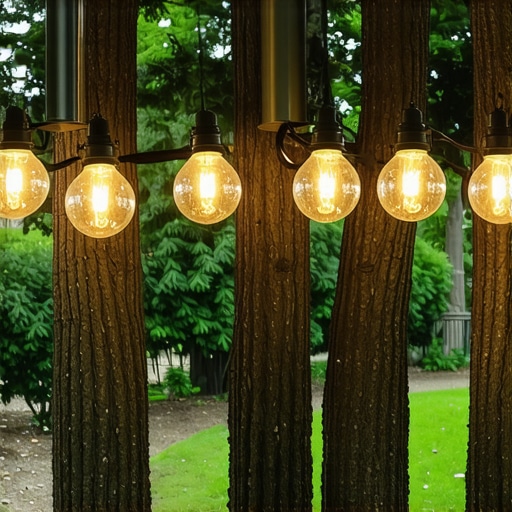
You smell it before you see it. It is that acrid, metallic tang of ozone mixed with the sweet, burning scent of pine sap. I have spent thirty-five years pulling burnt conductors out of places they never should have been, and tree-mounted lighting is the absolute king of ‘set it and forget it’ disasters. Homeowners love the aesthetic of moonlighting for their garden galas, but by the time the 2026 party season rolls around, those wires you slapped up three years ago have become ticking thermal bombs. I remember my journeyman used to smack my hand if I stripped a wire with a knife. ‘You nick the copper, you create a hot spot,’ he’d scream. He was right. That microscopic nick becomes a point of high resistance, and resistance is just another word for a localized furnace. When you are dealing with the movement of a living, growing tree, those ‘minor’ nicks and ‘good enough’ connections turn into house-leveling events. Before you invite the neighborhood over, we need to do a forensic deep-dive into why your backyard is a high-voltage liability.
1. The Girdling Effect: When Trees Eat Your Electrical Wiring Services
Trees do not just stay still; they are hydraulic machines in a constant state of expansion. If you used standard plastic zip ties or, god forbid, u-nails to secure your Romex to an oak tree, you have created a guillotine. As the tree’s girth increases, it performs a process called ‘girdling.’ The bark grows over the cable, putting thousands of pounds of pressure on the insulation. We call this ‘Cold Creep’ in the industry, though that usually refers to terminal lugs. Here, the pressure physically displaces the PVC insulation, thinning it out until the copper conductors are separated by nothing but a prayer. Eventually, the hot and neutral touch, and you get an arc-fault that stays hidden inside the wood. This is why AFCI breaker services are non-negotiable for these circuits. A standard breaker will let a low-level arc cook that tree for hours before it ever trips. You need a breaker that can ‘hear’ the signature of an arc through the electrical noise.
“Aluminum wire connections can overheat and cause a fire without tripping the circuit breaker.” – CPSC Safety Alert 516
While most tree lighting is copper, the principle of thermal expansion remains. In older estates where we still find knob and tube removal needs, the outdoor hacks are even worse. If your system is old enough to have ungrounded circuits feeding the yard, you aren’t just risking a fire; you’re risking an energized landscape.
2. Capillary Action and the ‘Widow Maker’ Extension Cord
I have seen it a thousand times: someone takes a ‘heavy duty’ orange extension cord, runs it up a trunk, and plugs in a chandelier. They think because the cord is thick, it is safe. It’s not. Most of those cords are not rated for permanent UV exposure. The sun’s ultraviolet rays bake the plasticizers out of the jacket, making it brittle. Then comes the rain. Water enters the jacket through micro-cracks and, through capillary action, travels down the inside of the wire like a straw. I’ve opened junction boxes thirty feet away from a tree and found them filled with water that ‘wicked’ through the cable. This moisture turns your chandelier installation into a grounded-fault nightmare. If you don’t have a properly bonded equipotential grid near your pool or patio area, that leaking current finds the easiest path to ground—which might be your guest holding a cocktail. This is why I insist on electrical safety audits before any major event.
3. The Myth of the ‘Weatherproof’ Wire Nut
You see those little blue nuts with the silicone goop inside? People think they are invincible. In the forensic world, we see those fail because of vibration. Trees sway. A twenty-mile-per-hour gust can move a limb several inches. If your connections aren’t made in a junction box with proper strain relief, that swaying is constantly tugging at the wire nuts. This creates a ‘loose neutral’ or a flickering hot. Every time that wire moves, it creates a micro-arc. Micro-arcs create carbon tracking. Carbon is conductive. Eventually, the plastic nut itself becomes a resistor and melts into a puddle of ‘monkey shit’ (that’s duct seal to the apprentices). If you’re serious about safety, you need a 400 amp service entrance that is properly balanced, ensuring your outdoor sub-panels aren’t being starved of voltage, which only increases current draw and heat at these weak points.
“Luminaires and equipment shall be mechanically connected to the building or structure… in a manner that prevents vibration from loosening the connection.” – National Electrical Code (NEC) Article 410
4. Harmonic Distortion in Cheap LED Drivers
Everyone switched to LEDs to save power, but cheap LED drivers are notorious for ‘harmonic noise.’ When you have fifty cheap transformers strapped to trees, they kick back high-frequency ‘trash’ into your home’s electrical system. This can interfere with your fire alarm system install or cause your office lighting upgrades to flicker like a horror movie. In high-end forensic inspections, we look for this ‘harmonic filth’ that overheats the neutral wire. If your neutral is shared (a common hack in old yards), the additive current from harmonics can exceed the wire’s rating even if the ‘amps’ look low on your Wiggy. This is where harmonic filter services come into play, cleaning up the power before it toasts your sensitive electronics.
5. Lack of a Secondary Safety Path
The biggest hazard is the absence of a ‘Home Run’ ground. Many old-school ‘handyman’ installs use the conduit itself as the ground, or worse, they don’t ground the fixture at all because ‘it’s just a tree.’ Wood is not a reliable insulator when it’s wet. If a fixture develops a ground fault, the entire tree can become energized. I’ve been hit by ‘phantom voltage’ just by leaning against a wet bark during a trim-out. We solve this by ensuring every outdoor circuit is protected by high-sensitivity GFCI and that your grounding electrode system is up to modern standards. If you are planning a 2026 party, stop looking at the Pinterest boards and start looking at your panel. If you see a ‘Zinsco’ or ‘Federal Pacific’ logo, you aren’t hosting a party; you’re hosting a bonfire. It is time for a real electrical wiring service to pull the ‘Widow Makers’ out of your canopy.
[IMAGE_PLACEHOLDER]