
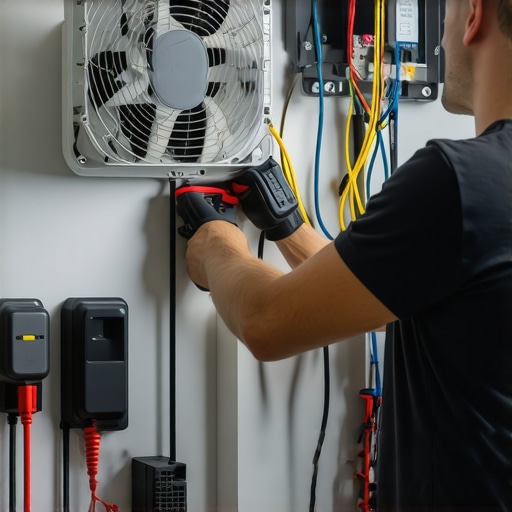
It was a hot summer afternoon when I first experienced the frustration of an electric fan that refused to turn on just when I needed it most. I remember fiddling with the switch, checking the wiring, and feeling helpless as the cool breeze I desperately needed was nowhere to be found. That lightbulb moment made me realize how vital reliable electrical solutions are in our daily lives, especially with the rising popularity of electric fans and EV chargers in homes.
Why Immediate Troubleshooting Matters More Than Ever
In today’s fast-paced world, waiting for a professional electrician can feel like an eternity—especially when your electric fan stops working during a heatwave or your EV charger suddenly goes offline when you’re ready to hit the road. According to recent studies, electrical issues are among the top causes of household emergencies, leading to safety hazards and costly repairs (CDC report). That’s why knowing quick, effective solutions for common problems can save you time, money, and stress.
Early on, I made the mistake of trying to fix complex issues without proper knowledge, which only worsened the problem. Learning from those mistakes, I now focus on simple, safe troubleshooting steps that anyone can follow. Whether it’s a malfunctioning ceiling fan or a stubborn EV charger, immediate action can often resolve minor issues before they escalate into major repairs.
Have you faced this kind of electrical dilemma at home? You’re not alone. Many homeowners struggle with similar problems but don’t know where to start. Fortunately, there are straightforward steps and expert tips that can help you troubleshoot effectively. In the next sections, I’ll walk you through proven methods to get your electric fans and EV chargers back online quickly and safely. For more detailed guidance, feel free to check out this comprehensive electrician guide.
Ready to become your own troubleshooting pro? Let’s dive into the practical steps that will turn your electrical frustration into a quick fix.
Start with Power Checks and Basic Reset
My first step during a frustrating afternoon was always to verify the power source. Just like checking if your phone is plugged in before troubleshooting, ensure the outlet is working by plugging in a different device. For electric fans and EV chargers, turn the device off, unplug it, wait 30 seconds, then plug it back in and turn it on. Sometimes, a simple reset clears minor glitches that cause the device to stop working.
Test the Circuit Breaker
Next, check your home’s circuit breaker panel. If the breaker controlling the outlet or device has tripped, reset it by switching it off then on again. Think of it as rebooting your computer — often, this resolves the issue immediately. If the breaker trips again quickly, there might be an overload or short circuit needing professional attention. This quick check can save you from more extensive repairs later.
Inspect Connections and Cables
Loose or damaged wiring is a common culprit. Disconnect the device and examine the power cord for cuts, burns, or frays. For ceiling fans, inspect the wiring in the fan’s canopy, ensuring all connections are tight and secure. I remember once encountering a ceiling fan that stopped suddenly because a wire had loosened during a storm. Tightening the wiring resolved the issue instantly. If you find damaged cables, replace them or call a professional for safety.
Test the Outlet with a Multimeter
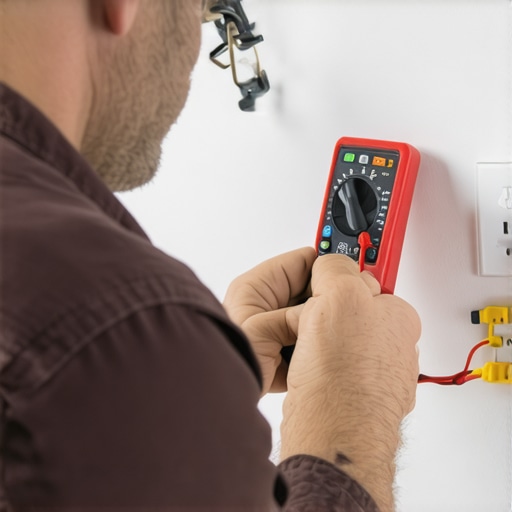
If you have a multimeter, set it to measure voltage and test the outlet. A standard outlet should read about 110-120 volts. If the voltage is abnormal, or there’s no power, the outlet or wiring may be faulty. In my experience, a faulty outlet was the root cause of a stubborn EV charger problem, and replacing it fixed the issue quickly. For detailed steps, review this comprehensive electrician guide.
Check Device-Specific Components
Many devices have internal fuses or circuit boards that can fail. For electric fans, look at the capacitor — a common failure point causing the fan not to start. If you hear humming but no movement, the capacitor might be dead. Replacing a capacitor is straightforward if you have some electrical experience. For EV chargers, inspect the display panel for error codes or blinking lights that indicate specific faults. Often, resetting the device or replacing a blown fuse can restore functionality.
Perform a Safe Reset or Power Cycle
Many issues can be resolved with a simple power cycle. Turn off the device, unplug it, wait 60 seconds, then plug it back in. This step clears temporary glitches. I once fixed a stubborn EV charger that refused to recognize my vehicle simply by performing this reset, saving a costly call-out. Always ensure the device is unplugged before opening or inspecting internal parts.
Use Troubleshooting Guides and Electrical Diagrams
If basic checks don’t resolve the problem, consult the device’s manual or troubleshooting guide. These resources often include common fault codes and solutions. For more complex issues, refer to detailed diagrams to trace wiring paths and identify potential problem points. This approach is like following a map — it guides you step-by-step to the fault.
When to Call a Professional
If you encounter signs of burning smell, sparking, or if the problem persists after basic troubleshooting, it’s time to call a licensed electrician. Safety is paramount. Remember, working with electricity involves risks, and professional electricians have the training and tools to handle complex repairs safely. For professional help, check out this ultimate guide.
Many homeowners approach electrical troubleshooting with a set of misconceptions that can lead to ineffective fixes or even safety hazards. Let’s dig deeper into some of the most common myths and clarify the nuanced truths behind them. Understanding these details can save you time, money, and prevent accidents.
Myth 1: Resetting the Device Always Fixes the Problem
It’s a widespread belief that simply unplugging and plugging back in will resolve most issues. While a power cycle can clear temporary glitches, it often masks underlying problems like faulty wiring or defective internal components. Relying solely on resets without diagnosing the root cause may lead to recurring failures and bigger risks. For example, a faulty capacitor in a ceiling fan might cause it to hum without spinning, and a reset won’t fix this. Always follow a systematic troubleshooting process instead of quick fixes.
Myth 2: The Circuit Breaker Reset Is Sufficient for Troubleshooting
Many think that flipping the breaker off and on resets the circuit. However, if the breaker trips repeatedly or trips immediately after resetting, it indicates a deeper issue like an overload or short circuit. Ignoring this and just resetting can lead to fire hazards. Advanced troubleshooting includes inspecting wiring connections, testing for shorts, or consulting an electrician if the breaker trips frequently. For detailed insights, check out this comprehensive electrician guide.
Myth 3: Internal Components Never Fail
Many assume that once installed, internal components like fuses, capacitors, or circuit boards are infallible. But these parts can degrade over time due to heat, moisture, or wear and tear. For instance, a capacitor in a ceiling fan may fail after years of use, causing it to stop starting altogether. Recognizing signs of internal failure—such as humming, overheating, or error codes—can guide you toward effective repairs rather than replacing the entire device.
Advanced Troubleshooting: Are There Risks in DIY Repairs?
While some troubleshooting steps are straightforward, attempting complex repairs without proper knowledge can be dangerous. Shock hazards, fire risks, and further damage are real concerns. Always use tools like multimeters correctly and follow safety protocols. If you’re uncertain, consulting a licensed electrician is the safest route. For complex issues, see this expert electrician troubleshooting guide.
Have you ever fallen into this trap? Let me know in the comments. Correct understanding of these nuances can make your DIY troubleshooting safer and more effective, especially for modern devices like EV chargers and ceiling fans.
Maintaining electrical systems in your home or business is crucial for ensuring safety, efficiency, and longevity. As technology advances, so do the tools and methods available for effective upkeep. From multimeters to smart monitoring devices, the right equipment can make all the difference in proactive maintenance and troubleshooting.
Why Investing in Quality Tools Matters
High-quality tools are the backbone of effective electrical maintenance. For example, I personally rely on a Fluke 117 Multimeter because it offers precise readings, durability, and safety features like non-contact voltage detection. This allows me to quickly identify issues such as voltage irregularities or faulty wiring without risking shock. Using reliable tools reduces guesswork and enhances safety, especially when working with complex systems like EV chargers or ceiling fans.
Regular Maintenance for Long-Term Results
Consistent inspections are key. I recommend checking connections at least twice a year, especially before winter and summer when electrical loads fluctuate. Clean and tighten all terminal screws, inspect for corrosion, and test outlets with a multimeter to ensure proper voltage levels. For devices like EV chargers and ceiling fans, following manufacturer-specific maintenance routines can prevent unexpected failures. A simple visual check combined with periodic testing can catch problems early, saving you costly repairs later.
Using Modern Monitoring and Diagnostic Tools
Smart electrical monitoring systems are trending towards predictive maintenance. Devices like the Sense Energy Monitor or the Emporia Vue can track power consumption and alert you to anomalies before they escalate. These tools provide real-time data, allowing for proactive repairs. For instance, if your EV charger suddenly shows irregular power draw, it might indicate internal component degradation. Addressing it early extends the lifespan of your equipment and maintains safety standards.
Scaling Your Maintenance Efforts
As your electrical needs grow, so should your maintenance strategy. For larger setups, consider integrating a central electrical management system that consolidates data from multiple sensors. This approach simplifies monitoring and helps prioritize repairs. Additionally, investing in professional-grade testing equipment—such as insulation resistance testers—can be invaluable for diagnosing insulation breakdowns in wiring or devices, especially in complex installations.
How do I maintain electrical systems over time?
Focus on routine inspections, use high-quality diagnostic tools, and stay informed about new technology trends. Regularly updating your tools ensures you can handle evolving electrical systems efficiently. Remember, safety always comes first—know your limits and call a professional when needed. For advanced troubleshooting tips, exploring resources like this comprehensive electrician guide can be very helpful. Try implementing a smart monitoring system today to keep your electrical systems running smoothly and catch potential issues early, saving you time and money in the long run.
The Hardest Lesson I Learned About Electrical Troubleshooting
One of my biggest mistakes was assuming that a simple reset would fix all issues. It taught me that understanding the internal components, like capacitors and circuit boards, is crucial. This lightbulb moment pushed me to learn more about device-specific parts and how they fail over time, preventing unnecessary replacements and ensuring safety.
3 Myths About Electrical Repairs That Held Me Back
I used to believe that resetting circuit breakers was always enough. I later discovered that frequent trips indicate deeper problems like overloads or wiring faults. Debunking this myth helped me approach electrical issues with a systematic mindset, emphasizing inspection and professional help when needed.
What Experts Won’t Tell You About Home Electrical Safety
Many overlook the importance of quality tools. Investing in a reliable multimeter like the Fluke 117 has been a game-changer, allowing me to diagnose problems accurately and safely. Regular maintenance, combined with modern monitoring tools, can catch issues early, saving money and lives.
My Essential Toolkit for Fixing Ceiling Fans and EV Chargers
Tools like multimeters, replacement capacitors, and inspection mirrors are must-haves. I trust these because they’ve helped me troubleshoot efficiently and safely. Additionally, consulting comprehensive guides on trusted sites has provided clarity on complex wiring diagrams and fault codes.
Your Turn to Take Action with Electrical Troubleshooting
Don’t wait for a problem to escalate. Use the lessons learned, invest in proper tools, and stay proactive with maintenance. Your home’s electrical system is vital, and with the right knowledge, you can ensure its safety and longevity. Remember, when in doubt, calling a professional is the best move. Ready to tackle your electrical challenges with confidence? Share your experiences below and let’s learn together!
Wow, this post really hits home for me because I recently faced a similar situation where my ceiling fan stopped working unexpectedly. I appreciated the detailed troubleshooting steps, especially checking the capacitor and testing the outlet with a multimeter. These simple yet effective steps can prevent unnecessary expenses before calling in a professional. In my case, I realized the circuit breaker had tripped, which was the root of the issue, and resetting it fixed the problem. Has anyone else found that common household issues like tripped breakers or loose wiring are often the culprits for device failures? I’d be interested to hear how others have successfully diagnosed and fixed similar problems without professional help. This kind of proactive troubleshooting not only saves money but also boosts confidence in handling home electrical issues safely.
This post really resonated with me, especially the part about quick troubleshooting being essential in our busy lives. I remember a time when my EV charger stopped working unexpectedly, and instead of immediately calling an electrician, I followed some of the steps mentioned here. Checking the circuit breaker was eye-opening because I found it had tripped without my noticing. Resetting it restored the charger, saving me a service call. It made me realize how crucial it is to understand basic electrical systems to troubleshoot effectively. I’ve also learned that inspecting wiring and using a multimeter can reveal hidden issues like faulty outlets or damaged cords. Has anyone else discovered that simple checks can often resolve problems that seem complex at first? I’m curious—what’s the most surprising fix you’ve found by doing a bit of DIY troubleshooting? It’s empowering to know you can handle many minor issues yourself, especially with proper tools and safety precautions.
Reading through this detailed troubleshooting guide really brought back memories of my own experiences with electrical issues around the house. One thing I’ve learned over the years is the importance of patience and safety precautions when dealing with electrical components. For example, I once discovered a loose wire inside a ceiling fan after a storm caused a power surge, and simply tightening a connection resolved the problem. It made me realize that many household issues could be easily fixed if homeowners first check simple things like power sources and connections, rather than immediately calling a professional. That said, I’d like to ask beginners: When inspecting wires or replacing parts like capacitors, what safety tips do you follow to avoid accidents? Also, what tools do you consider essential for a reliable DIY troubleshooting kit? Would love to hear other folks’ quick fixes or tips that helped them save a call to the electrician in a pinch.
This post really hits home because I’ve often underestimated how simple checks like verifying the outlet voltage or resetting the circuit breaker can solve what seem like complicated issues. I remember once dealing with a non-responsive EV charger, and it turned out to be a tripped breaker—such a relief to catch that early! It’s a good reminder that sometimes, the most basic troubleshooting steps can save us from costly repairs or unnecessary callouts. I’ve been considering investing in a multimeter lately; have others found that it really makes a difference in diagnosing electrical problems more accurately? I’m curious about other beginners’ experiences—what small tools or tips made your DIY troubleshooting safer and more efficient? Sometimes the most intimidating problems are straightforward when approached systematically and with the right knowledge.