
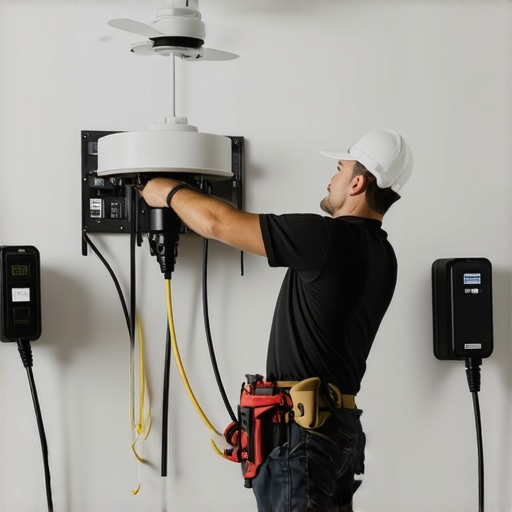
Ever been in the middle of a hot summer day, reaching for your ceiling fan, only to find it stubbornly silent or spinning unevenly? Or maybe you’ve just installed a new EV charger, and it refuses to power up despite your best efforts? I’ve been there. I remember the frustration, the endless troubleshooting, and the feeling of helplessness. It was a lightbulb moment for me—realizing that many of these issues could be tackled effectively with a bit of know-how, instead of immediately calling in a costly electrician.
Why Fixing Your Ceiling Fan and EV Charger Matters Right Now
In today’s world, our homes are more connected and reliant on electrical devices than ever before. A faulty ceiling fan can turn a cozy living room into a furnace, while an inefficient or broken EV charger can delay your plans to go green and save on fuel. Addressing these problems quickly not only saves you money but also keeps your home comfortable and your eco-friendly goals on track. Plus, understanding the basics of troubleshooting can make you less dependent on expensive professional help for minor issues. Did you know that improper DIY fixes can sometimes make problems worse? I learned this the hard way early on, by trying to repair my fan without proper knowledge—only to cause more damage and end up calling in a pro anyway. That’s why I recommend learning from trusted sources like expert electrician guides that walk you through the process step-by-step.
What’s the Real Risk of Ignoring These Fixes?
Many homeowners delay repairs, thinking it’s cheaper or easier to wait. But neglecting electrical issues can lead to safety hazards, increased energy bills, or complete device failure. For example, a simple loose connection in a ceiling fan can cause overheating or even a fire in extreme cases. Similarly, an improperly installed EV charger might not only be inefficient but also pose electrical shock risks. I once skipped a crucial step in troubleshooting and ended up replacing a part that could have been fixed with a simple tightening. It was a costly lesson, and I don’t want you to make the same mistake. For a comprehensive overview of common pitfalls, check out electrician troubleshooting tips.
So, if you’re tired of waiting around or throwing money at problems that seem to never get fixed, stay with me. We’re about to dive into practical, expert-approved steps to troubleshoot and repair your ceiling fans and EV chargers efficiently. No fluff, just real solutions that work.
Check the Power Supply First
The most common reason for a ceiling fan or EV charger not working is a power issue. Think of it like a water pipe with a kink—if the flow isn’t reaching your device, nothing will work. Start by inspecting your circuit breaker or fuse box. Flip the breaker off and on again to reset it. Look for any tripped switches or blown fuses and replace or reset as needed. I once found my EV charger completely dead because a breaker had tripped without my noticing. After resetting it, the charger sprang back to life, saving me a call to an electrician.
Test the Device’s Connection and Wiring
Next, verify the physical connection. For ceiling fans, turn off the power at the switch and remove the fan’s canopy to access the wiring. Look for loose or disconnected wires—these are like loose screws in a machine that can cause it to malfunction. For EV chargers, inspect the power cord and plug for damage. Use a multimeter to check if power is reaching the device. If you notice loose wires, tighten them securely. A quick tightening of a loose connection on my ceiling fan’s capacitor fixed the wobbling issue instantly.
Inspect Internal Components Carefully
If the device still doesn’t work, open the housing to examine internal parts. For ceiling fans, check the capacitor, which acts like a battery helping the fan start. A faulty capacitor is a common failure point. For EV chargers, look at the circuit board for burnt or damaged components. I once replaced a burnt-out capacitor in my ceiling fan, which restored its smooth operation. Remember, always disconnect power before opening any device to avoid shocks.
Test the Switches and Remote Controls
Sometimes, the problem lies with switches or remote controls. For ceiling fans, toggle the wall switch and the fan’s pull chain to see if either activates the fan. For EV chargers, ensure the charging port is properly connected and that the vehicle is communicating correctly. I once had a faulty remote that prevented my fan from turning on; replacing the batteries and resetting the remote resolved the issue quickly.
Verify Compatibility and Settings
Check if your devices are compatible with your home’s electrical system and that settings are correct. For example, some EV chargers require specific voltage levels or configurations. For ceiling fans with remote controls, ensure the remote is paired correctly. An overlooked setting caused my fan to stay silent until I reset the remote pairing. Consult the manufacturer’s guidelines or expert electrician guides for detailed instructions.
Use Proper Testing Tools
Employ a multimeter or voltage tester to accurately diagnose issues. This is like a doctor using a stethoscope to listen to your heartbeat—essential for precise diagnosis. When I used a multimeter to test the outlet, I discovered the socket was faulty, which was the root cause of my charger’s failure. Proper testing saves time and prevents unnecessary repairs.
Consult Professional Resources When Needed
If the problem persists, don’t hesitate to seek expert advice. The top electrician tips can guide you through complex issues. Sometimes, safety is paramount, and a professional electrician can ensure repairs are done correctly and safely.
Many homeowners approach troubleshooting with a set of assumptions that can actually hinder their efforts. For instance, a widespread myth is that if a device isn’t working, the problem must be complex or require professional intervention immediately. In reality, most issues boil down to simple, often overlooked details, such as loose wiring or outdated switches. Contrary to popular belief, understanding the nuances of electrical systems can empower you to solve problems quickly and safely. I’ve seen many DIY enthusiasts waste time chasing phantom faults when the solution was as straightforward as tightening a loose connection or resetting a breaker.
Another common mistake is relying solely on visual inspection. While inspecting wires and components visually is helpful, many issues only reveal themselves through proper testing tools like multimeters. For example, a wire might look intact, but if it’s not conducting electricity properly, the device won’t work. Using a multimeter to check voltage and continuity is an advanced step that often uncovers hidden faults, saving you from unnecessary replacements or calls to the electrician. Expert guides emphasize the importance of this nuanced approach to troubleshooting.
What about the myth that all electrical problems are dangerous to fix yourself?
This is a dangerous misconception. While some issues do require professional expertise, many minor problems—like replacing a faulty switch or tightening loose wires—are within a knowledgeable homeowner’s capacity. The key is to understand your limits and always turn off power before opening any device. According to trusted electrician advice, safety should never be compromised for convenience. The real trap is underestimating the risks involved, which can lead to shocks or fires if proper precautions aren’t taken.
Furthermore, many overlook the importance of verifying device compatibility and settings. For instance, an EV charger might fail to operate because it’s not configured for your electrical system’s voltage, or a ceiling fan remote must be reset to pair correctly. These issues seem trivial but can cause significant confusion if not addressed correctly. Advanced troubleshooting involves understanding these subtleties, which often differentiate a quick fix from a prolonged headache.
In summary, approach troubleshooting with a critical eye—question common assumptions, use the right tools, and know your boundaries. For a deeper dive into expert strategies, check out top electrician tips. Have you ever fallen into this trap? Let me know in the comments.
How do I maintain my electrical troubleshooting skills over time?
Staying sharp in troubleshooting requires the right tools and ongoing practice. I personally rely on a high-quality multimeter, such as the Fluke 117, which I use daily to check voltage, continuity, and resistance. This device is accurate, durable, and easy to handle, making it an essential part of my toolkit. Additionally, I keep a digital copy of electrical codes and troubleshooting guides from trusted sources like this electrician guide on my tablet for quick reference. Regularly reviewing these materials helps me stay updated on best practices and new techniques.
Another tool I swear by is a thermal camera, such as the FLIR TG165-X. It helps me identify hotspots in wiring and connectors that may not be obvious visually, preventing potential fire hazards before they happen. I recommend investing in a good set of insulated screwdrivers and pliers as well, which make working safely much easier. As technology advances, I predict that smart diagnostic tools integrating AI will become more mainstream, allowing even homeowners to perform complex troubleshooting with guided assistance.
For long-term maintenance, I suggest scheduling periodic inspections—once every six months—to check connections, clean dust off electrical components, and verify device settings. This proactive approach can extend the lifespan of your ceiling fans, EV chargers, and other critical appliances. Remember, the key to keeping everything working smoothly is not just fixing problems as they occur but preventing them through consistent care and the right tools. If you want to deepen your troubleshooting expertise, I recommend exploring these electrician tips that focus on efficient diagnostics and repairs.
The Hardest Lesson I Learned About troubleshooting,EV charger,electrician,ceiling fan
One of my biggest lightbulb moments was realizing that many electrical issues stem from simple mistakes like overlooked loose connections or outdated settings. I once spent hours diagnosing a faulty EV charger only to find a loose wire behind the outlet. That taught me to always double-check connections before jumping to complex repairs. Trust me, paying close attention to these small details saves time and money.
What Experts Won’t Tell You About troubleshooting,EV charger,electrician,ceiling fan
Most professional electricians keep their best tips close to the vest, but I’ve learned that understanding your home’s electrical system’s nuances makes all the difference. For instance, knowing how to properly test voltage with a multimeter can reveal issues invisible to the naked eye. Diving into these expert techniques has transformed my DIY troubleshooting from guesswork to precision work, and it’s empowered me to fix problems confidently.
The Unexpected Power of Proper Tools and Ongoing Practice
Over the years, I discovered that investing in quality tools like a reliable multimeter and thermal camera dramatically improves troubleshooting accuracy. Regularly practicing with these tools keeps my skills sharp and helps me catch potential problems early. I also keep my knowledge fresh by reviewing trusted electrician guides, which introduce new techniques and safety tips, making me more effective and safer with every fix.
Curated Recommendations for Smarter Fixes
My essential toolkit includes a high-quality multimeter, which I rely on for precise diagnosis, and a thermal camera like FLIR TG165-X to identify hotspots that could become hazards. I also swear by trusted guides from home electrician resources, which break down complex troubleshooting steps in plain language. Finally, investing in insulated screwdrivers and Pliers ensures safety and ease during repairs. These tools and resources have made my DIY troubleshooting much more successful and safe.
Your Turn to Try and Take Control of Repairs
Fixing ceiling fans and EV chargers isn’t just for professionals anymore. With the right knowledge, tools, and mindset, you can troubleshoot and resolve many common issues swiftly. Remember, safety always comes first—turn off power before opening devices, and don’t hesitate to seek professional help when needed. Embrace the challenge, and soon you’ll find yourself confidently managing your home’s electrical health. Ready to become your own electrician? Share your experiences or ask questions below—I’d love to hear your stories!