
The Ghost in the Attic: A Century of Decay
I remember my first week as a green apprentice, and my journeyman, Dutch—a man who smelled exclusively of pipe tobacco and WD-40—smacked my knuckles with a pair of dikes because I tried to pull a K&T wire through a tight hole without checking the ceramic insulator first. ‘You crack that porcelain, kid, and you’re just waiting for the house to find a reason to burn,’ he growled. He wasn’t being mean; he was being honest. In the decades since, I’ve seen exactly what happens when that ‘honest’ warning is ignored. We are moving into 2026, yet thousands of homes are still powered by technology designed when the Titanic was a new ship. If you think your home is safe just because the lights turn on, you’re ignoring the physical laws of thermodynamics and the inevitable breakdown of 100-year-old rubber. Knob and tube (K&T) wiring is not just an ‘old feature’; it is a ticking clock, and the alarm is already ringing in your walls.
1. The Physics of Insulation Failure and ‘The Widow Maker’
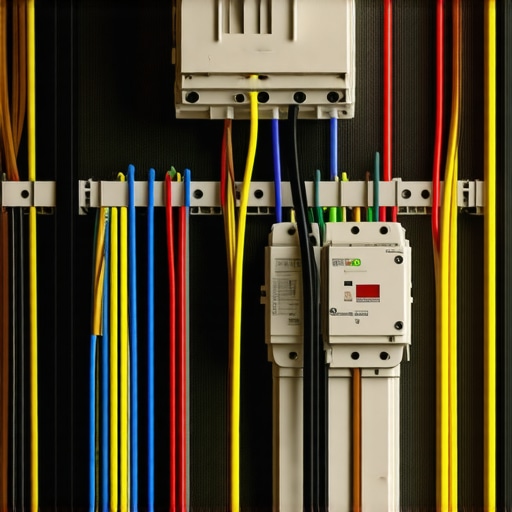
Let’s talk about the actual material sitting in your joists. K&T isn’t like the Romex we use today. It consists of a single copper conductor wrapped in a layer of vulcanized rubber and then a cotton-braid jacket. Over a century, that rubber undergoes a process called de-polymerization. It becomes brittle. If you so much as touch it during a routine outlet switch repair, the insulation flakes off like dried mud, leaving a Widow Maker (a live, bare conductor) exposed inside your wall. I’ve performed electrical safety audits where I’ve poked a Tick Tracer near a wall, and the thing screamed like a banshee because the insulation had literally turned to dust, and the current was arcing through the air to the horsehair plaster. [IMAGE_PLACEHOLDER]
“The National Electrical Code (NEC) does not broadly prohibit the use of knob-and-tube wiring, but it does prohibit it from being covered by thermal insulation, which causes heat buildup.” – NFPA 70: National Electrical Code
This is the trap. Modern energy codes require thick attic insulation. When you blow fiberglass over K&T, you are literally insulating a heat source. That wire was designed to dissipate heat into free air. When you bury it, the temperature of the copper rises, the resistance increases, and you begin the slow-motion charring of your structural lumber. This is why home rewiring services aren’t a luxury; they are a fire prevention mandate.
2. The Modern Load Crisis: From Incandescents to Data Closets
In 1920, the average home had a few lightbulbs and maybe a radio. Today, you’re running high-efficiency HVACs, induction cooktops, and complex data closet organization setups with servers and switches that require clean, grounded power. K&T is a two-wire system; it has no ground. When you plug a modern surge protector into an ungrounded K&T circuit, that surge protector is nothing more than a plastic brick. It has nowhere to dump the excess voltage. I’ve seen electrical inspections where homeowners complained about ‘ghosts’ in their electronics—flickering screens and fried motherboards. The ‘ghost’ is actually the lack of a ground path. This lack of grounding makes installing modern outdoor features like tree mounted lights or bollard light installation dangerous, as any fault in the line could energize the metal casing or the ground itself. You can’t just slap a GFCI on it and call it a day; you need a home rewiring service to bring a dedicated ground from the home run back to the bus bar.
3. The Insurance Trap and Panel Obsolescence
If the fire hazard doesn’t move you, the math will. In 2026, insurance companies are using AI-driven risk modeling that flags K&T wiring as an automatic ‘uninsurable’ condition. I’ve stood in kitchens where owners were forced to pay for a 24-hour emergency electrical panel upgrade and meter socket replacement just to keep their policy from being canceled. These old systems often terminate in rusted-out 60-amp fuse boxes or, worse, Zinsco and Federal Pacific panels that haven’t tripped a breaker since the Nixon administration.
“Aluminum wire connections and aging copper systems like Knob and Tube can overheat and cause a fire without ever tripping the circuit breaker.” – CPSC Safety Alert 516
When we perform a meter socket replacement, we often find ‘Monkey Shit’ (duct seal) that has dried out, allowing water to track down the service entrance cable right into the panel. Combining this with K&T is a recipe for a catastrophic arc flash. If you’re planning for the future—maybe a portable generator hookup for the next big storm—you cannot tie that modern power source into an antique skeleton. The impedance levels are too high, and the risk of back-feeding into brittle joints is a nightmare waiting to happen.
The Forensic Conclusion: Torque and Peace of Mind
Electricity is a lazy, dangerous beast. It wants to find the shortest path to ground, and it doesn’t care if that path is through your floorboards or your body. When I finish a rough-in and move to the trim-out, I use a torque screwdriver on every single lug. Why? Because I’ve seen the ‘cold creep’ in older systems where loose connections generated enough heat to melt a Wiggy tester. If you are living in a home with K&T, you are living in a forensic report that hasn’t been written yet. Do not wait for the smell of ozone—the sharp, metallic scent of burning oxygen—to tell you it’s time for an upgrade. Get the electrical inspections done. Invest in an electrical panel upgrade. Ensure your 2026 home is actually a sanctuary, not a tinderbox. When I leave a job site, I sleep well because I know every connection is torqued and every wire is Romex, not a 100-year-old fuse waiting to pop.