
The Hum of Inefficiency: Why Your Warehouse is Bleeding Cash
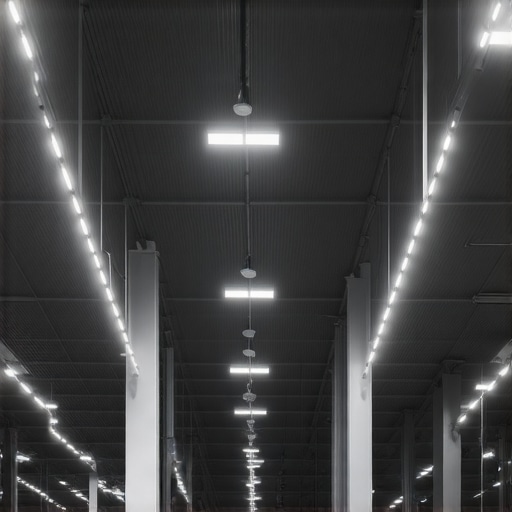
If you walk into your warehouse and hear a constant, low-frequency hum vibrating through the rafters, you aren’t hearing the sound of productivity. You’re hearing the sound of money vibrating into heat. As a forensic inspector, I’ve spent decades looking at industrial electrical systems that were over-engineered in 1978 and are now dying a slow, expensive death in the 2020s. Those massive metal halide fixtures hanging 30 feet up are more than just dinosaurs; they are resistive heaters that happen to produce a little bit of light as a byproduct. When we talk about a warehouse lighting retrofit, we aren’t just swapping bulbs. We are performing a surgical strike on your utility bill by addressing the physics of inductive loads and voltage drop.
I remember my journeyman, a man who had more scars from ‘live’ encounters than a stray cat, once caught me roughly stripping the insulation off a 4/0 feeder with a dull linoleum knife. He didn’t just yell; he slapped the tool out of my hand. ‘You nick that copper, kid, and you’ve just built a bottleneck,’ he barked. ‘You create a hot spot where the electrons pile up like a 5-car pileup on the interstate. Heat is resistance, and resistance is what the utility company charges you for.’ He was right. Every poor connection, every aging ballast, and every undersized circuit in your facility is a ‘hot spot’ that you are paying for every single month.
The Forensic Breakdown: Why Your Current System is a Time Bomb
In the world of forensic electrical inspection, we look for the ‘tells’ of a failing system. In a warehouse, that usually starts at the 400 amp service entrance. If you’re still running on mid-century infrastructure, your bus bars are likely oxidized, increasing the resistance at the very point where your power enters the building. This is where circuit breaker replacement becomes more than maintenance—it becomes a necessity. Old breakers lose their tension; the internal springs fatigue, and the contact points pit and carbonize. This doesn’t just lead to nuisance tripping; it leads to a fire hazard that your insurance company is looking for any excuse to stop covering.
“Aluminum wire connections can overheat and cause a fire without tripping the circuit breaker.” – CPSC Safety Alert 516
When we look at office lighting upgrades within these industrial spaces, the situation is often worse. You have dropped ceilings hiding ‘home run’ circuits that look like a bird’s nest. I’ve seen low voltage lighting transformers buried under insulation where they can’t breathe, baking until the plastic turns to charcoal. The goal for 2026 isn’t just to be ‘green’—it’s to be efficient. By moving to LED and smart controls, you’re reducing the total ampacity requirements of the building. This can be the difference between needing a massive, expensive service upgrade and being able to safely operate on your existing footprint.
[image_placeholder_1]
Ohm’s Law and the Reality of Heat
Electricity isn’t magic; it’s physics. Specifically, it’s Ohm’s Law (V=IR). When you use smart thermostat wiring to integrate your HVAC with your lighting, you’re managing the thermal load of the building. In a massive warehouse, the heat generated by 100 metal halide lamps can increase the ambient temperature by 10 degrees at the ceiling. This forces your attic fan installation to work overtime, or worse, causes your AC units to cycle constantly. You’re paying to create heat with your lights, and then paying again to move that heat out of the building. It’s an absurd cycle of waste.
We also need to talk about the ‘Skin Effect’ and harmonics. Modern electronics, from LED drivers to the computers in your front office, produce non-linear loads. This creates ‘dirty power’ that can cause your neutrals to overheat. During a forensic audit, I’ve used my Wiggy to find ghost voltages and my Tick Tracer to find cables that are energized but shouldn’t be. Often, the solution involves a 60 amp panel upgrade for specific sub-sections or a total electrical panel upgrade to handle the specific demands of modern high-efficiency drivers. If your breakers are warm to the touch, you aren’t just at risk of a fire—you’re literally watching your profits evaporate into the air as waste heat.
The Weekend Electrician vs. Code Compliance
I’ve seen plenty of ‘handyman specials’ in my time. I once walked into a warehouse where the owner had installed a massive electric gate opener by tapping into a lighting circuit with a piece of Romex draped over a fence. No conduit, no protection, just a Widow Maker waiting for the first rainstorm. This is why weekend electrician services are a double-edged sword. You want the flexibility of off-hours work so you don’t lose production time, but you need the expertise of a Master who knows that ‘monkey shit’ (duct seal) belongs in the conduit ends to prevent moisture migration, and that every lug must be torqued to the specific inch-pounds listed on the panel door.
“All electrical equipment shall be installed in a neat and workmanlike manner.” – NEC 110.12
When we do a rough-in for a warehouse lighting retrofit, we aren’t just throwing up fixtures. We are calculating the voltage drop over those 200-foot runs. If you use the wrong gauge wire, the voltage at the end of the line drops, the current (amps) goes up to compensate, and your efficiency goes out the window. By the time we get to the trim-out, every connection is verified. We don’t just ‘hand-tighten’ things. We use torque wrenches. A loose neutral can destroy a whole rack of LED drivers in a millisecond, turning your $20,000 investment into expensive scrap metal.
The Path to 2026: A Strategic Plan
If you want to slash costs by 2026, you need to stop thinking about lighting as a utility and start thinking about it as an asset. A proper retrofit involves: 1. A total load calculation to see if your 400 amp service entrance is actually balanced. 2. Replacing antiquated magnetic ballasts with programmable LED drivers. 3. Installing motion sensors and daylight harvesting controls so you aren’t lighting empty aisles. 4. Ensuring your circuit breaker replacement schedule is up to date to prevent catastrophic failure. Don’t let a ‘near miss’ be the reason you finally call a professional. I’ve seen the nursery where the main lug was glowing because someone didn’t use an anti-oxidant compound on an aluminum-to-copper transition. Don’t let your warehouse be that story. Get it torqued, get it tested, and sleep at night knowing your building isn’t trying to burn itself down just to keep the lights on.