
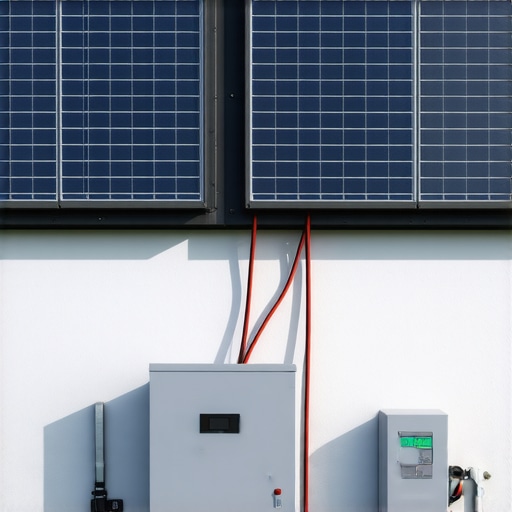
The Solar Salesman’s Lie and the Copper Reality
Every time I see a solar salesman knocking on doors, I feel a twitch in my lower back. They promise you a zero-dollar utility bill and a ‘seamless’ transition to green energy, but they rarely mention the 40-year-old service panel gasping for air in your garage. You can’t just slap 15 kilowatts of generation onto a bus bar that’s been pitted by decades of heat cycles and expect it to work like a Swiss watch. I’ve spent 35 years pulling Romex through spider-infested crawlspaces and tracing faults that would make a sane man quit the trade, and I can tell you this: electricity doesn’t care about your ROI if your house is on fire. If you are looking at a 2026 solar install, you aren’t just buying panels; you are stress-testing a legacy electrical system that was likely designed when the most high-tech thing in the house was a microwave.
My journeyman used to smack my hand if I stripped a wire with a knife. ‘You nick the copper, you create a hot spot,’ he’d scream. ‘That nick is a bottleneck where the electrons crowd together, create friction, and start a slow-motion disaster.’ He was right. In the context of solar, those ‘nicks’ aren’t just in the wire; they are in your entire infrastructure. When we talk about home rewiring services or prepping for solar, we are talking about the integrity of every connection from the inverter to the grounding rod.
“Aluminum wire connections can overheat and cause a fire without tripping the circuit breaker.” – CPSC Safety Alert 516
The Physics of the ‘Backfeed’ Nightmare
Most mid-century homes built between 1960 and 1980 are sitting on a ticking clock of aluminum branch wiring or, worse, Federal Pacific panels with breakers that refuse to trip. When you hook up solar, you are backfeeding power into your system. This isn’t a one-way street anymore. You have current coming from the utility and current coming from your roof. If your bus bar isn’t rated for that combined load, you get ‘Cold Creep.’ This is where the aluminum conductors expand and contract at different rates than the steel lugs. Over time, the screw loosens, an air gap forms, and you get micro-arcing. You won’t see it until you smell that sickly-sweet scent of melting plastic, or until you need fire damage wiring restoration because your main lug decided to turn into a welding torch.
Fix 1: The Service Heavy-Up and Bus Bar Sanity
The first fix for a real 2026 ROI is a total service upgrade, or a ‘heavy-up.’ Most old homes have a 100-amp or 125-amp service. Solar inverters often require a 40-amp or 60-amp breaker. According to the 120% rule in the NEC, you can’t just keep adding breakers to a bus bar.
“The sum of the ampere ratings of overcurrent devices in circuits supplying power to a busbar shall not exceed 120 percent of the rating of the busbar.” – NEC 705.12(B)(2)
If you try to cheat this, you’re asking for a meltdown. A proper upgrade involves pulling a new home run from the meter to a 200-amp copper-bus panel. While we’re in there, we’re looking for signs of troubleshooting nightmares like bootleg grounds. This is also the time to think about your future loads. Are you planning on a sauna heater installation next winter? Or maybe an EV charger? You calculate the load now, or you pay me three times as much to fix it on a Sunday via weekend electrician services.
Fix 2: AI Fault Detection and Thermal Monitoring
If you want to protect your investment in 2026, you stop relying on ‘dumb’ breakers. AI fault detection is the new gold standard. These systems use machine learning to identify the specific ‘signature’ of an arc-fault vs. the normal startup of a vacuum cleaner motor. In solar applications, this is critical. Inverters are noisy; they create harmonics that can confuse old-school AFCI breakers. By installing smart monitoring, you can catch a loose neutral or a failing solar string before it becomes a troubleshooting headline. It’s about moving from reactive ‘firefighting’ to proactive maintenance. If your system detects a 10-degree rise in temperature at the main breaker, it shuts down before the insulation carbonizes.
Fix 3: Grounding, Bonding, and the ‘Widow Maker’
I’ve seen fence line lighting and pathway lighting install jobs that were grounded to a rusty copper pipe that didn’t actually go to the earth. In a solar hookup, grounding is your only defense against lightning strikes and surges. We don’t just ‘tap’ into the existing ground. We want a dedicated grounding electrode system. If your ground is high-resistance because your soil is dry or sandy, your solar rack becomes a giant lightning rod waiting to send 50,000 volts through your recessed lighting installation. I use a Wiggy to test for voltage, but for grounding, you need a fall-of-potential test. Don’t let a ‘handyman’ tell you that a single 6-foot rod is enough. In 2026, with the weather getting more volatile, you want a redundant grounding path that can handle the surge.
The Cost of Cutting Corners
People ask me why I’m so cynical. It’s because I’ve seen the ‘Widow Maker’—a hot wire touching a metal casing because some ‘weekend warrior’ didn’t use a connector. Whether you’re doing recessed lighting installation or a full solar array, the principles of Ohm’s Law don’t change. Resistance creates heat. Heat creates fire. If you’re serious about your ROI, you sign up for a priority service membership with an outfit that actually owns a Tick Tracer and knows how to use it. You want someone who treats your rough-in like a forensic site. When we do a trim-out, every screw is torqued to the manufacturer’s inch-pound specifications, not just ‘hand tight.’ Because ‘hand tight’ is what causes the 2:00 AM emergency calls. Do it right, torque it down, and maybe you’ll actually get to enjoy that solar savings without the smell of ozone in your bedroom.