
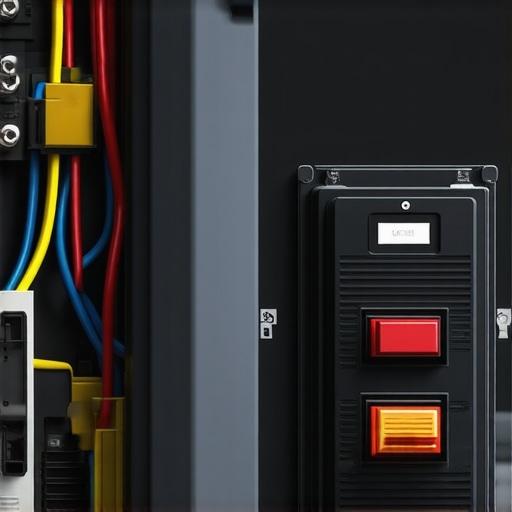
The Invisible Deadline: Why Your Electrical Panel is a Financial Liability
The year 2026 is etched into the calendars of underwriters across the country. It is the year that many insurance carriers have quietly designated as the final cutoff for properties operating on antiquated fuse technology. If you are still relying on an Edison-base fuse box, you are not just living in the past; you are sitting on a ticking clock that ends in a non-renewal notice. As a forensic inspector, I have seen the aftermath of these systems—the smell of charred organic insulation and the terrifying sound of a circuit that refuses to die even when it is literally melting through the studs. Upgrading to a modern breaker panel is no longer a ‘home improvement’ project; it is a mandatory survival tactic for your property’s insurability.
The Old Timer’s Lesson: The Physics of the Nick
My journeyman used to smack my hand if I stripped a wire with a knife. ‘You nick the copper, you create a hot spot,’ he’d scream. He was right. When you score a conductor, you reduce its cross-sectional area. In a fuse-based system, where homeowners often over-fuse—putting a 30-amp fuse on a 14-gauge Romex circuit—that nick becomes the point of failure. The wire heats up, the copper expands, and the microscopic notch becomes a localized heater. Unlike a modern breaker that might detect the thermal signature of a struggle, a fuse is a simple sacrificial link. If it doesn’t blow, the wire becomes the fuse, and your wall becomes the fuel.
“Aluminum wire connections can overheat and cause a fire without tripping the circuit breaker.” – CPSC Safety Alert 516
The Anatomy of Failure: Why Fuses Can’t Handle 2026
The core problem with fuses isn’t the fuse itself—it is the human element and the lack of protection for modern electronics. We live in an era of energy storage systems and industrial motor controls found in home workshops. A fuse is a ‘one-shot’ device. When it blows at 9:00 PM on a Tuesday, and you don’t have a spare, the temptation to stick a penny in the socket is what leads to forensic inspectors like me walking through your charred living room. This is known as ‘bridging,’ and it removes all safety from the system. Modern main disconnect services utilize thermal-magnetic breakers that provide two layers of protection: a bimetallic strip for long-term overloads and an electromagnet for instantaneous short-circuit protection. Fuses simply cannot compete with this dual-action response.
The Overhead Service Drop and the ‘Monkey Shit’ Factor
When we perform a main disconnect service upgrade, we start at the overhead service drop. Over decades, the drip loop—that sag in the wires designed to keep water out of your house—can lose its shape. I’ve seen water travel down the service entrance cable like a highway, bypassing the ‘monkey shit’ (that’s duct seal to you civilians) and entering the meter can. This moisture causes galvanic corrosion, where the copper and aluminum parts of your service equipment start eating each other. By the time I get there with my thermal imaging inspections camera, the meter base is glowing at 180 degrees Fahrenheit. A fuse box upgrade includes a new service mast, weather head, and grounding system, ensuring that your home’s first line of defense is actually waterproof.
Thermal Imaging: The Forensic Inspector’s Secret Weapon
I don’t trust my eyes; I trust my Flir. During thermal imaging inspections, we look for the ‘white heat’ of high resistance. A loose neutral in an old fuse panel won’t always blow a fuse, but it will create a thermal plume that can exceed 400 degrees. This heat slowly bakes the wood of your home, a process called pyrophoric carbonization, which lowers the ignition temperature of the wood until it can catch fire at the temperature of a toaster. Replacing that old box with a modern panel allows for GFCI outlet installation and AFCI protection, which can detect the specific signature of an arc—something a fuse is physically incapable of doing.
“Arc-fault circuit interrupters (AFCIs) are necessary to protect against fires caused by arcing faults in home electrical wiring.” – NFPA 70E Safety Standards
Modern Demands: Data, Power, and Security
Your home is no longer just a place to sleep; it’s a data center. From ethernet wiring services to access control wiring for your smart locks, the modern load profile is complex. Old fuse boxes were designed when a ‘heavy load’ was a toaster and a radio. Today, we have data closet organization needs that require clean, surge-protected power. If you are running high-end ethernet wiring services through a house with a bootleg ground and an old fuse box, you are asking for electromagnetic interference (EMI) to ruin your data integrity. A panel upgrade provides a dedicated, bonded grounding bus that drains away this interference, protecting your hardware and your sanity.
The Solution: A Systematic Overhaul
When we perform a ‘Heavy Up,’ we aren’t just swapping boxes. We are re-engineering your home’s relationship with the grid. This involves temporary power services to keep your fridge running while we rip out the 1940s relic. We install a new main disconnect service outside for first responders, then rough-in the new home run circuits to the modern panel. We use dikes to clean up the rats’ nest of old wires, ensuring every connection is torqued to the manufacturer’s inch-pound specifications. Don’t let a ‘handyman’ with a tick tracer tell you it’s fine. Use a Wiggy to test for real load-bearing voltage, and if that fuse box is still there, get it out before the 2026 insurance hammer drops.