
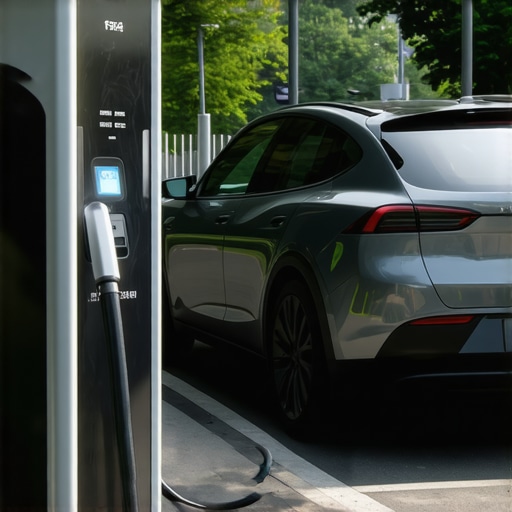
The Tripping Breaker: A Warning From Your Panel
You smell that? It’s not your morning toast. It’s the smell of a $60,000 electric vehicle trying to suck 48 amps through a terminal that wasn’t torqued to spec. When you plug in that shiny new 2026 EV, you aren’t just ‘fueling up’; you are initiating a continuous electrical load that rivals a commercial bakery. Most homeowners treat an EV charger like a toaster, but as a forensic inspector, I’ve seen the aftermath of that delusion. I’ve walked into garages where the NEMA 14-50 outlet has literally fused into a single block of charred plastic because of high-resistance heating. If you think you can just slap a breaker into an aging 100-amp panel and call it a day, you’re not just being cheap—you’re being dangerous. This isn’t about convenience; it’s about the physics of heat and the unforgiving nature of Ohm’s Law.
The Old Timer’s Lesson: Why Precision Prevents Fire
My journeyman used to smack my hand if I stripped a wire with a knife. ‘You nick the copper, you create a hot spot,’ he’d scream. He was right. That tiny nick reduces the cross-sectional area of the conductor, increasing resistance. In the 1980s, when we were doing a basic rough-in for a bedroom, a nicked wire might never cause an issue. But in 2026, we are pushing the limits of residential infrastructure. When you’re running a home run of 6 AWG copper for an EV charger, that circuit is under maximum stress for eight hours straight. Any imperfection—a nicked strand, a loose lug, or a cheap wire nut—becomes a glow-plug. I’ve used my tick tracer to find circuits that were literally vibrating under the load. We don’t play games with charging. If the connection isn’t perfect, the thermal expansion and contraction—what we call thermal cycling—will eventually back that wire right out of the terminal.
“The total area of an electric vehicle charging station load shall be considered to be a continuous load for the purposes of calculating the service or feeder capacity.” – NEC Article 625.42
The Load Calculation: Why Your 100-Amp Service is Obsolete
Before we even talk about the charger, we have to talk about the overhead service drop. Most mid-century homes are hanging on by a thread. You’ve got a 100-amp or maybe a 150-amp service. Then you add hot tub wiring services, a modern kitchen range hood wiring project with a high-cfm blower, and maybe some architectural lighting for the facade. Now, try to pull 48 continuous amps for your car. You’re exceeding the 80% rule of your main breaker’s capacity. When you hit that limit, the bus bar starts to heat up. In 2026, the best setup involves a ‘Heavy-Up’—upgrading to a 200-amp or 400-amp service. We aren’t just doing this for the car; we’re doing it for microgrid integration. Modern systems now allow your car to power your house during a blackout, but that requires a transfer switch and a system that won’t melt under the bidirectional flow of electrons. If your panel looks like a bird’s nest of Romex, you’re not ready for an EV.
Component Zooming: The Physics of Thermal Runaway
Let’s get technical about why those ‘Amazon Special’ chargers fail. It comes down to the quality of the contact points. A Level 2 charger at 48 amps generates significant heat at every junction. If you’re using a plug-in model instead of a hardwired unit, you’ve introduced two more points of failure: the plug blades and the socket tension. Over time, the spring tension in a cheap receptacle weakens. This creates a tiny air gap. Electricity loves to jump gaps—that’s called arcing. Arcing creates plasma, and plasma is hotter than the surface of the sun. Hardwiring is the only way to go for a 2026 setup. We use 1-inch EMT conduit and THHN wire, because it handles heat better than the plastic sheathing on standard NM-B cable. When I do a trim-out, I use a torque screwdriver. Every lug is tightened to exactly 50 inch-pounds. If you’re ‘hand-tightening’ with a pair of dikes or a standard driver, you’re asking for a forensic inspector like me to show up with a fire marshal.
Modern Integration: Beyond Just Charging
The 2026 landscape isn’t just about the car. It’s about the whole-home ecosystem. We are seeing more requests for permanent holiday lighting and PA system installation in modern smart homes, all pulling from the same service. If you live in a flood-prone area, flood water electrical safety is paramount when positioning your charger. You don’t want your charging port becoming a path to ground during a storm surge. I’ve seen chargers installed in basements that turned into widow makers after a heavy rain. We also have to consider emergency exit lighting in the garage and phone line installation for backup data links to the charger’s management software. Everything is connected. If you don’t have a holistic view of your home’s load, you’re just waiting for a catastrophic failure.
“Fixed electric space-heating equipment shall be rated not more than 50 amperes and shall be protected by an overcurrent device…” – NFPA 70, Section 424
The Forensic Verdict: Hardwired vs. Plug-In
I recently inspected a house where the owner used a NEMA 14-50 ‘dryer’ outlet for his EV. He thought he was smart. But he didn’t realize that dryer outlets are designed for intermittent use—maybe an hour at a time. An EV is a ‘continuous load.’ After three months, the plastic housing of the outlet had carbonized. Carbon is conductive. The outlet started tracking, which is a slow-motion short circuit. By the time I arrived with my Wiggy, the wall studs were scorched. The solution for 2026 is simple: Hardwire your charger using a dedicated 60-amp circuit with a high-quality GFCI breaker. Use monkey shit (duct seal) to plug the conduit ends to prevent moisture migration. Anything less is a gamble with your family’s safety. Electricity is a loyal servant but a terminal master. Respect the amperage, torque your lugs, and for God’s sake, stop using extension cords for anything that has a motor or a battery.