
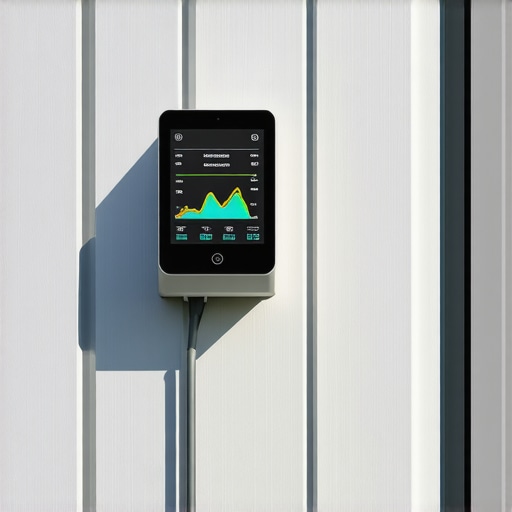
The Invisible Drain: Why Your Old Meter Base is Costing You a Fortune
I walked into a ‘fully renovated’ 1974 split-level last week where the new owner complained of a sulfur smell near the laundry room. The flipper had installed quartz countertops and a fancy farmhouse sink, but when I pulled my tick tracer out, the wall behind the drywall was screaming. I found a buried junction box where they’d spliced the old cloth-insulated service wire to a new piece of Romex with nothing but electrical tape and hope. This wasn’t just a code violation; it was a thermal event waiting for an audience. That’s the reality of modern home ownership in 2026. You can paint the walls, but if you’re trying to push 2026 energy loads through a 1970s service entrance, you’re playing Russian roulette with a copper-clad chamber. The transition to smart meter infrastructure isn’t just a utility whim; it’s a technological necessity driven by the sheer volume of juice we’re pulling for EV chargers and battery backup wiring.
“Aluminum wire connections can overheat and cause a fire without tripping the circuit breaker.” – CPSC Safety Alert 516
The Physics of the Meter Base: Why Replacement Isn’t Optional
Most homeowners look at their electric meter as a spinning wheel of debt. As a forensic inspector, I see a mechanical bottleneck. If your home was built between 1960 and 1980, your meter base is likely an old 100-amp or 125-amp tin-plated copper socket. Over decades, the tension in those meter jaws—the clips that hold the meter in place—weakens. This is called ‘stress relaxation.’ When the tension drops, resistance goes up. In the electrical world, resistance equals heat. By the time you notice your lights flickering when the AC kicks on, those jaws are often pitted and charred. A meter base replacement isn’t just about getting a new box; it’s about restoring the mechanical integrity of the connection to the grid. In 2026, utility companies are moving to mandatory Time-of-Use (TOU) rates. Without a smart meter capable of granular power quality analysis, you’ll be billed at the highest peak rates because the utility can’t verify when you’re actually using power.
The Load Calculation Crisis: EV Chargers and Battery Backups
We’re seeing a massive influx of EV charger installations that are absolute hack-jobs. People buy a 48-amp Level 2 charger and think they can just slap a double-pole breaker into a crowded panel. Ohm’s Law doesn’t care about your budget. When you add a continuous 11.5kW load to a house already running a heat pump and a dryer, you’re hitting the thermal limit of the service conductors. This is where arc flash studies come into play for residential settings. I’ve seen main disconnects literally weld themselves shut because the fault current exceeded the equipment’s rating. If you’re planning on battery backup wiring, the integration requires a smart meter to manage the ‘islanded’ state of your home. A smart meter acts as the traffic cop, ensuring that while your batteries are feeding your fridge, you aren’t backfeeding the grid and killing the lineman trying to restore your power.
Restoring the Foundation: Fire Damage Wiring Restoration
When I’m called in for fire damage wiring restoration, the culprit is rarely a lightning strike. It’s almost always a loose neutral or an overloaded circuit in a garage or kitchen. People think garage wiring services are just about adding a few outlets for a table saw. But if you’re running a workshop and an EV on the same leg, you’re creating an imbalance that heats up the neutral wire. Unlike the hot wires, the neutral doesn’t have a breaker to protect it. It just glows until the insulation turns to carbon. Carbon is conductive. Once the insulation becomes a conductor, the arc-over happens, and your main disconnect services become the only thing standing between a tripped breaker and a total loss.
“The service-entrance conductors shall have a vertical clearance of not less than 8 feet from roof surfaces.” – NEC Section 230.24(A)
The 2026 Infrastructure Shift: Why Smart Meters are the Anchor
The 2026 energy landscape is built on data. A smart meter provides the utility with real-time feedback on voltage sags and spikes. If your kitchen range hood wiring or those new patio cover outlets are causing a harmonic distortion, the smart meter logs it. This helps in diagnosing ‘dirty power’ that kills sensitive electronics. When we perform main disconnect services, we’re often upgrading the entire service mast and grounding system. I’ve seen old galvanized pipes used as masts that have rusted through at the roofline, allowing water to travel down the inside of the service cable like a straw, straight into the meter base. We call that a ‘Widow Maker.’ We seal those entries with Monkey Shit (duct seal) and high-grade silicone, but the real fix is a modern, weather-tight smart meter enclosure that can handle the higher amperage of a 200-amp or 400-amp ‘heavy-up’ service.
The Forensic Verdict: Don’t Wait for the Smell of Ozone
I’ve spent 35 years with a Wiggy in my hand and dikes in my pocket, and I can tell you that electricity is lazy but patient. It will find the easiest path to ground, even if that path is through your studs. If you’re still running on a ‘dumb’ meter from the Reagan era, you’re missing out on the surge protection and efficiency monitoring that 2026 rates demand. Getting a pro to handle your rough-in and trim-out for a service upgrade is the only way to sleep at night. You want every lug torqued to spec, every home run labeled, and a main disconnect that actually disconnects when you need it to. Don’t let a handyman ‘finesse’ your service entrance. If they don’t know how to perform a proper load calculation or don’t understand why a smart meter installation is required for your new solar-ready panel, kick them off the job site before they burn your investment to the ground.
This article really hit home about the importance of updating old meter bases, especially with the rising demand for EV chargers and home batteries. I recently had my own panel inspected after noticing flickering lights, and it turned out my meter base was severely degraded, which could have led to potential fire hazards. The technical depth in this post makes me think about the broader implications of neglecting these upgrades—it’s not just about compliance, but safety and efficiency. I’m curious, has anyone faced delays or issues with utility companies when requesting these upgrades, given the push towards smart meters and higher amperage services? It seems like coordination between homeowners and utilities can sometimes be a bottleneck, and I’d love to hear tips on navigating that process smoothly.