
The Autopsy of a 2026 Electrical Catastrophe
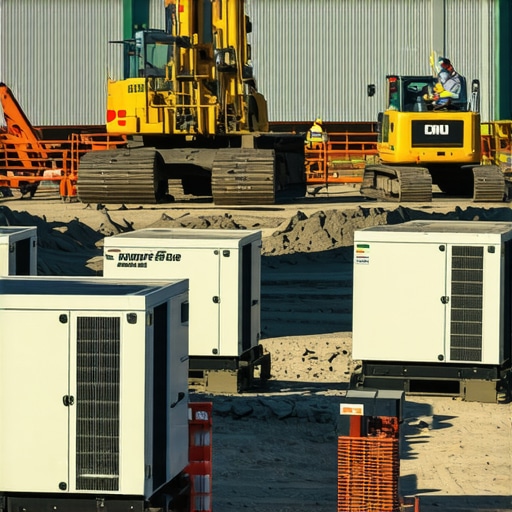
I remember my first journeyman, a grizzly old guy who smelled like ozone and cheap coffee, smacking my hand with a pair of dikes because I tried to strip a length of 12-gauge Romex with a pocket knife. ‘You nick that copper, you create a hot spot,’ he’d scream over the sound of a hammer drill. ‘That nick is a choke point for electrons. Heat builds up, the insulation chars, and 20 years from now, some kid dies in a house fire because you were lazy.’ He was right. Today, in 2026, the stakes have only gotten higher. We are seeing job sites fail at an unprecedented rate because the ‘pro’ temporary power services being used are anything but professional. I recently performed a forensic audit on a high-end coastal build where the entire three-phase power services array had melted into a slag heap of molten aluminum and copper. The culprit? A series of micro-arcing events caused by salt-air ingress and improper torque settings on the main lugs. This wasn’t just a ‘bad wire’; it was a systemic failure of physics.
The Physics of Failure: Why Coastal Power Systems Rot
When we talk about boat lift wiring or swimming pool bonding in a coastal environment, we aren’t just fighting water; we are fighting chemistry. Salt air is a highly efficient electrolyte. In this specific forensic case, the temporary service mast was positioned 50 feet from the high-tide line. Without proper monkey shit (duct seal) in the conduit and stainless steel enclosures, the salt spray bridged the gap between the phases. On a standard 120/208V three-phase system, that bridge creates a high-impedance fault that doesn’t always trip a standard breaker. Instead, it just cooks. The heat causes the conductors to expand—a phenomenon known as thermal expansion—and then contract when the load drops at night. This cycle, combined with ‘cold creep’ in aluminum conductors, eventually loosens the mechanical lugs. Once that connection is loose, the resistance sky-rockets.
“Aluminum wire connections can overheat and cause a fire without tripping the circuit breaker.” – CPSC Safety Alert 516
The Smart Home Wiring Trap
Modern job sites aren’t just running saws anymore; they are running sensitive server racks for smart home wiring integration before the drywall even goes up. If your temporary power isn’t conditioned, those $10,000 lighting controllers are toast before the first coat of paint. I’ve walked onto sites where a portable generator hookup was back-feeding a panel through a ‘suicide cord.’ Beyond being a widow maker for any utility lineman working on the street, the ‘dirty’ power from a non-inverter generator creates harmonic distortion. This distortion wreaks havoc on the microprocessor-controlled AFCI and GFCI breakers required by modern code. When these breakers trip, the ‘handyman’ solution is usually to swap them for standard breakers, removing the only thing keeping the structure from an electrical fire.
The Critical Nature of Bonding Jumper Services
In the world of forensic inspection, we look at the grounding electrode system first. A common failure in 2026 job sites is the neglect of bonding jumper services. I recently inspected a site where a camper electrical panel was being used as a temporary office. The installer forgot to remove the green bonding screw, creating a parallel path for neutral current through the frame of the trailer. Anyone touching the metal stairs while standing on wet grass became the path of least resistance. You don’t feel 120 volts as a ‘shock’ in that scenario; you feel it as a muscle-contracting grip that you can’t let go of. This is why spa grounding services and swimming pool bonding are so heavily scrutinized—water and electricity don’t mix, but water and improperly grounded electricity are a death sentence.
“The grounding electrode conductor shall be installed in one continuous length without splice or joint.” – NEC Article 250.64(C)
Why an Electrical Panel Upgrade is Non-Negotiable
If you’re planning a standby generator install or adding heavy loads like a fast-charging EV station, your 1980s-era 100-amp service is a ticking time bomb. An electrical panel upgrade isn’t an ‘upsell’; it’s a capacity requirement. When we perform a ‘heavy-up,’ we aren’t just swapping the box. We are recalculating the load demand based on Ohm’s Law and the derating factors for ambient temperature. If your panel is located in a hot garage, its bus bars can’t carry the same current as they could at 68 degrees. We use a tick tracer to find the hot spots and a Wiggy to verify the voltage under load. If that voltage drops more than 3% at the furthest outlet, you have a home run that is undersized, leading to heat buildup behind your walls. Don’t trust a guy with a multimeter he bought at a grocery store; trust the inspector who knows how to read the thermal signature of a failing bus bar. Sleep at night knowing every lug was torqued to the inch-pound specified on the manufacturer’s label, not just ‘snugged’ by a guy who thinks he knows his own strength.