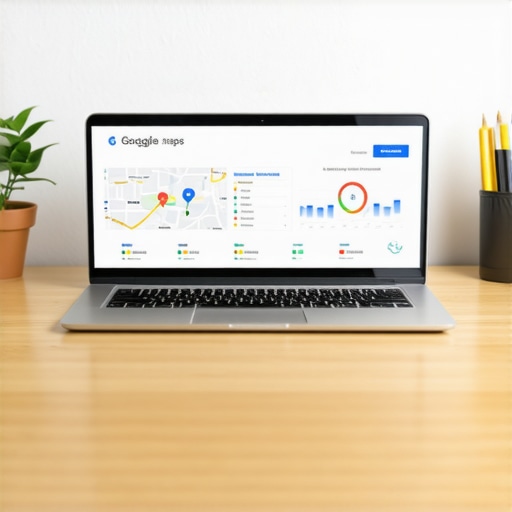
3 Crucial Metrics to Measure if Your Google Maps Strategy is Booking Real Jobs
As we navigate the competitive landscape of 2026, the digital storefront for any electrical contractor isn’t just a website – it is their Google Maps presence. However, there is a growing frustration among business owners in the trade industries. You might see your business appearing in the search results, or perhaps your “views” are climbing, but your dispatch board remains empty. This disconnect stems from a reliance on “Vanity Metrics” rather than “Value Metrics.” Mastering google business profile seo is no longer just about showing up; it’s about ensuring that every impression has the potential to turn into a service call for a tripped breaker or an emergency panel upgrade.
In 2026, local competition has reached a fever pitch. With more “truck-in-a-van” operations and large-scale franchises vying for the same three spots in the Local Map Pack, simply “ranking” isn’t enough to guarantee revenue. You need a data-driven approach to distinguish between people just browsing and homeowners ready to book. If you are tired of looking at graphs that go up while your bank account stays flat, it’s time to change how you measure success. Before diving into the deep end of analytics, it is essential to understand How to Claim the Top Spot on Google Maps for Local Electrical Service Calls, but once you are there, you must know if that spot is actually paying for itself.
I’m Arslan Abid, a Local SEO Expert. Over the last two years, I have helped service-based businesses move past the noise of basic reporting to focus on what actually moves the needle: booked jobs. In this guide, we will break down the three crucial metrics that determine if your Google Maps strategy is a revenue generator or just a digital paperweight.
Beyond Impressions: Tracking High-Intent Actions
The first mistake most business owners make when reviewing their google business profile seo performance is falling in love with “Impressions” or “Views.” In the world of local search, views are often a lie. A “view” could be someone scrolling past your listing while looking for a different business, or a competitor checking your prices. For an electrical contractor, the only metrics that truly matter in the initial stage of the funnel are High-Intent Actions.
High-Intent Actions are the specific behaviors a user takes that signal they are ready to hire. Within the Google Business Profile (GBP) dashboard, these are categorized as Phone Calls, Website Clicks, and Direction Requests. For a service-based business, phone calls are the undisputed king. When a homeowner’s lights flicker or they experience 2026 industrial downtime due to a faulty transformer, they don’t usually browse a blog for twenty minutes; they hit the “Call” button directly from the Map Pack.
To truly rank google business profile listings effectively, you must monitor the “Interactions” tab in your GBP insights. But go deeper: compare your “Total Interactions” to your “Total Views.” If you have 10,000 views but only 5 phone calls, your profile is likely suffering from a conversion issue. Perhaps your photos don’t look professional, or your primary category is set incorrectly. High-intent action volume tells you if your profile is persuasive enough to stop the scroll.
Furthermore, direction requests are a sleeper metric for contractors. While you likely go to the customer, a high number of direction requests can indicate that customers are looking for your physical shop to drop off equipment or verify that you are a legitimate local entity rather than a lead-gen ghost office. Tracking these actions helps you understand The Missing Link in Your Google Maps Strategy That Actually Drives Phone Calls, which is often the perceived reliability of your brand at a glance.
In 2026, Google’s AI-driven search results are better at identifying “searcher intent.” This means your profile needs to be optimized for specific keywords like “emergency electrician near me” or “EV charger installation.” If your high-intent actions are low despite high visibility, you may be ranking for the wrong terms. Using a professional google maps ranking service can help align your profile content with the specific services that drive the most profitable calls.
Proximity Relevance: Are You Visible Where the Jobs Are?
The second metric is one that many business owners overlook because it isn’t found inside the standard Google dashboard: Proximity Relevance and Share of Voice. A common trap is checking your ranking while sitting in your office. Of course, you rank #1 when you are standing ten feet from your router. But does a homeowner ten miles away in a high-value neighborhood see you? This is where a google maps rank tracker becomes an essential part of your toolkit.
Google’s algorithm relies heavily on three pillars: Proximity, Relevance, and Prominence. Proximity is the most difficult to overcome. As an electrician, your “service area” might span a 30-mile radius, but Google’s “Map Pack” is notoriously biased toward proximity. To measure if your strategy is working, you need to use “Geogrid” tracking. A Geogrid provides a visual map of your rankings across a specific geographic area, showing you exactly where your visibility drops off.
If your Geogrid shows you are green (ranking 1-3) only in a tiny circle around your office, but red (ranking 10+) in the affluent suburbs where people are looking for “2026 Fire Safety” inspections, your strategy is failing. You are visible, but not where the jobs are. To fix this, you must build “Local Prominence.” This involves gathering reviews from customers in those specific target zip codes and creating location-specific service pages on your website that link back to your GBP.
Understanding How Proximity Relevance and Prominence Change Where Your Electrical Van Shows Up is key to expanding your reach. You should aim for a “Share of Voice” metric – what percentage of the time does your business appear in the top 3 for your core keywords across your entire service territory? If your share of voice is increasing month-over-month in your target neighborhoods, your google business profile seo is working, even if your total “views” stay the same. You are trading low-quality traffic for high-value proximity.
To manage this effectively, many top-tier contractors use local seo tools to automate the tracking of these grids. Seeing a visual representation of your “dominance zone” allows you to allocate your marketing budget more effectively – perhaps running Local Services Ads (LSAs) in the areas where your organic map ranking hasn’t yet broken into the top 3.
The Bottom Line: Calculating Your Map-to-Job Conversion Rate
The final and most important metric is the actual ROI: the Map-to-Job Conversion Rate. This is the “Bottom Line.” You can have all the phone calls in the world, but if they are all “wrong numbers” or people looking for the cheapest price, your Google Maps strategy isn’t booking *real* jobs. To measure this, you must bridge the gap between a digital click and a physical technician arriving at a home.
The most effective way to track this is by using UTM parameters on your Google Business Profile website link. Instead of just linking to `proelectricalco.com`, use a link like `proelectricalco.com/?utm_source=google&utm_medium=organic&utm_campaign=gbp`. This allows Google Analytics 4 (GA4) to isolate exactly what traffic came from your map listing. You can then see if those users are filling out your “Request a Quote” form or clicking your “Book Now” button.
Another critical factor in this conversion rate is “Review Velocity.” In 2026, customers are savvy. They don’t just look at your overall rating; they look at how recently you responded to a review and how frequently you get new ones. A profile with 500 reviews from two years ago is less trustworthy than a profile with 50 reviews, five of which were posted this week. High review velocity signals to both Google and the customer that you are active, reliable, and currently booking jobs. This trust is what converts a searcher into a lead.
Consider the math: If your GBP generates 100 leads a month, and your office converts 20% of those into booked jobs with an average ticket of $500, your Google Maps presence is worth $10,000 a month. If you are spending $1,000 on a google maps ranking service, your ROI is 10x. This is a much more powerful conversation to have than simply talking about “rankings.” You can even apply this to specific services, such as using A Simple Way to Calculate the ROI of Your Home EV Charging Station installations to see which keywords are the most profitable.
To get these insights, you need local seo performance software that integrates your GBP data with your CRM (Customer Relationship Management) system. When you can see that a $2,000 panel upgrade originated from a Google Maps search for “electrician near me,” you have 100% certainty that your SEO strategy is working. This level of attribution is what separates the pros from the amateurs. It also helps you identify if you need to pivot – perhaps you are getting plenty of calls for small repairs but want more high-ticket items like Infrared Thermography Scans for 2026 Fire Safety. Your metrics will tell you if your profile optimization matches your business goals.
Streamlining Your Local SEO Audit
Measuring these three metrics – Action Volume, Proximity, and ROI – can be time-consuming if done manually. The modern electrical business owner doesn’t have hours to spend in spreadsheets. This is where automation becomes your best friend. Utilizing a google business profile audit tool can provide an instant snapshot of your profile’s health, identifying missing information, poorly performing keywords, and opportunities for local backlink growth.
A regular audit ensures that your business information remains consistent across the web (NAP consistency: Name, Address, Phone). In 2026, even a small discrepancy in your phone number across different directories can confuse Google’s algorithm and tank your rankings. By streamlining your measurement process, you spend less time “guessing” and more time responding to the leads that your optimized profile is generating.
Conclusion & CTA
In the world of local electrical services, visibility is only the beginning. To ensure your Google Maps strategy is booking real jobs, you must move beyond vanity metrics and focus on high-intent actions, hyperlocal proximity, and actual conversion ROI. When you track the right data, you stop viewing SEO as an expense and start seeing it as your most productive “digital technician.”
Are you ready to stop wondering if your marketing is working and start seeing the results on your bottom line? Check out these 7 Google Maps Optimization Tips That Actually Drive Local Electrical Leads. If you want a professional to handle the heavy lifting and ensure your business dominates the local map pack in 2026, contact Pro Electrical Co today for a comprehensive local SEO audit and strategy session.