The Anatomy of a Dark Grid
When the sky turns that bruised shade of purple and the transformers start popping like overcharged capacitors, your house isn’t just a home anymore; it’s a high-stakes physics experiment. I’ve spent 35 years pulling wire through charred framing and digging out flooded service laterals, and if there is one thing I’ve learned, it’s that electricity doesn’t forgive a disaster. Most people think a recovery starts with a hammer, but it actually starts with a Tick Tracer and a solid plan for temporary power. You don’t just plug a generator into a dryer outlet—that’s a ‘widow maker’ move that kills linemen and burns down what the storm left standing.
The Old Timer’s Lesson: The Sin of the Nick
My first journeyman was a man who lived through the transition from knob-and-tube to modern Romex, and he had a temper like an ungrounded 240-volt circuit. I remember him watching me strip a #10 wire with a pocket knife. He didn’t just correct me; he grabbed my wrist and pointed at the microscopic score mark I’d left on the copper. ‘You nick that conductor, kid, and you’ve just built a bottleneck for electrons,’ he growled. ‘Heat builds up right there. Thermal expansion makes it worse. Eventually, that nick becomes a glowing ember inside a wall.’ He was right. In disaster recovery, we see this constantly. Amateur lighting installation services or rushed repairs lead to ‘hot spots’ that ignite long after the floodwaters recede. Every connection must be torqued to spec, not just ‘tight enough.’
“Aluminum wire connections can overheat and cause a fire without tripping the circuit breaker.” – CPSC Safety Alert 516
The Forensic Breakdown: Why Salt and Water Are the Ultimate Enemies
In coastal disaster zones, we deal with a phenomenon called galvanic reaction on steroids. When salt spray or brackish water hits a meter can, it creates a conductive bridge between phases. I’ve opened panels where the bus bars looked like they were covered in green moss—that’s copper oxidation. This isn’t just ugly; it increases resistance. Resistance equals heat. Heat equals fire. This is why a fuse box to breaker conversion is often the first step in a real recovery. Old Edison-base fuses are vulnerable to moisture-induced arcing in ways a modern, sealed AFCI (Arc-Fault Circuit Interrupter) breaker isn’t. When we perform a smart meter installation during a rebuild, we aren’t just giving the utility a way to read your bill; we are installing a digital sentry that can detect load anomalies before they turn into a 1,200-degree plasma arc.
Temporary Power: More Than Just an Extension Cord
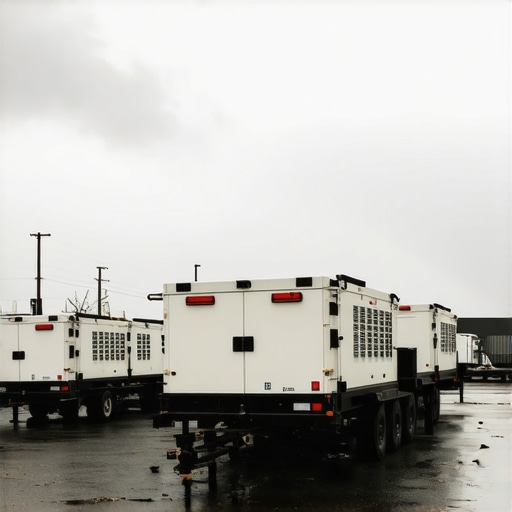
Professional temporary power services during a disaster involve setting up a ‘Spider Box’ network. We’re talking about a NEMA 3R rated enclosure, properly grounded with an eight-foot copper-clad rod driven into the earth—not just stuck in a pile of debris. This system provides the juice for parking lot lighting so crews can work safely at night and powers the heavy machinery needed for reconstruction. Without this, you’re relying on ‘handyman specials’ that bypass GFCI protection. If you’re standing in a damp basement and your outlet switch repair wasn’t done with a Wiggy to verify true ground, you’re the path of least resistance. It’s that simple.
Upgrading the Infrastructure: The Silver Lining of Recovery
Once the temporary poles are down, the real work begins. A disaster is often the only time homeowners get to see the guts of their electrical system. It’s the perfect time for a solar panel electrical hookup or a dedicated EV charger circuit. Why? Because the walls are open. You can run the heavy-gauge copper needed for a sauna heater installation or up lighting services without the ‘fishing’ surcharges. We call this the ‘Rough-in’ phase of the recovery. It’s where we apply monkey shit (duct seal) to the service entrance to ensure no future moisture can track down the cable into the lugs. We also offer free electrical estimates during this phase because, frankly, I’d rather spend an hour quoting a safe job than ten hours testifying in a forensic fire investigation.
“All 15-amp and 20-amp, 125-volt, single-phase outlets installed in tactical or emergency power systems shall be GFCI protected.” – NFPA 70 (National Electrical Code)
The Physics of ‘Cold Creep’ in Rebuilt Zones
When we do a heavy-up after a storm, we often find aluminum conductors in mid-century homes. Aluminum has a much higher coefficient of thermal expansion than copper. In the humid, fluctuating temperatures of a disaster-recovery zone, the wire expands and contracts, literally crawling out from under the terminal screws. This ‘Cold Creep’ leaves the connection loose. A loose connection arcs. An arc is 35,000 degrees. That’s why we use AlumiConn connectors and specialized anti-oxidation paste on every outlet switch repair. If your electrician isn’t talking about torque-inch-pounds and dielectric grease, he’s a parts-changer, not a master of the trade. Don’t gamble with a grid that’s already been stressed by Mother Nature. Get it torqued, get it grounded, and sleep through the next storm.