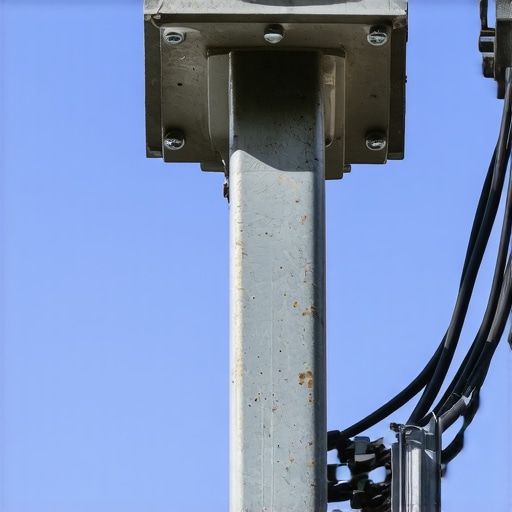
The Unseen Sentinel: Why Your Weatherhead Is a Literal Lightning Rod for Trouble
Most homeowners look at the pipe sticking out of their roof or the service cable hugging the side of their house and see a static piece of hardware. I see a high-stakes battleground where physics, weather, and age are conspiring to flood your electrical panel. As a licensed master electrician, I’ve spent decades diagnosing why panels fail, and more often than not, the culprit isn’t a breaker—it’s the service entrance weatherhead. If that weatherhead loses its integrity, it stops being a protector and starts being a funnel. I’ve seen water travel through the inside of a service cable like a straw, dripping directly onto live bus bars inside the home. It’s a slow-motion disaster that usually ends with a 200 amp panel install because the original equipment literally rotted from the inside out.
My journeyman used to smack my hand if I even thought about stripping a wire with a pocket knife. ‘You nick the copper, you create a hot spot,’ he’d scream over the sound of a generator. ‘And if you don’t dress those drip loops right at the weatherhead, you might as well just leave the garden hose running into the meter socket.’ He wasn’t just being a hard-nose; he understood that electricity demands precision. If the weatherhead isn’t seated, sealed, and oriented perfectly, the entire system is compromised. This is why electrical safety audits are non-negotiable for older homes.
The Forensic Anatomy of a Weatherhead Failure
To understand weatherhead integrity, we have to look at the physics of the Service Entrance (SE) cable and the mast. The weatherhead is designed to provide a 180-degree turn for the conductors, ensuring that rain cannot enter the pipe or the cable jacket. However, time is the enemy of all insulation. In older homes built between 1920 and 1960, we often find knob and tube removal projects that lead us back to the service entrance where the original cloth-jacketed SE cable has turned into a brittle, cracked mess. This is where Component Zooming becomes vital. Let’s look at the insulation chemistry.
The outer jacket of an older SE cable is often a bitumen-impregnated braid. Over decades of UV exposure, the oils in that bitumen bake out, leaving a dry, porous skeleton. When it rains, the braid absorbs moisture via capillary action. This isn’t just about a few drops of water; it’s about the ‘wicking effect’ where moisture travels between the strands of the aluminum or copper conductor. If the weatherhead’s plastic or porcelain ‘comb’ (the insulator block) is cracked, water follows the gravity-fed path of the wires straight down into your home. This is why a licensed master electrician won’t just look at the head from the ground; we get on a ladder and check for ‘checking’—the tiny micro-fractures in the insulation.
“Service-entrance conductors shall be equipped with a service head at the point of connection to service-drop or overhead service conductors.” – National Electrical Code (NEC) Section 230.54
The Physics of the Drip Loop: The Last Line of Defense
The most common failure point I see during a temporary power services setup or a permanent install is the lack of a proper drip loop. The drip loop is the slack in the wires between the utility’s triplex and your weatherhead. The lowest point of that loop must be below the point where the wires enter the weatherhead. Why? Because water is lazy. It follows the path of least resistance. If the loop is shallow or non-existent, water will run down the utility wire and directly into your mast. I once performed an inspection where the utility had pulled the wires so tight that the drip loop was inverted. Every rainstorm for five years had been shunting water into the meter base. When I pulled the meter, the bottom of the can was filled with a sludge we call ‘monkey shit’—a mix of duct seal, oxidized aluminum, and rust. It was a miracle the house hadn’t burned down.
Identifying Structural Fatigue in the Service Mast
If you have a through-roof mast, the integrity of the weatherhead is also tied to the structural stability of the pipe itself. We look for ‘mast lean.’ When the utility line (triplex) puts too much tension on the mast—perhaps from a fallen branch or years of wind load—it can pull the mast away from the house or bend the weatherhead. This creates a gap in the roof flashing. Now you don’t just have an electrical problem; you have a roofing disaster. During holiday light installation, homeowners often lean ladders against these masts or, heaven forbid, zip-tie decorations to them. Don’t. The mast is for your service, not your reindeer. A bent mast can crack the weatherhead’s casting, which is often made of cheap pot metal in older installations.
The Corrosion Cycle: Salt, Aluminum, and Heat
In mid-century homes, aluminum SE cable was the standard. Aluminum is a great conductor but a terrible neighbor. It has a high coefficient of thermal expansion, meaning it grows and shrinks significantly as it heats up under load. This ‘cold creep’ can loosen the lugs where the cable enters the weatherhead or the meter socket. Once a connection is loose, resistance increases. Resistance generates heat. Heat causes more oxidation. Before you know it, you have a glowing connection. I’ve used my thermal camera during electrical safety audits to find weatherheads that were radiating 150 degrees Fahrenheit on a cool day. That’s not just a leak; that’s a fire waiting for a breeze.
“Aluminum wire connections can overheat and cause a fire without tripping the circuit breaker.” – CPSC Safety Alert 516
When we find this, the solution isn’t to just tighten a screw. Once aluminum has oxidized, it forms a layer of aluminum oxide—an insulator. You have to take it apart, wire-brush it to bright metal, and apply an antioxidant joint compound (the ‘goop’) to prevent future failure. If the damage is too far gone, you’re looking at a full 200 amp panel install to bring the system up to modern safety standards, including proper grounding and bonding that old systems simply lack.
The Checklist: How to Spot a Failing Weatherhead
If you’re worried about your system, grab a pair of binoculars. You don’t need a tick tracer or a Wiggy (solenoid tester) to see the most obvious signs of trouble. Look for the following: 1. Is the weatherhead level? If it’s tilted up, it’s a funnel. 2. Are the individual wires coming out of the head frayed or showing bare metal? 3. Is there a clear ‘U’ shape in the wires (the drip loop) before they enter the head? 4. Is the mast pulling away from the siding or the roof? 5. Do you see streaks of rust or white oxidation coming from the bottom of your meter socket? If the answer to any of these is ‘yes,’ you need a professional. We offer free electrical estimates to help homeowners navigate these high-voltage hazards before they become emergencies.
We also see issues when people try to DIY their own tiny home wiring or access control wiring. They often try to tap into the service entrance before the meter, which is not only illegal but incredibly dangerous. The weatherhead and the conductors leading to the meter are ‘unfused.’ That means there is no circuit breaker between you and the power plant. If you short those wires out, they won’t trip a breaker; they will just keep melting until the wire physically disintegrates or the transformer on the pole explodes. This is the ‘widow maker’ territory of our trade.
Final Verdict: Respect the Entrance
The service entrance is the most vulnerable part of your home’s electrical system because it is constantly beaten by the elements. From driveway sensor lights to the most complex smart home systems, everything depends on the clean, dry delivery of power through that weatherhead. If you haven’t had your service inspected in the last decade, you are gambling with your home’s safety. Electricity is a faithful servant but a cruel master. Treat your weatherhead with the respect it deserves, and keep the water out of your copper. It’s the only way to truly sleep at night knowing your lugs are torqued and your loops are dripping. “, “image”: {“imagePrompt”: “A close-up forensic photograph of an old service entrance weatherhead on a residential home. The weatherhead is a grey metal gooseneck style with visible cracks in the porcelain insulator block. The service entrance cables (SE cable) show signs of heavy UV degradation and fraying of the outer cloth jacket. A proper drip loop is missing, and there are visible rust streaks running down the service mast. High detail, professional electrical inspection style.”, “imageTitle”: “Corroded Service Entrance Weatherhead with Frayed Insulation”, “imageAlt”: “A close-up of a damaged electrical weatherhead showing cracked insulators and frayed service wires needing repair.”}, “categoryId”: 12, “postTime”: “2023-10-27T10:00:00Z”}