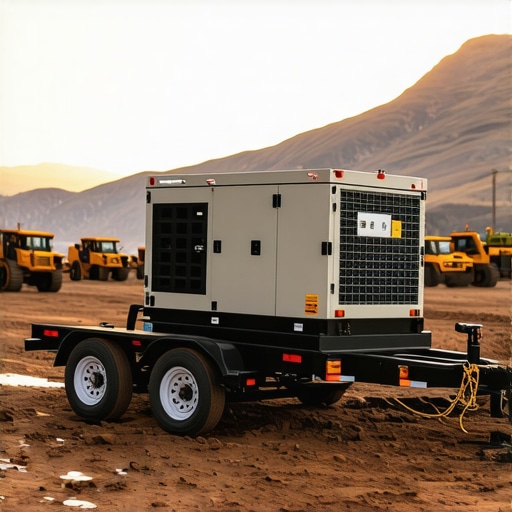
The Silence of the Dead Site: Why Your Remote Project Is Stalled
The silence of a remote job site is only poetic until you realize your cordless tools are bricks and your crew is standing around burning daylight. You’re 500 feet from the nearest utility transformer, standing in a slab of mud, and you need juice. Most guys think a temporary power service is just sticking a 4×4 in the ground and slapping a box on it. That’s how you end up with a pile of charred components and a visit from the fire marshal. I’ve seen it a thousand times: a “handyman” tries to skip the electrical safety audits, nicks a conductor during the rough-in, and suddenly the job site is a crime scene. When you need temporary power services fast, you don’t need a miracle; you need the physics of power distribution and a healthy respect for the National Electrical Code (NEC).
My old journeyman, a guy who could smell a loose neutral from the curb, used to bark at me about stripping insulation with a utility knife. “You score that copper, you’re making a fuse, not a circuit,” he’d scream. He taught me that electricity is lazy—it wants to find the easiest way to ground, and if that’s through your heart or a pile of dry sawdust, it doesn’t care. He was right. Every electrician worth their salt knows that a remote site is the most hostile environment for gear. You’ve got voltage drop issues, moisture ingress, and the constant vibration of heavy machinery trying to shake your lugs loose.
The Anatomy of a “Saw Pole”: Temporary Service Infrastructure
When we talk about temporary power services, we’re usually talking about a temporary service pole, or a “saw pole.” This isn’t just a piece of wood. It is a calculated piece of infrastructure that must withstand wind loads and provide a safe path for current. You start with a pressure-treated pole, usually a 4×4 or 6×6, buried at least 4 feet deep. You aren’t just dropping it in a hole; you’re tamping that dirt until it’s like concrete. On this pole, you mount your meter socket and a NEMA 3R (weatherproof) enclosure. This enclosure houses your main breaker and your camper electrical panel style distribution if you’re running multiple circuits.
“All 125-volt, single-phase, 15-, 20-, and 30-ampere receptacle outlets that are a part of a 15-, 20-, or 30-ampere branch circuit shall have ground-fault circuit-interrupter protection for personnel.” – National Electrical Code (NEC) 590.6(A)
The NEC 590.6 requirement for GFCI is non-negotiable. Why? Because on a job site, you’re likely working in wet conditions. If a tool has a ground fault and you’re standing in mud, you become the path. We use “Wiggys” (solenoid voltage testers) to verify the circuit because digital meters can give you ghost readings that’ll get you killed. When we’re setting up for storm damage electrical repair or a remote build, every connection is a potential failure point. We use “Monkey Shit” (duct seal) to plug the service entrance head. If you don’t, water will wick down the inside of the service conductors right into your lugs. Over time, that moisture causes oxidation, increasing resistance, which leads to heat, which leads to fire.
Component Zooming: The Physics of Voltage Drop
Let’s get into the weeds on why your saws are bogging down. If your remote site is far from the utility tap, you’re fighting Voltage Drop. Think of voltage like water pressure in a hose. If the hose is too long and too thin, the pressure at the nozzle is garbage. In electrical terms, if your feeder run is 200 feet and you’re using #12 Romex, you’re losing significant voltage before it even hits the saw. This causes the motor to draw more current to compensate, which generates heat. Heat kills motors and melts insulation.
To fix this, we use the 3% rule: you want no more than a 3% drop on your feeders. If you’re running a remote job site, you might need to upsize your wire to #4 or even #2 aluminum just to get a stable 120V at the outlet. When using aluminum, you have to account for Cold Creep. Aluminum expands and contracts at a different rate than copper. If you don’t use the right AlumiConn connectors or specialized lugs torqued to spec, the wire will literally wiggle itself loose over a few thermal cycles. This creates a high-resistance bridge. I’ve used infrared thermography scans on temporary panels and seen lugs glowing at 300 degrees Fahrenheit while the crew was just running a single compressor. That’s a fire damage wiring restoration job waiting to happen before the house is even framed.
The Grounding Electrode System: More Than a Stake in the Mud
You can’t just tap a piece of rebar into the ground and call it a day. A proper temporary service requires a legitimate Grounding Electrode System. Usually, this means an 8-foot copper-clad ground rod driven fully into the earth. But here’s the catch: the resistance to ground must be 25 ohms or less. If it’s not, the code requires a second rod. In rocky or dry remote soil, that ground rod is essentially useless unless you tie multiple rods together. Without a solid ground, your whole house surge protection (which you should absolutely have even on a temp pole to protect expensive smart tools) has nowhere to dump the excess energy from a nearby lightning strike or utility surge.
“Safety-related work practices shall be used to safeguard employees from injury while they are exposed to electrical hazards from electrical conductors or circuit parts that are or can become energized.” – NFPA 70E 110.1
When performing home rewiring services or setting up smart home wiring infrastructure, the temporary phase is where the most accidents happen. I’ve walked onto sites where the “electrician” used a “suicide cord” (a double-male plug) to back-feed a panel from a generator. It’s a Widow Maker. One wrong move and you’re sending 240V back into the utility lines, potentially killing a lineman three miles away who thinks the grid is dead. If you’re using a generator for temporary power, you need a transfer switch or a properly interlocked breaker. No exceptions.
Managing the Load: Why Your Breakers Keep Tripping
Blueprint C is all about the load calculation. You’ve got a crew of four. One’s on a table saw (15 amps), one’s on a miter saw (12 amps), one’s charging a bank of 18V batteries (5 amps), and the guy in the trailer has a space heater running (12.5 amps). Total draw: 44.5 amps. If you’ve only got a single 20-amp circuit on your temp pole, you’re going to be walking back to reset that breaker every ten minutes. Worse, frequent tripping weakens the breaker’s internal spring mechanism. Eventually, it’ll “weld” shut and refuse to trip at all. That’s when the wires start glowing.
For a remote job site, we recommend a 100-amp temporary service. This gives you enough “headroom” to run the tools and the site trailer without constantly chasing tick tracer ghosts. We also plan for the trim-out phase early. If you know the final build will include smart home wiring, we can sometimes leverage the permanent service mast early in the process, provided the utility company and the local inspector play ball. This saves money on the home rewiring services costs later and ensures the site stays energized through the entire rough-in.
The Professional Approach: Safety Audits and Restoration
If you’re dealing with a site that requires fire damage wiring restoration or storm damage electrical repair, the utility company won’t even think about turning the power back on until an electrician provides a signed-off electrical safety audit. This involves checking the insulation resistance of every conductor (Megger testing) and ensuring no “bootleg grounds” were installed during a frantic repair. Remote sites are prone to rodent damage, too. Squirrels love the taste of wire insulation. I’ve seen a brand-new temp pole short out because a squirrel decided the main lugs were a great place to store nuts. We use infrared thermography scans as a final check before we sign off, ensuring that every lug is seated and every connection is cold. We don’t guess; we measure. Because at the end of the day, you want to go home, and you want the job site to still be there when you come back in the morning.