The Smell of a Potential Tragedy
You’re standing in your backyard or a newly finished Accessory Dwelling Unit (ADU), smelling that fresh cedar. It’s supposed to be relaxing. But if you wired that 6kW or 9kW heater yourself after watching a ten-minute video, that smell might soon be replaced by the sharp, metallic tang of ozone and the acrid stench of melting PVC. I’ve spent 35 years in this trade, and I can tell you that a sauna heater is not a ‘plug-and-play’ appliance; it is a high-amperage industrial heating element that happens to be sitting in a wooden box where you intend to sit naked and sweaty. The margin for error is zero.
The Flipper’s Hidden Hazard
I walked into a ‘fully renovated’ basement last year where the owner had just finished his dream spa. He was complaining about a ‘humming’ sound behind the wall. I pulled out my tick tracer and the thing started screaming before I even touched the cedar. I used a drone thermography scan—a tool usually reserved for high-end industrial motor controls or data center power setup—and the wall was glowing at 180 degrees Fahrenheit. The homeowner had buried a junction box behind the tongue-and-groove siding. He used standard Romex and wire nuts that weren’t rated for the heat, then covered it up. He’d created a hidden kiln. If he’d left it on for another hour, the whole structure would have been a chimney. This is why ADU electrical services require a professional eye; you can’t hide your mistakes behind wood and hope for the best.
The Physics of Continuous Load and Cold Creep
Why is a sauna heater different from a microwave? It’s a continuous load. In the electrical world, that means the device runs at full tilt for three hours or more. This is where the physics of electricity gets violent. When current flows, it generates heat. This heat causes the copper wire and the aluminum lugs in your panel to expand. When the heater turns off, they contract. This cycle, known as thermal cycling, leads to Cold Creep. In mid-century homes with older panels, this expansion can loosen a screw just a fraction of a millimeter. That tiny gap creates resistance. Resistance creates more heat. Eventually, you get an arc—a localized miniature lightning bolt—that reaches temperatures of 35,000°F. Your circuit breaker replacement won’t help you if the bus bar is already charred beyond recognition.
“Aluminum wire connections can overheat and cause a fire without tripping the circuit breaker.” – CPSC Safety Alert 516
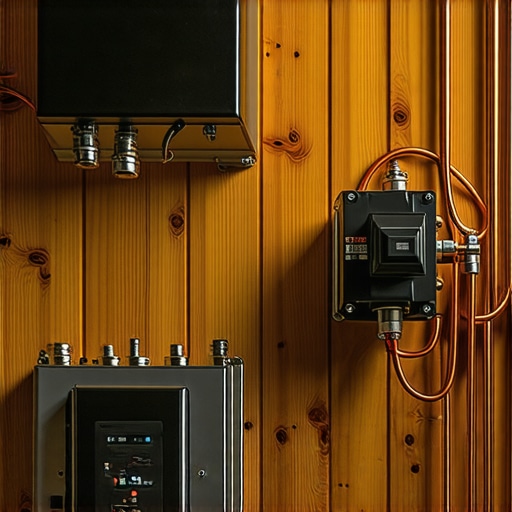
If you’re working with older infrastructure, you’re likely dealing with a 100-amp service. Adding a 40-amp sauna load to that is like trying to shove a fire hose through a soda straw. You need a load calculation, not a guess. Most DIYers don’t realize that the National Electrical Code (NEC) requires you to size the circuit at 125% of the heater’s nameplate rating. A 30-amp heater needs a 40-amp circuit. If you use a 30-amp breaker, you’re dancing on the edge of a nuisance trip—or worse, a slow-burn fire. [IMAGE_PLACEHOLDER]
The Terminal Torque Obsession
When I’m doing a rough-in for a high-load system, I don’t just tighten screws until they feel ‘snug.’ I use a calibrated torque screwdriver. If a terminal calls for 20 inch-pounds and you give it 15, you’ve failed. If you give it 30, you’ve crushed the wire strands, creating a neck-down point that acts like a fuse. This is the level of precision required for troubleshooting and preventing long-term failure. I’ve seen camper electrical panels and temporary power services melt down because a ‘handyman’ used dikes to strip the wire and nicked the copper. That tiny nick is a hot spot waiting to happen. In a sauna, where humidity is high, that hot spot oxidizes ten times faster. Once that oxidation layer forms, the resistance skyrockets, and the heater’s home run wire becomes a heating element itself.
The Industrial Reality of Home Wellness
Sauna heaters are essentially industrial motor controls without the motor. They use heavy-duty contactors and high-temperature silicone wiring. This is not the place for standard residential techniques. I often recommend remote electrical diagnostics for my clients who want to monitor their high-draw appliances. It’s the same logic we use in data center power setup: monitoring the health of the connection before it becomes a failure. If you haven’t had lockout tagout training, you shouldn’t be inside a panel with live 240V lugs. One slip with a Wiggy or a screwdriver and you’re the path of least resistance to ground.
“All electrical equipment shall be installed and used in accordance with the instructions included in the listing or labeling.” – NEC Article 110.3(B)
Why Professional Installation is Non-Negotiable
When you hire a master, you’re paying for the 35 years of seeing things go wrong. You’re paying for the knowledge that a circuit breaker replacement isn’t just about snapping a new plastic box onto a rail; it’s about checking the tension of the bus bar clips and ensuring the wire is torqued to spec. You’re paying for the troubleshooting skills that identify a loose neutral before it fries your expensive sauna control board. Electricity isn’t a hobby, and it isn’t a place to save a few hundred bucks. You want to sweat in your sauna because of the steam, not because you’re wondering if the wall is about to ignite. Get it done right, get it torqued, and sleep at night knowing your sanctuary isn’t a deathtrap.