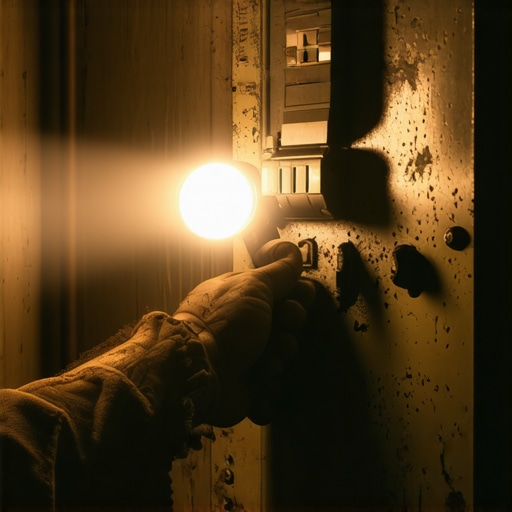
The History of the Hidden Fire: Why Your Mid-Century Dream is a Liability
Your home’s electrical system is not like wine; it does not improve with age. If you’re living in a house built between 1950 and 1990, you aren’t just sitting on a piece of history—you might be sitting on a structural fire waiting for an excuse to happen. I’ve spent decades pulling back dead fronts and finding what I call ‘The Flipper Special.’ I recently walked into a high-end kitchen renovation—granite counters, sub-zero fridge, the works. The homeowner was complaining about a faint fishy smell near the pantry. I pulled out my tick tracer, and it stayed silent, but my nose didn’t lie. I moved a decorative spice rack and found a Zinsco panel that a previous ‘pro’ had buried behind drywall and a veneer. The bus bar was so badly pitted from arcing that the breaker wasn’t even snapped on anymore; it was literally welded to the metal by sheer heat. The homeowners had just completed a home automation setup, unaware that their smart lights were being powered by a dumb, dangerous relic.
The Anatomy of a Failure: Component Zooming into the FPE Stab-Lok
The most notorious offender in the forensic electrical world is the Federal Pacific Electric (FPE) Stab-Lok panel. To understand why these are lethal, you have to look at the physics of the ‘E’ and ‘F’ style breakers. In a modern, safe breaker, the bimetallic strip is designed to flex and trip the mechanism when current exceeds the rating. In an FPE panel, the Stab-Lok design refers to how the breaker connects to the bus bar. Over time, these connections lose their ‘spring’ tension. This creates an air gap. In the world of high-voltage physics, an air gap is a playground for electrons. When they jump that gap, they create an arc. This arc reaches temperatures exceeding 3,000 degrees Fahrenheit instantly. The heat causes ‘cold creep’—the metal expands, then contracts, then expands again, loosening the connection further and creating a layer of non-conductive oxidation. Eventually, the breaker doesn’t trip even during a dead short. You could have a sauna heater installation drawing massive current through a 15-amp circuit, and an FPE breaker will just sit there and glow while the Romex insulation in your attic turns into charcoal.
“Aluminum wire connections can overheat and cause a fire without tripping the circuit breaker.” – CPSC Safety Alert 516
Identifying the Time Bomb: Visual Cues and Brand Shaming
Identifying these panels isn’t just about looking for a sticker; it’s about forensic observation. If you open your panel door and see a logo with a red-tipped breaker handle, you’re likely looking at an FPE Stab-Lok. They are unmistakable. Then there’s Zinsco. These panels, often branded as Sylvania or GTE-Sylvania in later years, used a bus bar made of an aluminum alloy that was prone to extreme corrosion. If you see breakers with blue, red, and green handles that look like they belong on a 1970s toy, you have a problem. When I do a power quality analysis for a client, the first thing I check is the physical integrity of these bus bars. If I see ‘magical’ white powder or black soot around the breaker base, it’s game over. I’ve seen kitchen range hood wiring melt back to the home run because a Zinsco breaker refused to let go during a simple ground fault. These aren’t just old; they are defective by design. They don’t meet OSHA compliance wiring standards for any modern workplace, and they shouldn’t be in your home either.
The Insurance Trap and the Professional Fix
Many homeowners ignore their panels until they try to sell the house or file an insurance claim electrical work request. That’s when the ‘Trap’ snaps shut. Most major carriers now perform ‘4-Point Inspections’ on homes over 30 years old. If they see an FPE or Zinsco panel, they will often give you 30 days to replace it or face immediate policy cancellation. This isn’t the time to call a handyman with a pair of rusty dikes. A proper panel change-out requires a master’s touch. We’re talking about pulling a new service mast, driving new grounding rods, and ensuring every circuit is torqued to the specific inch-pounds required by the manufacturer—not just ‘tight enough.’ If you’re adding heavy loads like boat lift wiring or a portable generator hookup, your old 100-amp service is likely already screaming for mercy. A ‘heavy-up’ to 200 amps with a modern Square D or Eaton panel isn’t an ‘upsell’; it’s an insurance policy for your life.
“The National Electrical Code requires that all electrical equipment be installed in a neat and workmanlike manner, free from recognized hazards that are likely to cause death or serious physical harm.” – NEC Article 110.12
The Cost of Neglect vs. The Value of Peace
I often hear, ‘But it’s worked fine for forty years!’ My response is always the same: ‘So does a grenade until you pull the pin.’ In my years providing commercial electrical services and residential inspections, I’ve seen the aftermath of that mindset. I’ve seen where someone tried to save $2,000 on a panel swap and ended up losing a $500,000 home because they thought the ‘humming’ sound in the wall was just the house settling. If you have an annual maintenance contract, your electrician should be using an infrared camera to check for hot spots. We look for the heat signatures that your eyes can’t see. Don’t wait for the smell of ozone or the sight of smoke. Check your panel brand today. If it says Federal Pacific, Zinsco, or Sylvania, stop what you’re doing and call a pro who knows how to handle a rough-in and trim-out without cutting corners. Sleep at night knowing your breakers will actually do the one job they were designed for: failing safely so you don’t have to.