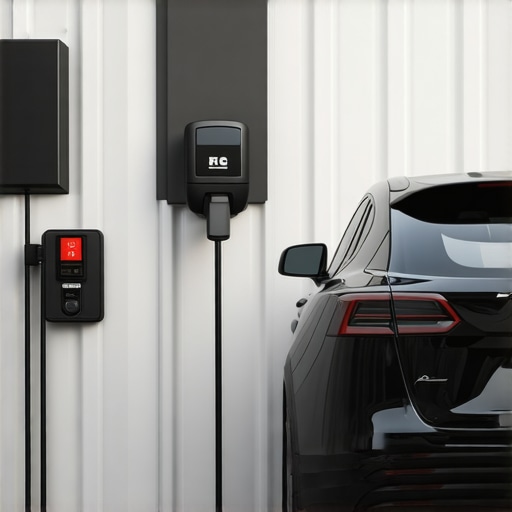
The Sound of a Failing System
You spent sixty thousand dollars on a sleek new electric vehicle, another six hundred on a Level 2 home charger, and you thought you were done. Then comes the ‘thunk.’ That dull, metallic sound of a 50-amp breaker giving up the ghost at 2:00 AM. You reset it, but the plastic casing feels soft, and there is a faint, acrid scent of ozone hanging in the garage air—the smell of money and magnesium burning. If your breaker is tripping, it isn’t a nuisance; it’s a forensic warning that your home’s electrical infrastructure is screaming for help under a load it was never designed to carry.
The Forensic Breakdown: Why It Happens
I walked into a garage last week where the homeowner had just finished a DIY install. He’d used a tick tracer to find a ‘hot’ wire and assumed he could just pig-tail his new charger into a junction box feeding the master suite’s air conditioner. I found the Romex jacket turned into a brittle, charred husk. He’d bypassed the most basic rule of electrical physics: the continuous load. Unlike a toaster that runs for two minutes, an EV charger is a continuous load, meaning it pulls maximum current for hours on end. According to the National Electrical Code, you have to size these circuits at 125% of the load. If your charger pulls 40 amps, you need a 50-amp circuit. If you’re running a 50-amp charger on a 50-amp breaker, that bi-metal strip inside the breaker is going to heat up, bend, and trip every single time. It’s not a defect; it’s the breaker doing its job before your house turns into a Roman candle.
“Fixed electric space heating equipment and motors shall be considered a continuous load… the branch-circuit conductors and overcurrent devices shall have an ampacity not less than 125 percent of the maximum load to be served.” – NEC Article 210.19(A)(1)
The 100-Amp Bottleneck
Most mid-century homes were built with a 100 amp service upgrade being the furthest thing from the builder’s mind. Back then, the biggest draws were a refrigerator and maybe a black-and-white TV. Today, you’re trying to run an electric range, a heat pump, a clothes dryer, and now a 40-amp car charger on a 100-amp main lug. You are redlining your electrical system. When the car starts charging at the same time the water heater kicks over, the bus bar in your panel starts to vibrate. This is where we see ‘Cold Creep’ in older aluminum-fed panels. The heat causes the metal to expand, pushing against the lug screws. When it cools, it doesn’t quite snap back. Over hundreds of charging cycles, that connection becomes loose. A loose connection creates resistance. Resistance creates more heat. Eventually, you get carbon tracking and a ‘widow maker’ scenario where the main breaker fails to trip even as the panel melts.
The Invisible Infrastructure: Grounding and Bonding
It’s not just about the wires in the wall. I often find that new EV owners overlook the grounding system. If your home has an older swimming pool bonding setup that hasn’t been inspected since the 70s, or if your ground rod is nothing but a rusted nub in the dirt, the high-frequency noise from the charger’s inverter can cause ghost trips on other GFCI outlet installation points throughout the house. Electricity wants to get back to the source, and if you don’t provide a clean path, it’ll find one through your cable lines or your plumbing. This is why a virtual consultation wiring review is often the first step I recommend; we can spot the obvious ‘handyman specials’ before I even pull my dikes out of the truck. We look for signs of ‘monkey shit’—that gray duct seal—used to hide water intrusion in the meter can, which is a death sentence for your new charger.
The Path to Safety
The fix isn’t just swapping a 50-amp breaker for a 60-amp and hoping for the best. That’s how you burn down a garage. You need a proper electrical inspections professional to perform a load calculation. If you’re over 80% capacity, you need a heavy-up. This might involve a new transformer installation if you’re in a rural area, or a total panel swap. For those worried about the cost, financing electrical upgrades is common practice now because the alternative—a house fire—is much more expensive. We also offer military discount wiring for our veterans because they understand better than anyone that you don’t compromise on the integrity of your equipment. Whether you’re setting up a data center power setup in your basement or just want to juice up your Tesla, the physics of copper and heat don’t care about your convenience.
“A circuit breaker that has tripped repeatedly should be replaced by a qualified electrician, as the internal mechanism can become damaged and fail to provide protection in the future.” – CPSC Safety Publication 516
Final Inspection
Don’t treat your home’s wiring like a hobby. When you’re dealing with the kind of amperage required for modern EVs or even an electric gate opener, every nick in a wire and every loose screw in a terminal block is a potential fire. Get the rough-in done right, ensure your trim-out is torqued to manufacturer specs with a calibrated torque wrench—not just ‘hand tight’—and sleep better knowing your home home run isn’t glowing cherry red in the attic. Electricity is a loyal servant but a vengeful master. Respect the load, or the load will eventually respect no one. “