The Invisible Fire: Why Your Walls Are Lyring to You
You see a charming mid-century ranch with original hardwood floors and a fresh coat of paint. I see a ticking clock. I’ve spent over three decades in the trade, carrying a Wiggy that’s seen more basements than a sump pump, and if there’s one thing I’ve learned, it’s that electricity is lazy and violent. It wants to find the shortest path to the ground, and it doesn’t care if your family is in the way. When I conduct electrical safety audits, I’m not just looking for loose screws; I’m performing a forensic autopsy on a living system that’s trying to eat itself. I remember my old journeyman, Gus. He was a man who could smell a burnt neutral from the driveway. One afternoon on a rough-in, I was stripping back some 12/2 Romex with a pocket knife because I’d lost my dikes. He didn’t just yell; he slapped the knife out of my hand. ‘You nick that copper, kid, and you’ve just built a bottleneck for electrons. That heat’s got nowhere to go but out. You want to be the reason this family loses everything?’ He wasn’t being dramatic. He was being an electrician.
“Aluminum wire connections can overheat and cause a fire without tripping the circuit breaker.” – CPSC Safety Alert 516
The core of a real inspection starts at the service entrance. If you’re still rocking a 60 amp panel upgrade is likely your first priority, though calling it an ‘upgrade’ is a polite way of saying your current system is a hazard. A 60-amp service was designed for a world with three lightbulbs and a toaster. Today, you’ve got 1,500-watt hair dryers, EV chargers, and gaming rigs. We start with troubleshooting the service mast and the meter socket. I’m looking for ‘Cold Creep’ in the lugs—especially in homes built between 1965 and 1978. Aluminum conductors have a different coefficient of thermal expansion than the steel or brass terminals they’re screwed into. Every time you turn on your oven, that wire expands, gets squeezed, and eventually deforms. When it cools, it leaves a microscopic gap. That gap introduces resistance. Resistance creates heat. Heat creates carbon. Carbon is a conductor, but a poor one, leading to a runaway thermal event that can melt a bus bar before a breaker even thinks about tripping.
The Anatomy of the Panel: More Than Just Flips and Switches
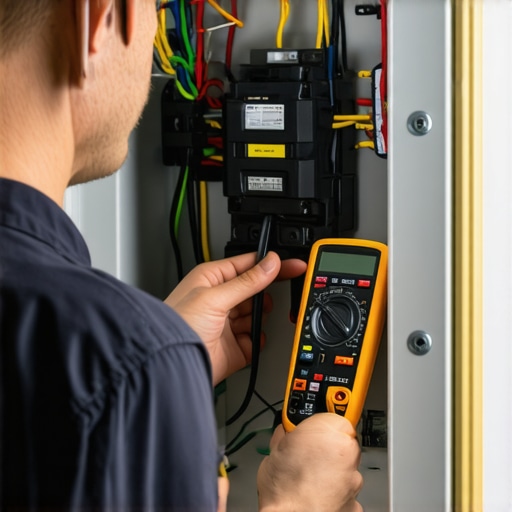
During a virtual consultation wiring review or an on-site visit, I head straight for the dead front. If I see a Federal Pacific Stab-Lok or a Zinsco panel, the inspection basically ends there with a recommendation for immediate replacement. These aren’t just ‘old’; they are functionally defective. The breakers are known to jam on the bus bar. In a forensic scenario, we call them ‘welded shut.’ You could have a dead short in a bedroom, and that breaker will sit there happily delivering current until the wire insulation turns into a toxic gas. Part of our free electrical estimates involves measuring the torque on every single lug. We don’t just ‘snug’ them. We use torque screwdrivers because over-tightening is just as dangerous as under-tightening; it crushes the wire strands and creates a hot spot. We also check for ‘bootleg grounds’—that’s a favorite trick of the ‘handyman’ who wants to fool a three-prong outlet tester by jumping the neutral to the ground screw. It looks safe on a $5 tester, but it energizes the entire metallic casing of your appliances. Touch the fridge and the stove at the same time, and you become the home run path to ground.
“The grounded conductor shall be connected to the equipment grounding conductor only at the service disconnecting means.” – NEC 250.24(A)(5)
We move to the wet zones next. GFCI outlet installation is the bare minimum. I’m looking for proper ‘Line’ and ‘Load’ configuration. If a DIYer swapped an outlet and missed the wiring order, that ‘Test’ button might pop, but the outlets downstream are still live and ready to kill. We also look at the exterior. For high-reach areas or complex rooflines, we utilize drone light inspections to check the integrity of sign lighting installation and weather heads without risking a ladder fall on a shaky service drop. If you’re doing a major renovation, we often set up temporary power services to ensure the construction crew isn’t overloading your aging circuits and causing a fire before the drywall even goes up. We also navigate the bureaucracy for you, identifying rebate assistance programs that can offset the cost of modernizing your system to meet 2020 NEC standards. When I’m done, I want to know that every connection is torqued, every arc-fault breaker is sensing signatures, and every ground rod is actually hitting the water table, not just shoved six inches into the mulch. I don’t want you to have a ‘smart’ home; I want you to have a safe one. Because at 2:00 AM, the only thing that should be humming in your house is the refrigerator, not the junction box behind your headboard.