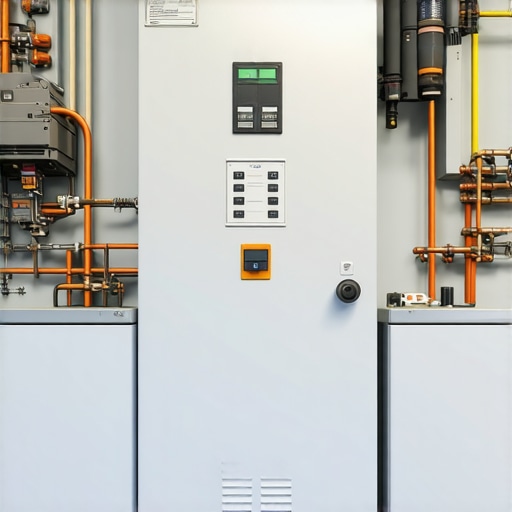
The Invisible Bomb in Your Electrical Room
You can’t see it, you can’t smell it until it’s too late, and most facility managers treat it like a ‘check-the-box’ insurance requirement. I’m talking about an Arc Flash—a release of energy so violent it turns solid copper into superheated plasma in milliseconds. I’ve spent thirty-five years looking at gear that should have been decommissioned when Nixon was in office, and the level of complacency I see in commercial facilities today is terrifying. When a bolted fault occurs, the air around the conductors becomes a conductor itself. The temperature can hit 35,000 degrees Fahrenheit—four times hotter than the surface of the sun. If your facility hasn’t had a proper engineering analysis in the last five years, you aren’t running a business; you’re sitting on a fuse.
The Old Timer’s Lesson: The Nick That Costs a Life
My journeyman used to smack my hand if I stripped a wire with a knife. ‘You nick the copper, you create a hot spot,’ he’d scream. He was right. That tiny disruption in the cross-sectional area of the conductor increases resistance. In a high-voltage commercial setting, those ‘hot spots’ are the precursors to disaster. He taught me that electricity isn’t your friend; it’s a caged animal looking for the slightest gap in the bars to escape. An Arc Flash study isn’t just about labels; it’s about checking the integrity of those bars.
“The arc-flash risk assessment shall be performed to determine the arc-flash boundary and the personal protective equipment that systems shall require.” – NFPA 70E-2021, Standard for Electrical Safety in the Workplace
1. The Hum of Impending Doom: Physical Deterioration and Salt-Air Corrosion
If you’re operating near a coastline, the enemy is invisible and relentless. Salt-laden air is a master of galvanic reaction. It creeps into your gear, bridging the gaps between phases. I’ve pulled covers off switchgear where the bus bars looked like they’d been sitting at the bottom of the Atlantic. This corrosion increases impedance and slows down the ‘clearing time’ of your breakers. In an Arc Flash calculation, timing is everything. If a breaker takes 0.1 seconds longer to trip because the pivot point is gummed up with salt-air oxidation, the incident energy released can jump from ‘manageable’ to ‘lethal.’ We utilize drone thermography scans to identify these thermal anomalies before they become catastrophic failures. When the heat signature on a lug shows a 30-degree delta compared to its neighbors, that’s not just a loose connection; that’s a potential arc fault waiting for a trigger.
2. Ghost Labels and the Mystery of the Home Run
I’ve walked into ‘modern’ facilities where the structured wiring panels look like a bowl of spaghetti. If your electrical single-line diagrams don’t match the reality of your floor, your last Arc Flash study is worthless. Every time a tenant adds a ceiling fan or a data center expands their rack space, the fault current availability changes. I’ve seen ‘handymen’ run a new home run through a trenching electrical conduit without updating the schedule. When an engineer calculates the arc flash boundary, they rely on the exact length and gauge of that wire. If those variables change, the PPE labels on your equipment are lying to your electricians. That is a ‘Widow Maker’ scenario. If you’ve had significant renovations or equipment shifts, your facility is overdue.
3. The ‘Tick Tracer’ Lies: Underground Decay and Grounding Failures
A tick tracer might tell you a line is dead, but it won’t tell you if your equipotential grid has rotted away. In commercial facilities, the grounding system is the only thing standing between a minor fault and a massive explosion. I’ve seen underground wiring services where the conduit had collapsed, and the copper was sitting in a pool of brackish water. This creates a high-impedance ground fault. The breaker doesn’t see enough current to trip immediately, so the arc continues to burn, ionizing the air and expanding the plasma cloud. We now use augmented reality troubleshooting to overlay the hidden infrastructure of a building, allowing us to see where the grounding rods and grids are supposed to be versus where the trenching electrical conduit actually runs. If you can’t verify your grounding path, you can’t survive a fault.
“Aluminum wire connections can overheat and cause a fire without tripping the circuit breaker.” – CPSC Safety Alert 516
4. Sign Lighting Installation and the Peripheral Threat
People forget that an Arc Flash doesn’t just happen at the main switchgear. I’ve seen massive incidents triggered by a faulty sign lighting installation on the exterior of a building. When a ballasted sign shorts out, the surge can travel back through the system. If the selective coordination of your breakers is off—which happens over time as components age—the main breaker might trip before the branch circuit, or worse, neither trips in time. This is why drone light inspections are becoming a standard part of forensic electrical work. We can spot the ultraviolet signature of corona discharge on exterior high-voltage signs before it arcs over. If your exterior lighting is flickering or showing signs of tracking, your entire internal system is being stressed.
5. The Load Creep: From RV Hookup Installation to Heavy Machinery
Commercial facilities often suffer from ‘load creep.’ It starts small—maybe an RV hookup installation for the owner’s trailer out back, or a few more servers. Each addition increases the demand on the transformer. As the transformer works harder, the available fault current changes. If you haven’t recalculated your short-circuit current since the last time you added a major load, your protective devices might be ‘mis-coordinated.’ This means a small fault in a sub-panel could cause a catastrophic Arc Flash in the main distribution center. It’s about the physics of energy—you can’t just keep shoving more through the same pipes without checking if the valves still work.
Forensic Conclusion: Don’t Trust the ‘Monkey Shit’
I’ve seen guys try to seal up leaking conduits with monkey shit (duct seal) and call it a day. That doesn’t stop the physics of an arc. You need an engineering firm to come in, perform the calculations, and give you the real data. If your breakers haven’t been ‘exercised’ or tested in years, they are likely frozen. A breaker that doesn’t move is just a glorified piece of copper during a fault. Get the study done. Torque your lugs to spec. And for God’s sake, keep the covers on your gear. Sleep at night knowing your facility isn’t one loose neutral away from a headline in the morning paper. Electricity is the most dangerous tool we use—stop treating it like a utility and start treating it like the force of nature it is.