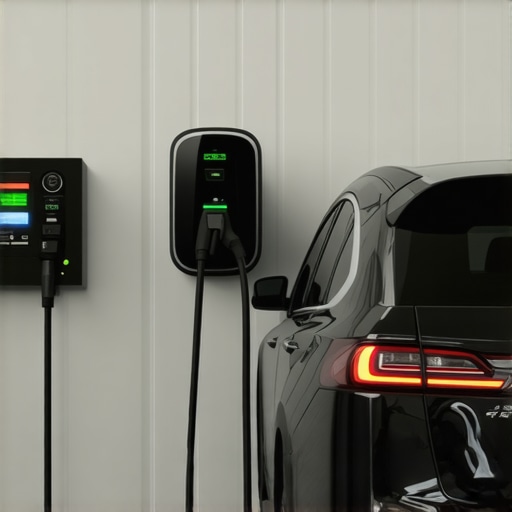
The Scent of a Melting Service Entrance
If you have ever smelled the acrid, metallic tang of ozone in your garage after plugging in your new Tesla, you are not smelling ‘new car scent.’ You are smelling the slow-motion suicide of your home’s electrical infrastructure. As a forensic inspector who has spent three decades digging through the charred remains of ‘renovated’ homes, I can tell you that electricity is the only force in your house that is actively trying to kill you while you sleep. Most homeowners treat their electrical panel like a toaster—it either works or it doesn’t. But when you introduce a level 2 EV charger into a home built before the turn of the millennium, you aren’t just adding an appliance; you are redlining an engine that was designed for a different era. You wouldn’t ask a 90-year-old marathon runner to carry a refrigerator uphill, yet people expect a 60-amp fuse box to handle an ADU, a hot tub, and a fast charger without breaking a sweat. This is where electrical panel upgrade financing becomes a literal lifesaver.
The Old Timer’s Lesson: The Nick That Kills
My journeyman used to smack my hand with a pair of dikes if I even thought about stripping a wire with a pocket knife. ‘You nick the copper, you create a hot spot,’ he’d scream until he was purple in the face. ‘That nick reduces the cross-sectional area of the conductor. You’ve just created a high-resistance bottleneck. Heat builds up. The insulation melts. The house burns. Now, do it again with the proper strippers.’ He was right. That lesson in 1985 stayed with me every time I see a cloth insulated wiring replacement job or a knob and tube removal project. Even a tiny physical imperfection in a wire can lead to a catastrophic failure under load. When you are pulling 40 continuous amps for an EV charger, that ‘tiny nick’ or a loose lug becomes a localized furnace. If you are still running on an ancient system, bundling the cost of a full rewire with your charger installation isn’t just about convenience; it’s about the physics of resistance.
“Aluminum wire connections can overheat and cause a fire without tripping the circuit breaker.” – CPSC Safety Alert 516
The Anatomy of an Electrical Overload
Why do we talk about fuse box to breaker conversion so urgently? It is not an upsell; it is a necessity of modern load demand. A fuse is a simple thermal device. It works, but it is often bypassed by homeowners who put a penny behind it or install a 30-amp fuse on a 14-gauge wire circuit. A modern breaker is a mechanical marvel designed to detect magnetic surges and thermal overloads, yet even they have a lifespan. If you live in a mid-century home, you might have a Federal Pacific or Zinsco panel. In the trade, we call these ‘widow makers’ because the breakers frequently jam on the bus bar. They won’t trip even when the wire is glowing cherry red. When we perform ADU electrical services or a speaker system setup, the first thing I do is put my Wiggy on the mains to see what the voltage drop looks like under load. If your lights flicker when the vacuum turns on, you are already at capacity. Adding a charger to that mess is like adding a turbocharger to a lawnmower engine.
The Infrastructure Reality Check
A level 2 EV charger requires a 240-volt circuit, usually pulling 32 to 48 amps. According to the National Electrical Code, an EV charger is considered a ‘continuous load,’ meaning it runs at full power for more than three hours. This requires us to size the circuit at 125% of the load. Most older homes have a total service of 100 amps. If you are charging your car, running the AC, and someone starts the dryer, you are pushing that main breaker to its absolute limit. Over time, this leads to Cold Creep and thermal expansion. The lugs in your panel expand when hot and contract when cold. This cycling eventually loosens the connection. A loose connection creates an arc. An arc creates fire. This is why surge protector installation and a doorbell camera install should be part of a larger safety strategy. We use monkey shit (duct seal) to keep moisture out of the service mast, but we can’t stop the internal degradation of a panel that has been over-taxed for twenty years.
“The total connected load shall not exceed the carrying capacity of the service-entrance conductors.” – NFPA 70: National Electrical Code
The Financing Equation: Why Bundle?
The cost of a parking lot lighting project or a massive home renovation is significant, but the ‘piecemeal’ approach to electrical work is the most expensive way to do it. When you hire an electrician for a rough-in, the mobilization costs, permit fees, and labor are fixed. If you pay for a level 2 EV charger installation today, and then realize six months later that your panel is buzzing and needs an electrical panel upgrade, you are paying double for permits and labor. Financing these together allows you to address the cloth insulated wiring replacement and the knob and tube removal in one go. You are essentially building a new ‘home run’ for your entire electrical system. This isn’t just about the car; it’s about the speaker system setup in the living room and the doorbell camera install that needs a clean, stable power source to function without frying its delicate circuitry.
The Forensic Inspector’s Conclusion
I have walked into too many basements where the smell of melting plastic was the only warning before a four-alarm fire. Don’t be the person who buys a $60,000 electric vehicle but tries to save $2,000 by skipping a panel upgrade. Use a tick tracer on your outlets; if they aren’t grounded, your ‘renovated’ home is a facade. Financing the upgrade along with your charger ensures that the work is done to current NEC standards, including the mandatory surge protector installation which protects your car’s expensive on-board computer. When I finish a trim-out, I want to know that the torque settings on every lug are exactly to spec. I want to sleep knowing your family isn’t breathing in carbon monoxide from a smoldering junction box. Electricity is a faithful servant but a terrible master. Treat it with the respect it demands.