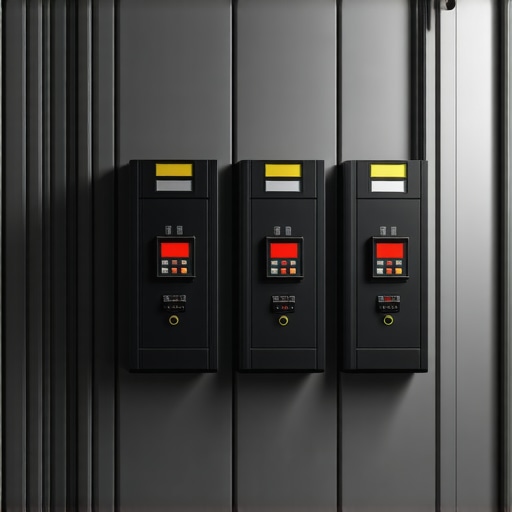
The Ghost in the Walls: Why Your Old Panel is Robbing You
You probably think of your electrical panel as a passive box of switches. You’re wrong. In my thirty-five years of diagnostic forensics, I’ve seen those boxes become literal furnaces. If your home was built between 1965 and 1980, you aren’t just sitting on a fire hazard; you are paying a ‘heat tax’ every single month. When I walk into a garage and see an old Federal Pacific or a Zinsco load center, I don’t just see a safety violation—I see a meter spinning faster than it needs to. My old journeyman used to smack my hand if I stripped a wire with a knife. ‘You nick the copper, you create a hot spot,’ he’d scream. He was right. That tiny nick creates resistance, and resistance creates heat. Multiply that across forty years of ‘handyman’ additions and loose lugs, and you’ve got a system that’s bleeding energy into the atmosphere of your utility room.
“Aluminum wire connections can overheat and cause a fire without tripping the circuit breaker.” – CPSC Safety Alert 516
The Physics of the ‘Heat Tax’
Let’s talk about the physics of Cold Creep and thermal expansion. In mid-century homes, aluminum wiring was the darling of the industry. But aluminum is a temperamental metal. It expands and contracts at a different rate than the steel screws in your breaker lugs. Over decades, this cycle of heating and cooling causes the connection to loosen—a phenomenon we call ‘creeping.’ Once that connection is loose, the electricity has to jump the gap. This creates micro-arcing and massive resistance. According to Ohm’s Law, as resistance increases in a circuit with a fixed load, heat generation (I²R) skyrockets. You aren’t just paying to run your refrigerator; you’re paying for the energy that is being converted into wasted heat inside your walls. This is why aluminum wiring repair isn’t just a safety checkbox; it’s an efficiency upgrade. We use AlumiConn connectors to create a stable, low-resistance path that stops the thermal bleed.
The Forensic Breakdown of an Inefficient Load Center
When I perform a forensic inspection, I’m looking for the ‘widow maker’—a circuit that should have tripped but didn’t. Old breakers lose their calibration. The internal bi-metal strips fatigue, meaning they require more heat (and thus more wasted current) to trigger or, worse, they weld themselves shut. Modern AFCI breaker services provide a level of digital precision that old thermal-magnetic breakers can’t touch. An Arc-Fault Circuit Interrupter (AFCI) isn’t just looking for a surge; it’s looking for the specific waveform signature of a dangerous arc. By cleaning up the ‘noise’ on your lines and ensuring tight, torqued connections, you reduce the impedance of the entire system. When I do a rough-in for a new panel, every home run is organized to minimize inductive heating. We don’t just ‘slap it in.’ We torque every lug to the manufacturer’s inch-pound specifications using a calibrated driver. Most guys just ‘crank it until it feels tight,’ which actually crushes the wire and increases resistance.
Expanding Your Infrastructure: Beyond the Breaker
Your load center is the heart, but the arteries matter too. If you’re still running outlet switch repair on 50-year-old devices, you’re dealing with pitted contacts. Every time you plug into a loose outlet, you’re creating a high-resistance point. This is especially true for high-draw areas. For instance, kitchen range hood wiring and attic fan installation often involve motor loads. Motors hate voltage drops. If your old panel is dropping 5% of its voltage due to poor bus bar conductivity, your motors run hotter and die faster. Replacing an old transformer with a modern transformer installation for your low voltage lighting or architectural lighting ensures that you aren’t burning watts just to step down the power. I’ve seen holiday emergency calls where a single string of lights was the ‘straw that broke the camel’s back’ because the main bus bar was already at 160 degrees Fahrenheit from internal resistance.
“The integrity of electrical terminations and splices is a primary factor in the safety and efficiency of the electrical system.” – NFPA 70E Standard for Electrical Safety
Modern Demands: Network and Airflow
We live in a world of high-frequency loads. Network cable installation requires clean power environments to prevent EMI (Electromagnetic Interference). When you upgrade your load center, you aren’t just getting more spaces for breakers; you’re getting a copper bus bar with superior conductivity compared to the old tin-plated aluminum bars found in budget-grade 1970s panels. Combine this with an attic fan installation to pull the heat out of the structure, and your HVAC system doesn’t have to fight the radiant heat from the roof. It’s a holistic approach. I use my Wiggy and my tick tracer to find the phantom loads that are draining your wallet. Often, it’s a ‘bootleg ground’ or an old-school transformer installation for a doorbell that’s been humming and wasting power for forty years. Getting a professional trim-out means every device is seated properly, every wire is stripped with precision, and your home is no longer a ‘time bomb’ of wasted energy and fire risk. Stop paying the ‘heat tax.’ Get the panel torqued, the aluminum stabilized, and the infrastructure brought into the 21st century. It’s the only way to truly sleep at night without one ear open for the sound of a crackling breaker.