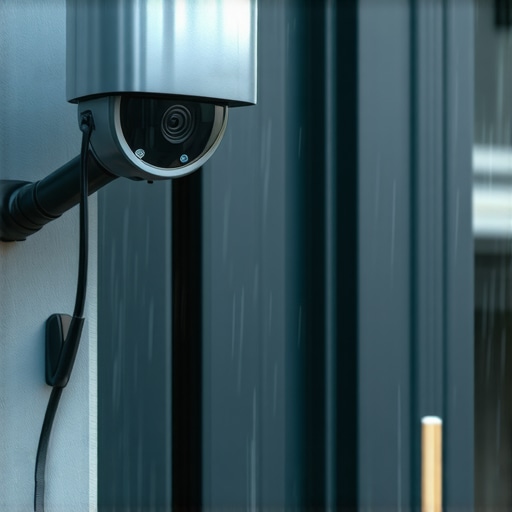
The Sensory Warning: The Ghost in the Connection
I’ve lost count of how many times I’ve stood in a driveway, looking at a $300 wireless camera that’s currently doing nothing more than acting as a plastic bird perch. The homeowner is usually holding a smartphone, showing me a ‘Device Offline’ notification while their property is being scoped or, worse, after a theft already happened. You can’t smell a wireless failure like you can smell a fried meter socket replacement or the ozone off a 400 amp service entrance, but the failure is just as absolute. In the trade, we call wireless ‘convenient,’ and we call hardwired ‘reliable.’ If you’re protecting a warehouse, a family, or even a tiny home wiring project, you need to understand why the air is a terrible medium for security.
My old journeyman, a man who had more scars than a rescue dog, used to smack my hand if I stripped a low-voltage wire with a pocket knife. ‘You nick that copper, you create a hot spot for resistance, and data doesn’t like resistance,’ he’d scream. He was a dinosaur, but he was right. He understood that electricity and data are physical things. When you try to move them through the air, you’re at the mercy of every microwave, baby monitor, and neighbor’s router in a three-block radius. A hardwired system, a true home run from the camera to the NVR, removes the variables. It’s the difference between a garden hose and a prayer for rain.
“Aluminum wire connections can overheat and cause a fire without tripping the circuit breaker.” – CPSC Safety Alert 516
The Forensic Breakdown: Why Wireless Is a Time Bomb
Let’s talk about the physics of the ‘dropout.’ Most wireless cameras operate on the 2.4GHz frequency. This is the crowded bus of the electromagnetic spectrum. When your smart meter installation is pinging the utility company, your neighbor is streaming 4K video, and your microwave is humming, the data packets from your security camera are literally colliding in mid-air. We call this ‘packet loss.’ In a security context, packet loss means the frame where the intruder’s face is visible simply never reaches the hard drive. By the time the camera reconnects, the ‘event’ is over.
Then there’s the issue of power. A ‘wireless’ camera usually isn’t wireless; it either needs a battery—which fails the moment the temperature drops below freezing—or it needs a plug. If you’re already running a wire for power, why on earth wouldn’t you run a wire for data? I’ve seen doorbell camera install jobs where the homeowner used a ‘wireless’ unit that died every three weeks. We ended up doing a rough-in for a proper PoE (Power over Ethernet) line, and they haven’t had a single second of downtime since. PoE is the gold standard. One cable, eight thin copper strands, carrying both the 48V DC power and the high-definition video signal. No batteries to swap, no signal to drop.
Component Zooming: The Physics of the PoE Connection
When we pull Cat6 for a security system, we aren’t just ‘running wire.’ We are creating a shielded environment. Inside that cable, the pairs are twisted at specific intervals to cancel out electromagnetic interference (EMI). This is ‘Differential Signaling.’ If you run a data cable too close to a high-voltage line—like the ones feeding your hot tub wiring services—the EMI can bleed into the data. That’s why we use dikes to clean up the terminations and ensure no ‘stray hairs’ of copper are touching. If you nick the jacket, you’re inviting oxidation. Over time, that copper turns green, resistance climbs, and your 1080p image starts looking like a 1980s television with bad reception.
For homeowners with significant power needs, perhaps those who just underwent a 400 amp service entrance upgrade to accommodate EVs and workshops, the electrical noise in the house is massive. Every time a heavy compressor kicks on, it sends a spike through the electrical field. A wireless camera’s tiny internal radio doesn’t stand a chance against that kind of ‘noise.’ Hardwiring with shielded cable (STP) acts as a Faraday cage for your data. It’s locked down, isolated, and fast.
“Fixed wiring systems shall be installed in a neat and workmanlike manner.” – NFPA 70 (National Electrical Code)
The Vulnerability of the ‘Smart’ Facade
I’ve been called out as a 24 hour emergency electrician because ‘smart’ systems were glitching and the homeowner thought they had a fire. Often, it’s just a cheap transformer in a wireless camera or a doorbell that’s overheating. Wireless systems are consumer-grade electronics; hardwired systems are infrastructure. When we perform remote electrical diagnostics, we can see the power draw on a PoE switch. If a camera is drawing too much juice, we know the hardware is failing before it actually dies. You don’t get that with a battery-powered plastic toy.
Furthermore, wireless signals can be jammed. A $20 device from the internet can flood the 2.4GHz frequency and ‘blind’ every wireless camera in your house without the intruder ever touching them. You can’t jam a copper wire buried in conduit and sealed with monkey shit (duct seal) at the entry point. It’s physically impossible to intercept that signal without a physical tap, which triggers a ‘Link Down’ alert immediately.
The Logistics: Infrastructure and Financing
I get it—pulling wires through finished walls is a headache. It’s why people choose the ‘easy’ route. But if you are already looking into financing electrical upgrades, you should roll the security infrastructure into that package. Whether it’s adding emergency exit lighting for a commercial space or just ensuring your family is safe, the cost of a trim-out for a hardwired system is an investment in the building’s bones. When we do a meter socket replacement, we’re often looking at the whole ‘health’ of the system. Adding a dedicated circuit for a security NVR (Network Video Recorder) ensures that even if a kitchen appliance trips a breaker, the ‘eyes’ of the house stay on.
For those in tiny home wiring scenarios, space is tight and wireless interference is even worse because everything is packed together. Hardwiring is the only way to ensure your doorbell camera install doesn’t drop every time you turn on the induction cooktop. It’s about the ‘Total Load’ and the ‘Signal Integrity’—two things that cynical old-timers like me take very seriously. You want to sleep at night? Don’t rely on a radio wave to watch your front door. Torque the lugs, seat the connectors, and pull the wire. That’s how you build a system that lasts thirty years instead of three months.
{“@context”:”https://schema.org”,”@type”:”HowTo”,”name”:”How to Transition from Wireless to Hardwired Security”,”step”:[{“@type”:”HowToStep”,”text”:”Assess your current electrical load and determine if a 400 amp service entrance or 200 amp upgrade is needed for whole-home stability.”},{“@type”:”HowToStep”,”text”:”Plan ‘Home Run’ routes for Cat6 cabling from each camera location to a central Network Video Recorder (NVR).”},{“@type”:”HowToStep”,”text”:”Install PoE-compatible cameras and use ‘monkey shit’ (duct seal) to weather-proof all exterior penetrations.”},{“@type”:”HowToStep”,”text”:”Terminate cables with RJ45 connectors, ensuring no nicks in the copper to prevent resistance and heat.”}]}