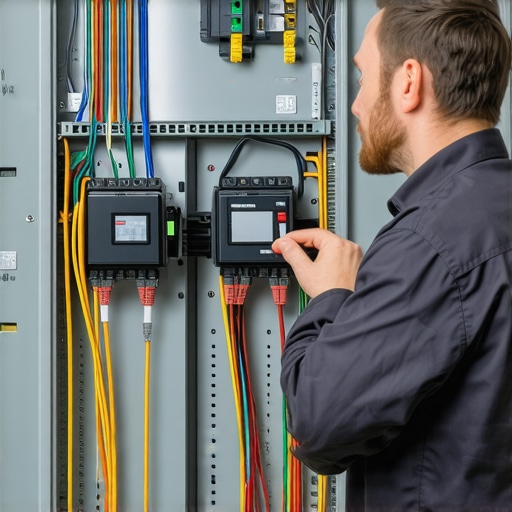
The first thing you notice when an electrical system is screaming for help isn’t the flickering lights; it’s the smell. It’s a cloying, metallic stench—ozone and melting thermoplastic. Most homeowners think they can just ‘tap’ into their existing panel to power an Accessory Dwelling Unit (ADU) like they’re plugging in a new toaster. They’re wrong. I’ve seen enough melted bus bars and scorched Romex to know that electricity doesn’t forgive ‘close enough.’ If you don’t perform a rigorous load calculation before the first rough-in, you aren’t building a guest house; you’re building a slow-burning fuse.
The Lesson of the Floating Neutral
Years ago, I was called to a property where the homeowner had built a ‘she-shed’ and wired it himself. He didn’t think he needed permit pulling services because it was ‘just a shed.’ My Tick Tracer went off the charts the moment I touched the aluminum siding. He’d nicked the neutral wire while pulling it through a tight LB fitting, and the entire structure was energized. My old journeyman used to say that a wire is like a blood vessel—you nick the skin of that copper, and you create a bottleneck for electrons. That bottleneck generates heat. Heat leads to Cold Creep, where the metal expands and contracts until the connection works itself loose. He once slapped my hand with a pair of dikes for stripping a wire with a pocket knife instead of a dedicated stripper. ‘You’re creating a hot spot, kid,’ he’d growl. He was right. That ‘she-shed’ was seconds away from a structural fire because the homeowner didn’t understand the physics of demand.
The Physics of the Parasitic Load
When you add an ADU, you are essentially adding a second heart to a body that only has enough blood for one. Your main electrical service—the main disconnect services at the front of your house—was sized for the original floor plan. If you have a 100-amp service and you try to tack on a kitchen, a mini-split HVAC, and garage wiring services for the ADU, you are violating the basic laws of thermodynamics.
“Aluminum wire connections can overheat and cause a fire without tripping the circuit breaker.” – CPSC Safety Alert 516
This is especially true in mid-century homes where the main disconnect services might still be using an old Federal Pacific or Zinsco panel. Those breakers are notorious for ‘locking’ on the bus bar. You could be pulling 120 amps through a 100-amp bus, and the breaker will just sit there, silent and hot, until the insulation on the Romex liquefies into a toxic puddle.
The Load Calculation: Why the Math Doesn’t Lie
A professional load calculation isn’t just adding up the numbers on the breakers. We use NEC Article 220 to determine the ‘Demand Factor.’ We look at the square footage, the ‘small appliance branches,’ and the fixed motor loads. If you’re planning on speaker system setup or high-end track lighting services, those are continuous loads. In the electrical world, ‘continuous’ means anything running for three hours or more. Under OSHA compliance wiring standards and the NEC, a continuous load must only account for 80% of the circuit’s rating. If you skip this math, you’ll find out the hard way when your Christmas light services blow the main lug on a freezing December night.
“The calculated load of a feeder or service shall not be less than the sum of the loads on the branch circuits supplied.” – NFPA 70: National Electrical Code
Infrastructure Context: The Hidden Enemies
If you’re building an ADU on an older property, you’re likely dealing with aging infrastructure that wasn’t meant for the digital age. I’ve opened panels where the main disconnect services were so corroded from flood water electrical safety issues that the copper had turned a sickly shade of turquoise. This oxidation increases resistance. High resistance equals more heat. When we perform a load calculation, we also inspect the integrity of the service entrance. Is the service mast pulled away from the house? Are the grounding rods actually reaching the water table, or are they just sticks of copper in dry sand? We often have to install temporary power services just to keep the site safe while we overhaul the primary system to handle the new ADU demand.
Beyond the Lights: Specialized ADU Needs
Modern ADUs are often more tech-heavy than the primary residence. You might be looking at phone line installation for a home office, a dedicated speaker system setup, or even track lighting services to make a small space feel larger. Each of these requires its own ‘home run’ back to the sub-panel. And let’s talk about the exterior. If you’re adding Christmas light services to the ADU eaves, that’s another 15-20 amps of demand you didn’t account for in July. Without a professional calculation, you’re playing a game of ‘electrical musical chairs.’ Eventually, the music stops, and the Widow Maker (that’s what we call a live, ungrounded circuit) finds a victim.
The Importance of Professional Execution
Don’t let a handyman convince you that a ‘sub-panel’ is a magic box that creates more power. It doesn’t. It just redistributes what your main disconnect services can provide. If the source is weak, the ADU will be weak. We ensure that every lug is torqued to the specific inch-pounds required by the manufacturer—not just ‘hand-tight.’ We use ‘Monkey Shit’ (duct seal) to keep moisture out of the conduits and prevent the flood water electrical safety disasters I’ve seen in low-lying ADU conversions. In the end, a load calculation is the only thing standing between a comfortable new living space and a forensic investigator like me standing in the ashes of your garage, holding a melted Wiggy and shaking my head.
How to Prepare for Your ADU Electrical Inspection
Step 1: Inventory Your Appliances
List every major appliance planned for the ADU, including HVAC, water heaters, and electric ranges. Note their wattage and voltage requirements.
Step 2: Assess Your Main Panel
Check the amperage rating on your main home’s disconnect. If it’s less than 200 amps, an upgrade is likely mandatory for an ADU addition.
Step 3: Calculate Continuous Loads
Identify systems like track lighting services or EV chargers that run for hours. Apply the 125% multiplier to these loads as per NEC rules.
Step 4: Verify Grounding and Bonding
Ensure the ADU has its own grounding system and that it is properly bonded to the main service to prevent stray voltage and ensure OSHA compliance wiring standards.