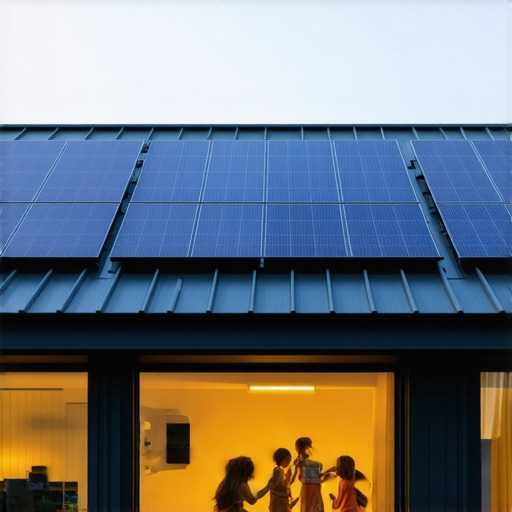
The Sound of Real Independence
You’re sitting in the dark, and the only sound is the rhythmic click-clack of freezing rain hitting the window. Suddenly, there is a heavy thud from the basement—the sound of a 200-amp transfer switch engaging—and the lights flicker back to life. This isn’t magic; it’s a microgrid. Most people think energy independence means sticking a few solar panels on the roof and calling it a day. They’re wrong. True independence requires a forensic understanding of how your home consumes, stores, and manages power. If you don’t respect the physics, you’re just building a very expensive fire hazard.
My journeyman used to smack my hand if I stripped a wire with a knife. ‘You nick the copper, you create a hot spot,’ he’d scream. He was right. That microscopic notch reduces the cross-sectional area of the conductor, and when you are dealing with the massive current draws of energy storage systems, that notch becomes a thermal time bomb. In a microgrid setup, you aren’t just a consumer; you are the utility. That means the overhead service drop coming from the street is no longer your only lifeline—and that changes everything about how your home must be wired.
The Load Calculation: Why Your Panel is a Bottleneck
Before we even talk about battery backup wiring, we have to talk about Ohm’s Law and the cold, hard reality of heat. Most mid-century homes are still limping along on 100-amp services. You try to add a home automation setup, high-speed fiber optic cabling, a modern kitchen range hood wiring project, and an EV charger on that old bus bar, and you are asking for a meltdown. A microgrid requires a ‘Heavy-up’—an upgrade to a 200 or 400-amp service—to handle the bidirectional flow of electricity. If you don’t calculate the load properly, your energy storage system will trip the main breaker the second your HVAC kicks in during an outage.
“Energy Storage Systems (ESS) shall be listed and labeled for the intended use and shall be installed in accordance with the manufacturer’s instructions.” – NEC Article 706.5
When I do a rough-in for a microgrid, I’m looking at the thermal expansion of the lugs. If you’re using aluminum feeders for the temporary power services during construction, you have to account for Cold Creep. Aluminum expands and contracts at a different rate than copper. If those lugs aren’t torqued to the exact inch-pound spec, they will loosen over time. I’ve seen energy storage systems fail because a tech didn’t use a torque wrench, leading to an arcing fault that melted the entire inverter housing. I don’t trust a tick tracer to tell me a circuit is safe; I use a Wiggy to pull a real load and see if the voltage drops. If it drops more than 3%, you’ve got a high-resistance connection somewhere, likely at a home run junction box hidden by some DIYer.
[image_placeholder_1]
Component Zooming: The Physics of Islanding
True independence comes from ‘Islanding’—the ability of your microgrid to safely disconnect from the utility grid during a blackout. This requires a gateway that monitors the overhead service drop. If the grid goes down and your system doesn’t disconnect, you’ll be backfeeding power into the utility lines, which is a ‘Widow Maker’ for the linemen trying to fix the poles. We use monkey shit (duct seal) to plug the entrance of the service mast to prevent moisture from wicking down into the sensitive electronics of the gateway. Moisture and high-frequency inverters don’t mix; it leads to sacrificial anode corrosion on the bus bars.
We also have to consider the ‘vampire loads.’ Your driveway sensor lights and that elaborate holiday light installation you put up every December might seem insignificant, but when you are running on stored chemical energy, every milliamp counts. A microgrid integration often involves a home automation setup that can automatically shed these non-essential loads. We’re talking about fiber optic cabling running between the inverter and the smart panel to ensure zero-latency communication. If the communication lag is too high, the battery can’t react to the inrush current of a motor starting, and the whole system collapses into a dark-start state.
The Forensic Inspection: Don’t Let the Flipper Special Kill You
I’ve been called out for same day service appointments where the homeowner smelled ‘fish.’ That’s the smell of burning Bakelite—the plastic used in old breakers. Usually, it’s because a ‘handyman’ tried to integrate a battery system into an old Federal Pacific or Zinsco panel. These panels are known as the ‘No-Trip’ wonders. The breaker jams, the wire glows cherry red, and the house burns down. If you’re serious about energy independence, the first thing you do is take your dikes and cut out the old junk. You need a modern, copper-bus panel with AFCI (Arc-Fault Circuit Interrupter) protection.
“Aluminum wire connections can overheat and cause a fire without tripping the circuit breaker.” – CPSC Safety Alert 516
When we do the trim-out on a microgrid, we’re checking every single Romex connection. We’re looking for signs of oxidation. If I see even a hint of dullness on the copper, I’m cleaning it and applying antioxidant compound. People think I’m paranoid. I tell them I’ve seen enough charred studs to justify the paranoia. True independence isn’t about being ‘off-grid’—it’s about having a system that is robust enough to handle the grid’s failures without becoming a failure itself. Sleep at night knowing your lugs are torqued and your grounding electrode is continuous. That’s the only way to be truly free.