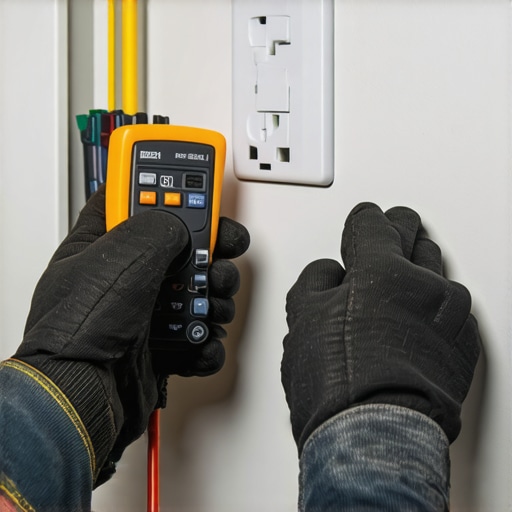
The Ghost in the Walls: Why Your ‘Simple’ Outlet Swap is a Fire Hazard
I can smell a failing electrical device before I even walk into the room. It is a sickly-sweet, metallic stench—the smell of ozone and melting PVC. To a homeowner, it is a mystery. To a licensed master electrician, it is the sound of a countdown clock. The internet has convinced people that swapping a receptacle is a level-one DIY task, akin to painting a room. But paint does not cause a house fire at 3 AM. Electricity is a relentless, vibrating force, searching for any path to ground, and it will find it through your mistakes. When you open a junction box, you are looking at the nexus of your home’s safety system. If you treat it with anything less than forensic precision, you are gambling with your life.
My old journeyman, a grizzly guy named Stan who smelled like black coffee and burnt insulation, taught me the hard way. I was a second-year apprentice, rushing through a rough-in. I used a pocket knife to strip the Romex. Stan stopped me, grabbed my wrist with a hand that felt like sandpaper, and pointed at the copper. ‘Look at that scratch, kid,’ he growled. ‘You just reduced the cross-sectional area of that conductor. You created a bottleneck. That nick is where the heat starts. You are not an electrician; you are an arsonist with a toolbox.’ He was right. In this trade, precision isn’t about being neat; it is about the physics of resistance. One small nick, one loose screw, and you’ve built a heater where you meant to build a circuit.
The Forensic Breakdown: Why ‘Handyman’ Repairs Fail
When a DIYer watches a three-minute video, they see the ‘how’ but never the ‘why.’ They don’t see the power quality analysis or the code violation corrections that happen in a pro’s head before the first wire is stripped. A common failure I see is the ‘back-stabbed’ outlet. Most cheap receptacles allow you to push the wire into a spring-loaded hole in the back. It’s fast, and it’s garbage. Over time, the spring loses tension due to thermal expansion and contraction. This creates a high-resistance connection. As current flows through that resistance, it generates heat. That heat causes the metal to expand further, loosening the grip. It is a feedback loop of failure that eventually melts the device without ever tripping the breaker. This is why a pro will always perform a ‘side-wire’ hook, wrapping the conductor 75% of the way around the screw in a clockwise direction, ensuring that as you tighten the screw, it pulls the wire tighter into the terminal.
“Terminal connections and joints shall be made by an approved means… connectors shall be identified for the material of the conductor and shall be properly installed and used.” – National Electrical Code (NEC) 110.14
The Infrastructure Crisis: From Knob & Tube to Modern Loads
If you are living in a home built between 1900 and 1950, your ‘simple outlet repair’ is likely a knob and tube removal project in disguise. The insulation on these old wires is made of rubber and cloth. Over eighty years, that rubber becomes as brittle as a dry biscuit. The moment you move that wire to install a new smart switch or smart thermostat wiring, the insulation crumbles away, leaving bare copper touching a metal box. Suddenly, your ‘repair’ has turned into a dead short. A licensed master electrician knows how to handle this ‘widow maker’ wiring. We don’t just slap a new outlet on it; we assess the home run to see if the circuit can even handle modern electronics. We look for ‘bootleg grounds’—a common cheat where a DIYer connects the neutral screw to the ground screw to trick a tick tracer or a simple plug-in tester. This is lethal; it puts current on the metal frames of your appliances, waiting for you to complete the circuit to ground.
The Load Calculation Reality Check
Modern life is heavy on electricity. We are adding EV charger installs and high-draw appliances to systems designed for three lightbulbs and a radio. If your 1970s home is still running on a 100-amp service, a fuse box to breaker conversion isn’t an ‘upgrade’—it’s a necessity. DIYers often ignore the load calculation. They’ll tap into a bedroom circuit to add landscape lighting install or a space heater, not realizing they’ve pushed the bus bar to its thermal limit. We use a Wiggy or a high-end multimeter to check for voltage drops under load. If the voltage dips significantly when the compressor kicks on, you have a high-resistance joint somewhere. Finding that joint requires a forensic eye, not a YouTube tutorial. Whether it’s industrial motor controls or a simple kitchen GFCI, the physics remains the same: heat is the enemy.
“Aluminum wire connections can overheat and cause a fire without tripping the circuit breaker.” – CPSC Safety Alert 516
Beyond the Outlet: Commercial and Industrial Safety
In a commercial setting, the stakes are even higher. A warehouse lighting retrofit isn’t just about changing bulbs; it’s about ballast compatibility and circuit phasing. If you get the phasing wrong on industrial motor controls, you’ll spin a three-phase motor backward and destroy thousands of dollars in equipment in seconds. Professional code violation corrections involve looking at the entire system. We use monkey shit (duct seal) to prevent moisture migration through conduits and ensure every connection is torqued to the specific inch-pound requirements listed on the device. Most DIYers don’t even own a torque screwdriver, yet NEC 110.14(D) makes it a mandatory requirement. If it’s not torqued to spec, it’s not to code. Period.
Conclusion: Sleep Better With Professional Torque
At the end of the trim-out, I want to know that I can put my hand on that panel cover and feel nothing but cool metal. No vibration, no heat, no smell. When you hire a professional, you aren’t paying for the thirty minutes it takes to swap an outlet; you are paying for the thirty-five years of experience that tells us exactly where the system is most likely to fail. We see the microscopic stress fractures in the copper, the ‘cold creep’ in old aluminum connections, and the ‘pitting’ on contact points. Don’t let a ‘quick fix’ turn your home into a forensic investigation site. Keep your dikes and your electrical tape in the drawer and call someone who knows how to keep the fire inside the wires.