The Autopsy of a Dark Lot: What Dead Ballasts Are Costing Your Business
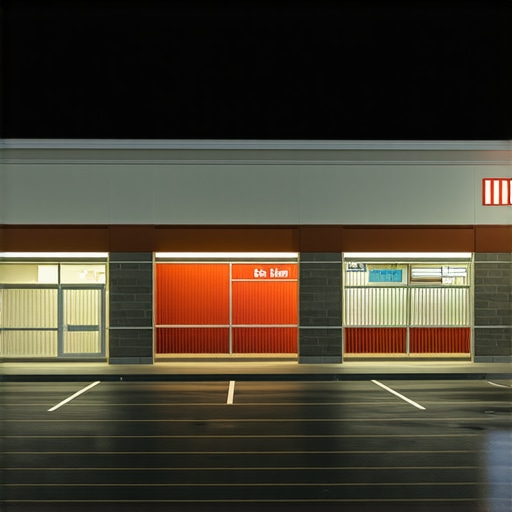
Imagine standing in your retail store at closing time, looking out the front window. Beyond the glass lies a cavern of shadows where your parking lot used to be. A couple of 400-watt metal halide fixtures are sputtering a sickly, strobing purple, while two others are completely dead, their capacitors having boiled over years ago. You watch a potential customer slow down, look at the gloomy asphalt, tap their brakes, and drive straight to your brightly lit competitor down the street. It is not just a minor inconvenience; it is a direct hit to your bottom line. Bad commercial exterior lighting screams neglect, invites liability, and actively repels paying customers.
“A well-lit exterior environment is a critical factor in public safety and commercial viability, directly influencing consumer perception of security and brand quality.” – Illuminating Engineering Society (IES) Handbook
My journeyman used to smack my hand if I stripped a wire with a knife. ‘You nick the copper, you create a hot spot,’ he’d scream. He was right. In the world of industrial trade work, minor details dictate whether systems run for decades or burn down in spectacular fashion. When we look at commercial parking lot poles, those same minor installation errors are magnified by wind, rain, and relentless thermal cycling. Let us dissect exactly why those towering fixtures are failing, how bad infrastructure strangulates your sales, and what is actually required to fix the underlying electrical skeleton.
The Anatomy of Failure: Why those Pole Lights Flicker and Die
Most business owners think a dark pole just needs a new bulb. If only it were that simple. When I haul my bucket truck up thirty feet to diagnose a dead fixture, I rarely find a simple burned-out lamp. Instead, I find a forensic crime scene of thermal degradation and moisture intrusion. Inside the head of an old High-Intensity Discharge (HID) fixture, temperatures regularly exceed 300 degrees Fahrenheit. This intense heat bakes the conductor insulation until it is as brittle as potato chips. Touch it with your hand, and the insulation flakes off, leaving bare copper exposed to the vibrating aluminum housing.
Furthermore, we must talk about the ballast. These massive transformers step up voltage to strike the arc in HID lamps. Over time, the internal windings degrade. The ballast begins to hum loudly—a clear sign of laminations vibrating under magnetic stress—before ultimately shorting out. This failure does not just kill the light; it creates massive harmonic distortion back down the home run wire to your electrical panel, heating up your neutral conductors and stressing your entire system. If your facility is running on an outdated service, this extra thermal load is a silent killer.
Water, Wind, and the Ground-Level Hazard
The real nightmare, however, is not at the top of the pole; it is at the bottom. Inside the concrete base of every light pole is a small handhole cover. This is where the underground PVC conduits emerge and splice into the vertical wires running up the pole. This handhole is a prime target for lawn mowers, weed whackers, and pooling rainwater. I have opened these covers with my tick tracer glowing red-hot before I even touched the metal, only to find the splice boxes filled with mud and stagnant water.
When those underground splices fail, they do not just take out one light; they trip the main breaker, plunging your entire property into darkness. If your retail space relies on an old panel, these recurring short circuits will eventually weld the breaker contacts shut. A breaker that refuses to trip is a direct path to an electrical fire. Upgrading your infrastructure with an electrical-panel-upgrade ensures your safety systems trip when they should, isolating faults before they shut down your entire sales floor.
“Overcurrent protection devices must be capable of interrupting the maximum available fault current at their line terminals to prevent catastrophic enclosure failure.” – National Electrical Code (NEC) Section 110.9
The Financial Cost of Dark Corners: Liability and Customer Trust
From a psychological standpoint, human beings are hardwired to avoid dark, uninviting spaces. A dim parking lot sends a subconscious signal that your business is either closed, struggling, or unsafe. If customers cannot clearly see the pathway from their cars to your front door, they simply will not take the risk. They worry about tripping hazards, vandalism, and personal safety. You could have the best products and customer service inside, but if your exterior lighting is subpar, you are choking your sales pipeline at the very entrance.
Then there is the cold, hard reality of premises liability. If a customer slips on an unseen patch of ice or a cracked piece of asphalt in a poorly lit area of your lot, your commercial insurance carrier will be the first to look at your maintenance logs. If they find you have ignored dead fixtures for months, you are looking at negligence lawsuits that can easily wipe out a year’s worth of profit. Investing in professional up-lighting-services and maintaining your overhead poles is not an aesthetic luxury; it is a critical shield against legal exposure.
Beyond the Parking Lot: The Integrated Business Electrical Ecosystem
A smart business owner views their property as a single, interconnected machine. Your parking lot poles are tied to the same distribution boards that power your interior cash registers, your HVAC units, and your inventory systems. If you are planning on expanding your operations—perhaps adding an electric-gate-opener for your loading dock, installing a high-capacity EV-charger-installation to attract affluent customers, or running heavy machinery via industrial-motor-controls—you cannot afford to have your electrical service choked by ancient, inefficient lighting circuits.
Modernizing your exterior lighting to solid-state LED fixtures reduces your lighting electrical load by up to seventy percent. This massive reduction in amperage frees up valuable capacity on your main distribution panel. That newly recovered power can then be redirected to support modern business upgrades, whether that is powering a dedicated pool-pump-electrical system for a hospitality venue, installing comprehensive shed-wiring-install for exterior inventory storage, or setting up festive Christmas-light-services to drive holiday traffic without overloading your panels. Controlling all of these dynamic systems becomes significantly easier with modern smart-thermostat-wiring and building automation platforms that schedule your energy usage to avoid costly peak-demand charges from your utility provider.
The Solution: Engineering a Reliable, High-Output Lighting System
How do we fix this permanently? We do not do it with cheap replacement bulbs from a big-box store. We do it by engineering a system designed to survive the elements and deliver clean, uniform foot-candles across your entire property. Here is the blueprint for a professional lighting overhaul:
- LED Retrofitting: We strip out the old ballasts and HID lamps completely, bypassing the obsolete circuitry to supply clean line voltage directly to high-efficiency LED drivers. This eliminates the humming, the flickering, and the massive power draw.
- Subgrade Splice Rebuilds: We dig out the water-logged handholes, cut back the corroded copper wires until we reach bright metal, and remold the connections using heavy-wall heat-shrink tubing and professional-grade sealing gel. No more ground faults when it rains.
- Service Modernization: For large commercial properties, we evaluate the service entrance. If your current switchgear is maxed out, upgrading to a robust 400-amp-service-entrance provides the necessary overhead to power your bright new exterior lights alongside heavy-duty interior machinery without dropping voltage.
Do not let a dark, flickering parking lot turn your business into a ghost town. When you invest in your property’s electrical infrastructure, you are not just buying wire and metal; you are buying safety, liability protection, and a welcoming beacon that tells every passing customer that you are open, professional, and ready for their business.