The Flipper Special: A Forensic Reality Check
I recently walked into a ‘fully renovated’ high-end kitchen where the backsplash tile was pristine, but the owner kept complaining about a faint, fishy smell whenever the dishwasher ran. I pulled out my tracer and found the nightmare: the flipper had buried three live junction boxes directly behind the subway tile without covers. These weren’t just loose connections; they were ‘widow makers’ waiting for enough steam to bridge the gap. That is the reality of modern residential electrical work—it looks pretty on the surface, but the physics of failure are buried where you can’t see them. Our Priority Service Membership isn’t a ‘club’ or an ‘upsell’; it is a systematic forensic intervention designed to catch these ticking time bombs before they turn your home into a charcoal pit.
1. Thermal Imaging Inspections: Seeing the Invisible Heat
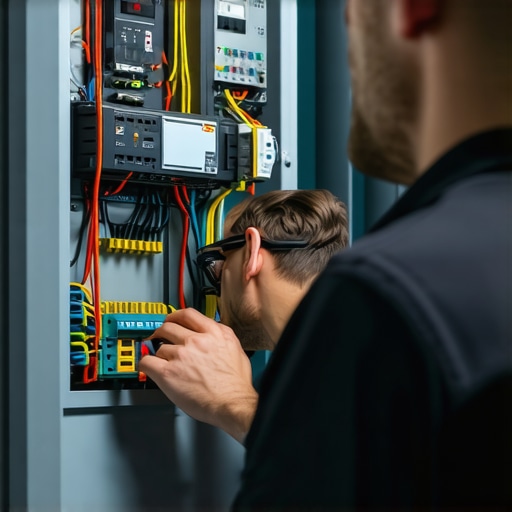
One of the core pillars of our membership is the annual thermal imaging inspection. To the naked eye, a 200 amp panel install might look perfectly fine. But through an infrared lens, a loose lug glows like a signal flare. This is where we analyze the physics of resistance. According to Joule’s First Law, the heat generated by an electrical conductor is proportional to the square of the current multiplied by the resistance (P=I²R). When a screw on a breaker isn’t torqued to the specific inch-pounds required by the manufacturer, resistance increases. This creates a feedback loop of thermal expansion and contraction known as ‘Cold Creep.’ Over time, the copper or aluminum compresses, the connection loosens further, and micro-arcing begins. This arcing carbonizes the surrounding plastic insulation, and once you have a carbon track, you have a path for a high-intensity fire. We catch these temperature deltas of 5 or 10 degrees before the ozone smell even starts.
“Aluminum wire connections can overheat and cause a fire without tripping the circuit breaker.” – CPSC Safety Alert 516
2. Troubleshooting the ‘Ghost’ in the Circuit
Most homeowners ignore flickering lights or a breaker that trips once every three months. They think it’s a nuisance; I know it’s a symptom. During our priority visits, we go beyond a simple visual check. We use a ‘Wiggy’ (solenoid voltmeter) to put a mechanical load on the circuit to see if the voltage drops under pressure. This is critical for identifying a ‘floating neutral.’ If you lose your neutral connection, your 120V circuits can suddenly see 240V, frying your home automation setup and every appliance in the house. We trace the ‘Home Run’ back to the panel, ensuring that every wire nut and terminal is seated properly. We aren’t just looking for what’s broken today; we are looking for the ‘Rough-in’ mistakes made twenty years ago that are finally reaching their breaking point.
3. 200 Amp Panel Health and Corrosion Mitigation
For those in coastal regions, the enemy isn’t just load—it’s salt air. Salt is hygroscopic and highly conductive. It enters the meter can and travels down the service entrance cable like a highway. I’ve opened panels where the bus bars were coated in a green crust of copper carbonate, effectively ‘welding’ the breakers into place. If a breaker can’t move, it can’t trip. Our membership includes a deep-dive forensic audit of your panel’s integrity. We look for signs of galvanic reaction where dissimilar metals meet. If we find oxidation, we don’t just brush it off; we apply high-grade dielectric grease and, if necessary, recommend a full 200 amp panel install to replace a compromised system. We also ensure your service mast is sealed with ‘monkey shit’ (duct seal) to prevent moisture from entering the internal guts of your home’s electrical heart.
4. Industrial Motor Controls and Heavy Load Stability
Modern homes now resemble small industrial sites, with car chargers, variable speed HVAC pumps, and high-draw pool motors. These devices utilize industrial motor controls that are sensitive to voltage fluctuations. A primary benefit of our membership is monitoring the in-rush current of these devices. When a motor starts, it can pull six times its running amperage. If your connections are weak, this sudden draw causes a brownout across the rest of the house. We inspect contactors for pitting and ensure that your grounding system—including the grounding rods and water pipe bonds—is below 25 ohms of resistance. If your ground is bad, your surge protector is just a fancy power strip with no place to dump the excess energy.
5. Recessed Lighting and Attic Safety Audits
During a ‘Trim-out’ of a new home, recessed lighting installation looks simple. However, older ‘can’ lights often have thermal cutouts that fail. If a homeowner installs a bulb with a higher wattage than the fixture is rated for, or if an insulation contractor buries a non-IC rated fixture, the heat buildup is catastrophic. As part of our priority service, we check these fixtures for ‘scorched earth’ symptoms. We look for brittle insulation on the wires inside the junction box—a result of decades of thermal stress. Replacing these with modern, cool-running LED modules isn’t just about saving energy; it’s about removing a heat source that is literally inches away from your dry wooden rafters.
“Arc-fault circuit interrupters (AFCIs) are necessary because standard breakers do not always trip when an arc occurs.” – NFPA 70E Safety Standards
6. Permanent Holiday Lighting and Tree Mounted Lights
Everyone loves the look of permanent holiday lighting or tree mounted lights, but these are ‘high-abuse’ installations. They are constantly exposed to UV degradation, squirrel chewing, and moisture intrusion. Most people ‘set it and forget it’ until the GFCIs start tripping. Our inspectors check the ‘Romex’ or UF-rated cables feeding these systems. We look for ‘tick tracer’ hits that indicate stray voltage leaking into the ground or the tree itself. A tree mounted light that has been swallowed by bark over ten years is a fire waiting to happen as the tree’s growth puts immense physical tension on the copper conductors, leading to a ‘necking down’ of the wire and a subsequent hot spot.
7. Remote Electrical Diagnostics and Home Automation Safety
With a home automation setup, you have low-voltage data lines running alongside high-voltage power lines. If these are not properly separated during the ‘Rough-in’ phase, electromagnetic interference (EMI) can cause erratic behavior, but worse, a high-voltage surge can jump to your low-voltage system and destroy your entire smart home interface. Our Priority Service Membership includes remote electrical diagnostics where we monitor your system’s harmonic distortion. We use ‘dikes’ to clean up messy wiring in communication closets that lead to overheating and ensure that your temporary power services for outdoor events or construction don’t overload your main bus. We treat your home’s electrical system as a single, living organism, where a fault in the backyard can lead to a fire in the bedroom. We don’t guess; we test, we torque, and we ensure you can sleep without the smell of burning phenolic resin waking you up.