
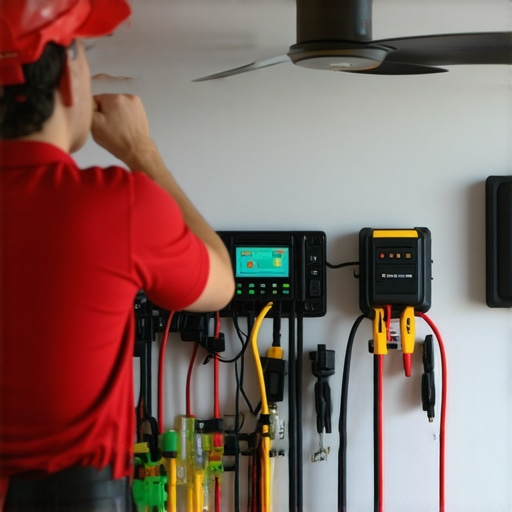
Ever been mid-summer, sweating over an unresponsive ceiling fan, or frustrated because your electric vehicle charger suddenly stops working? I’ve been there—trust me, nothing feels worse than relying on your home’s electrical systems and hitting a wall. I remember the first time my ceiling fan faltered right before a family gathering; I was scrambling to fix it, feeling clueless and annoyed. That’s when I realized how crucial it is to have quick, reliable troubleshooting tips up your sleeve. Today, I want to share what I’ve learned from my own experiences and the seasoned electricians I’ve worked alongside. We’ll dive into practical strategies to diagnose and resolve common issues with ceiling fans and EV chargers so that you can avoid headaches and get back to what matters. Have you faced this kind of frustrating electrical hiccup recently? If so, you’re in the right place. Reliable home electrical systems aren’t just a convenience—they’re a necessity, especially with how much we depend on tech-heavy devices. According to a recent study, nearly 70% of household electrical failures could be fixed with simple troubleshooting procedures (source: Electrical Safety Foundation International). That’s a lot of wasted time and money that could be saved with just a little know-how. So, let’s get started on ensuring your home stays powered and comfortable, starting with understanding the basics of troubleshooting these common problems.
Inspect the Power Supply First
Begin by checking if your ceiling fan or EV charger is receiving power. Use a non-contact voltage tester on the outlet or circuit breaker. If there’s no power, reset the breaker or replace blown fuses. I once noticed my EV charger wasn’t working, and after testing, I found a tripped breaker. Resetting it restored function instantly, saving me hours of guesswork.
Examine Connections and Wiring
Loose or disconnected wiring is a frequent culprit. Turn off the power at the circuit breaker before inspecting. Look for loose screws or corroded terminals. During a repair, I tightened a loose terminal on my ceiling fan, which immediately resolved flickering issues. Remember, secure connections prevent future failures.
Test Components Systematically
Replace or test key parts like switches, capacitors, or motors. For ceiling fans, a faulty capacitor often causes insufficient spinning. For EV chargers, a malfunctioning relay might be the issue. Use a multimeter to measure resistance or continuity. Once, replacing a faulty capacitor on my ceiling fan restored smooth operation.
Look for External Factors
Environmental issues like moisture or dust can impair performance. Ensure fixtures are clean and dry. If your EV charger is outdoors, consider weatherproofing or relocating it. I once found debris inside the fan motor housing, which I cleaned out. Keeping hardware clean preserves longevity and performance.
Consult Troubleshooting Guides
Check expert-specific troubleshooting tips for detailed diagnostics tailored to your model. These resources often reveal common pitfalls and solutions that save time. I referenced such a guide when my EV charger kept disconnecting, leading me to a faulty wiring connector that I replaced.Use the Right Tools for Diagnosis
A multimeter, screwdriver, and voltage tester are essential. Learn how to use these tools properly to pinpoint issues efficiently. For example, testing continuity helped me identify a broken wire in the fan’s switch circuit. Proper tool use makes troubleshooting faster and more accurate.
Test After Repairs to Confirm
Always power systems back on to verify repairs. Observe for normal operation and listen for strange noises. I once replaced a motor in my ceiling fan and tested it by turning it on. It ran smoothly, confirming my fix. Don’t skip this step—it avoids recurring problems.
Know When to Call Professionals
If diagnostics indicate complex electrical issues or if you’re uncomfortable with wiring, consult licensed electricians. Remember, safety comes first. I call in experts for high-voltage problems or when uncertain, ensuring the job is done right and safely. For more on when to seek professional help, visit this comprehensive guide.Many homeowners believe they understand electrical issues, but in reality, misconceptions can lead to costly mistakes. One prevalent myth is that all electrical problems are simple to diagnose with a basic toolkit. While tools like multimeters are essential, relying solely on them without nuanced knowledge can cause overlooked faults, especially with complex appliances like EV chargers. Seasoned electricians emphasize that symptoms often mask underlying issues—such as wiring degradation or controller failures—that aren’t immediately apparent.
Why Do Beginners Fail to Recognize Advanced Faults?
It’s common to think that replacing a faulty component, like a capacitor in a ceiling fan, solves the problem permanently. However, this oversimplifies troubleshooting and sidesteps deeper issues like circuit overloads or outdated wiring that may cause recurrent failures. For example, replacing a fan motor without inspecting the circuit can lead to repeated burnout. Advanced troubleshooting involves understanding the entire electrical ecosystem, which most DIYers underestimate. Interestingly, studies show that up to 30% of electrical failures are due to environmental factors such as moisture intrusion, which isn’t addressed by component replacement alone. This highlights the importance of comprehensive diagnostics, not just surface fixes, when dealing with complex systems like EV charging stations.
Avoid falling into the trap of assuming that standard repair procedures always work. Modern EV chargers and ceiling fans integrate microcontrollers and advanced electronics, requiring nuanced approaches that go beyond traditional methods. Many get caught up in myth-busting easy fixes but overlook the intricate wiring and control systems involved. For instance, a faulty relay in an EV charger may seem like a simple switch problem, but it could actually be caused by power quality issues or firmware glitches.
In particular, the misconception that troubleshooting can be effectively performed without professional guidance often leads to dangerous situations. Electricity is unforgiving: mishandling connections or bypassing safety checks can result in injuries or further damage. The key is having a clear understanding of when to call a qualified electrician—especially when initial diagnostics don’t resolve the problem. For an in-depth look at common pitfalls and how to avoid them, check out this expert guide.
To truly master troubleshooting, homeowners need to recognize that every system is complex, layered, and often affected by external factors like voltage fluctuations or environmental wear. Recognizing these nuances helps prevent recurring failures and ensures safety. Have you ever fallen into this trap with your DIY attempts? Let me know in the comments.
Keep It Running: Essential Tools for Long-Term Success
Maintaining your home’s electrical systems, especially components like ceiling fans and EV chargers, requires more than just basic knowledge—it demands reliable, precise tools that I personally use to ensure safety and efficiency. Over the years, I’ve honed my toolkit, selecting equipment that provides immediate feedback and helps diagnose issues accurately. For instance, I swear by a digital multimeter with auto-ranging capabilities. It offers quick resistance, voltage, and continuity readings, streamlining the troubleshooting process and reducing guesswork. My favorite is the Fluke 117, renowned for its durability and precision, making it invaluable when testing circuit boards or wiring connections.
Why Proper Testing Devices Matter
Investing in high-quality tools isn’t just about convenience—it’s about safety. A reliable multimeter can detect subtle voltage drops, identify hidden wiring faults, or reveal intermittent connections that might not be obvious without proper testing. I once faced an elusive flickering ceiling fan, and it was only after using an advanced clamp meter that I discovered a hidden overload in the circuit. This kind of insight prevents future failures and avoids unnecessary replacements.
Software and Calibration for Consistency
Complementing my hardware toolkit is software that helps log and analyze readings over time. For example, I use calibrated testing equipment that need periodic software updates—this ensures everything remains accurate. Calibration is vital; even a slight deviation in readings can lead to misdiagnosis. I follow manufacturer guidelines or consult expert sources like the electrician’s troubleshooting resources to maintain my tools’ precision.
Actionable Tips for Longevity and Accuracy
To keep your tools working flawlessly, store them in a dry, temperature-controlled environment—humidity and extreme temperatures can compromise sensor accuracy. Regularly test your equipment with known-good sources, and replace batteries or damaged leads promptly. An often-overlooked practice is to keep a log of your tool’s performance, noting calibration dates and any anomalies. These habits won’t just extend the lifespan of your devices—they ensure each diagnostic reading remains trustworthy, reducing the risk of overlooked faults that could compromise safety.
Future of Troubleshooting Equipment
Looking ahead, I predict a shift toward smarter diagnostic tools that integrate AI and wireless connectivity. Imagine tools that sync with your smartphone, provide step-by-step troubleshooting guides, and even suggest immediate fixes based on real-time data. Investing in existing high-quality equipment now prepares you for this digital evolution, maintaining your home’s electrical health effectively. To dive deeper into advanced troubleshooting methods, check out this comprehensive guide.
How do I maintain my electrical troubleshooting tools over time?
Proper upkeep involves regular calibration, protection from environmental hazards, and consistent testing against known standards. For instance, periodically verifying your multimeter against a certified voltage source ensures ongoing accuracy. Additionally, storing tools in protective cases and avoiding exposure to moisture prolongs their life. Remember, precision tools are investments—treat them accordingly to ensure they remain reliable when you need them most. Lastly, I highly recommend trying advanced techniques like using a clamp meter for diagnosing overloads quickly—this method saved me hours during a recent ceiling fan repair, and it can do the same for you. For expert-approved tips on maintaining your equipment, consider reviewing this detailed guide.
Having navigated countless electrical hiccups, I’ve discovered that the biggest lessons come from unexpected setbacks and personal missteps. One lightbulb moment was realizing that many issues aren’t immediately obvious—what looks like a simple blown fuse can be a sign of deeper wiring fatigue. I learned to trust my instincts and question what wasn’t visibly broken, digging deeper into environmental factors or subtle wiring fatigue. It’s tempting to quick-fix with a new part, but often the real fix requires understanding the system as a whole. The key is patience and curiosity—approaching each problem as a puzzle and learning from errors rather than fearing them. This mindset transformed my troubleshooting approach from guesswork to confident diagnosis, saving time and preventing recurring failures.