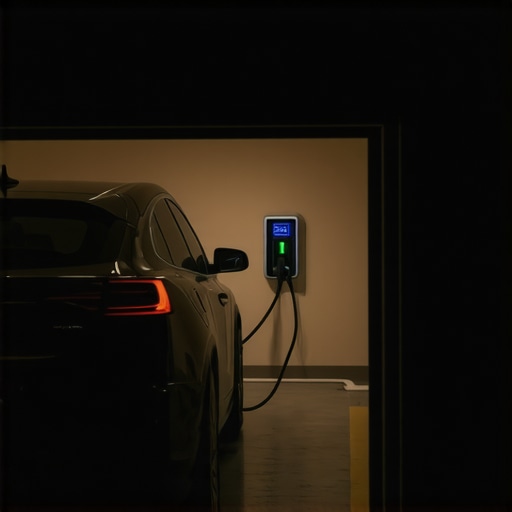
The Real Reason Your Home EV Charger Takes All Night: Technical Bottlenecks and Local Solutions
You pull into your driveway after a long day, plug in your brand-new Electric Vehicle (EV), and head inside, assuming that by morning, you’ll have a full “tank.” But when the sun rises, you’re greeted by a frustrating reality: the battery has barely reached 50%. This “overnight charging” disappointment is one of the most common complaints among new EV owners. While the dealership might have told you that a standard wall outlet is all you need, the technical reality of Level 1 charging is far less convenient.
The truth is that most EVs come bundled with a “trickle charger,” a glorified wall plug that struggles to keep up with the energy demands of modern long-range batteries. For homeowners, this realization often leads to an urgent search for professional help. For electricians, this surge in demand represents a massive opportunity, provided they understand how to leverage google business profile seo to connect with these frustrated drivers at the exact moment they need an upgrade.
In this guide, we will break down the technical limitations of your home’s current setup and explain why your new EV charger needs a dedicated professional installation to avoid overloading. We’ll also look at how the top electrical contractors are using digital strategies to ensure they are the first ones called when a homeowner realizes their standard outlet just isn’t cutting it.
Level 1 vs. Level 2: Why 120 Volts Isn’t Enough
The primary reason your EV takes all night – and sometimes well into the next day – to charge is the massive disparity between Level 1 and Level 2 charging infrastructure. Most EVs are sold with a Level 1 charging cable that plugs into a standard 120-volt (V) household outlet. This is the same outlet that powers your toaster or your bedside lamp.
Technically speaking, a Level 1 charger typically delivers about 1.4 kilowatts (kW) of power. For a standard EV with a 60kWh to 100kWh battery, this results in a charging speed of roughly 3 to 5 miles of range per hour. If you have a long commute, a Level 1 charger simply cannot replenish the energy used in a single day within an 8-hour sleep cycle. In fact, a full charge from near-empty on a Level 1 connection can take anywhere from 24 to 50 hours.
Level 2 charging, which utilizes a 240V circuit (similar to what your clothes dryer or electric oven uses), is the industry standard for “fast” home charging. A Level 2 station can deliver anywhere from 6.2 to 19.2 kW, depending on the amperage of the circuit. This translates to 12 to 80 miles of range per hour, allowing most vehicles to reach a 100% charge in 4 to 10 hours.
Because the transition from Level 1 to Level 2 requires professional electrical work, homeowners frequently turn to search engines to find local experts. This is where a specialized google maps ranking service becomes indispensable for contractors. When a homeowner searches for “EV charger installation near me,” the businesses that appear in the top three results of the Local Map Pack are the ones that get the call. Without proper google maps seo, even the most skilled electrician remains invisible to a market that is literally searching for their services.
Temperature and Efficiency: The Silent Charge Killers
Beyond the raw voltage, environmental factors play a significant role in why your car might be charging slower than expected. Lithium-ion batteries are sensitive to temperature. When it gets too cold, the chemical reactions inside the battery slow down. To protect the battery from damage, the vehicle’s onboard Battery Management System (BMS) will intentionally limit the charging speed.
Research indicates that in extreme cold, an EV can lose up to 4% of its charge overnight simply by sitting in a cold garage, as energy is diverted to keep the battery cells at a safe operating temperature. If you are using a Level 1 charger in the winter, a significant portion of the incoming electricity isn’t even going toward range; it’s being used just to warm the battery so it can accept a charge at all.
Furthermore, heat is an enemy of electrical efficiency. If your home’s wiring is older or not rated for continuous high-amperage draw, resistance builds up, creating heat and reducing the amount of energy that actually reaches the car. This is a safety hazard that many homeowners overlook. This is why we recommend that homeowners learn how infrared thermography scans catch overheating wires before they cause a fire. A professional inspection ensures that the “all-night” charge isn’t just slow, but safe.
Electrical Infrastructure: Is Your Subpanel the Bottleneck?
Many homeowners assume that installing a Level 2 charger is as simple as swapping an outlet. However, the real bottleneck is often the home’s existing electrical infrastructure. A Level 2 charger usually requires a dedicated 40-amp or 50-amp circuit. If your main electrical panel is already near capacity – which is common in homes with central air, electric water heaters, and hot tubs – there simply isn’t enough “room” to add a high-draw EV charger.
In many cases, the solution is a panel upgrade or the installation of a subpanel. You might need to consider why your garage projects require a dedicated subpanel installation specifically to handle the load of an EV charger alongside power tools or shop lights.
If your home still operates on an older 60-amp or 100-amp service, a Level 2 charger is essentially out of the question without a major upgrade. Homeowners should ask themselves: is your home safe? 4 reasons for a 60 amp panel upgrade in 2026. Upgrading to a 200-amp service is becoming the baseline requirement for the modern, electrified home. Without this infrastructure, your EV will be stuck on the “slow drip” of Level 1 charging indefinitely.
How the Best Electricians Appear at the Top of Google Maps
For the electrical contractors who perform these vital upgrades, technical knowledge of 240V circuits and load calculations is only half the battle. The other half is local business seo. In the modern marketplace, being a great electrician doesn’t matter if you don’t rank google business profile listings effectively.
Google’s local algorithm is built on three pillars: Relevance, Distance, and Prominence.
- Relevance: Does your profile clearly state you offer EV charger installations?
- Distance: How close are you to the homeowner searching for help?
- Prominence: How many 5-star reviews do you have, and how often is your business mentioned across the web?
To dominate the local map pack seo, contractors use local seo tools to track their visibility across different neighborhoods. It isn’t enough to rank in the city center; you need to rank in the affluent suburbs where EV adoption is highest. By utilizing a google maps rank tracker, businesses can see exactly where their visibility drops off and adjust their google maps marketing strategy accordingly. High-performing contractors also use local seo software to automate review requests, ensuring a steady stream of “prominence” signals to Google’s algorithm.
Dominating the Local Map Pack in 2026
As we move toward 2026, the competition for “EV charger installation” keywords will only intensify. To stay ahead, contractors must move beyond basic setup and embrace advanced google business profile optimization. This includes:
- Optimized Service Categories: Ensuring “Electric vehicle charging station contractor” is your primary or secondary category.
- Geotagged Images: Uploading photos of completed Level 2 installations with metadata that confirms your service area.
- GMB Ranking Service: Utilizing professional google business profile optimization tools to manage citations and ensure NAP (Name, Address, Phone) consistency.
When providing quotes, transparency is also key. Homeowners are wary of hidden costs. Contractors should be aware of 3 red flags your 2026 free electrical estimates should reveal to build trust with potential clients immediately. Combining technical transparency with a robust gmb ranking service creates a powerhouse lead-generation machine.
Conclusion: Solving the Overnight Charging Dilemma
The “real reason” your home EV charger takes all night is a combination of low-voltage Level 1 hardware, environmental interference, and aging home infrastructure. While Level 1 is a fine emergency backup, it is not a sustainable solution for the modern EV driver. Upgrading to a Level 2 system is the only way to ensure your vehicle is ready when you are.
For the professionals who install these systems, the challenge is being found. Technical excellence must be paired with high-intent local seo services. If you are a contractor looking to grow your business, now is the time to audit your digital presence. Use a google business profile audit tool today to see where you stand in the local rankings and start capturing the massive wave of EV-related search traffic in your area.