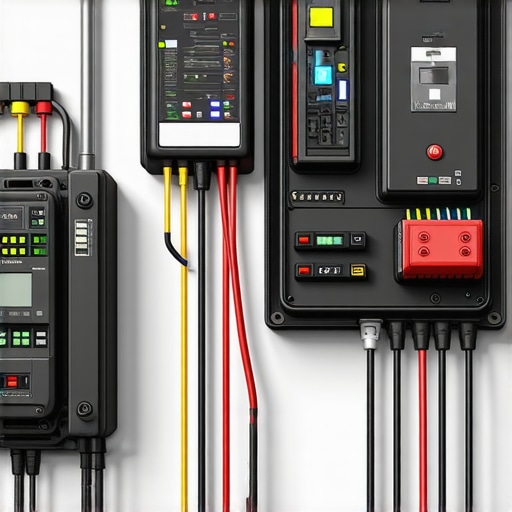
The Low Hum of an Overloaded Circuit
You’re in the garage, the table saw is screaming through a piece of kiln-dried oak, and then it happens. The lights dim to a sickly orange glow, the motor stutters, and the distinct, metallic tang of ozone hits your nostrils. That’s the smell of failure. It’s the smell of electrons struggling to fight through resistance, turning your 12-gauge Romex into a heating element. As a forensic inspector, I’ve seen this scene end in two ways: a tripped breaker or a 2:00 AM visit from the fire department. If you’re planning on turning your garage into a workshop, a gym, or an EV charging hub, you aren’t just adding tools; you’re demanding a level of performance your home’s original load center was never designed to provide.
The Old Timer’s Lesson: The Physics of the Hot Spot
My journeyman used to smack my hand if I stripped a wire with a knife. ‘You nick the copper, you create a hot spot,’ he’d scream. He was right. That tiny notch in the conductor reduces the cross-sectional area, increasing resistance at that specific point. In a garage environment, where high-draw motors start and stop, that hot spot undergoes constant thermal cycling. The metal expands and contracts, eventually loosening the terminal screw. This is the ‘Cold Creep’ phenomenon usually associated with mid-century aluminum wiring, but even copper isn’t immune to the laws of physics when you’re pulling 18 amps on a 20-amp circuit for three hours straight. Installing a dedicated subpanel isn’t a luxury; it’s about shortening the ‘Home Run’ to your high-draw devices and ensuring that a fault in the garage doesn’t take out the refrigerator in the kitchen.
Why Load Center Upgrades Aren’t Enough
Most homeowners think a simple load center upgrade at the main service entrance solves everything. While jumping from a 100-amp to a 200-amp service is a great start, it doesn’t solve the ‘voltage drop’ problem at the end of a sixty-foot run of wire. When you trigger a high-torque motor, the initial inrush current can be six times the running current. If that power is coming all the way from a crowded main panel across the house, the resistance of the long wire run causes a voltage dip. This makes motors run hotter and die younger. By bringing a heavy-gauge feeder line to a garage subpanel, you provide a reservoir of power right where it’s needed. This is critical for microgrid integration and AI fault detection systems that monitor power quality in real-time. Modern electronics in your workshop don’t just want power; they want clean power.
“All branch circuits for the garage shall be protected by a ground-fault circuit-interrupter (GFCI) and, in many jurisdictions, arc-fault circuit-interrupter (AFCI) protection is becoming the standard for any area where humans spend significant time.” – NFPA 70: National Electrical Code (NEC)
The Forensic Breakdown: Anatomy of a Garage Fire
When I conduct arc flash studies after a structure fire, the culprit is rarely a lightning strike. It’s usually a series of small, avoidable failures. It starts with a homeowner tapping into an existing lighting circuit to add a couple of 240V outlets for a welder. They don’t account for the ‘Derating’ of the wire when multiple conductors are bundled together in a single conduit. Heat builds up. The PVC insulation on the Romex reaches its melting point, and suddenly, the phase-to-phase insulation fails. If you don’t have a subpanel with properly sized breakers, that fault might not draw enough current to trip a 100-amp main breaker immediately, but it will generate enough heat (upwards of 5,000 degrees Fahrenheit) to ignite the ‘Monkey Shit’ (duct seal) or sawdust nearby. [image_placeholder_1]
EV Chargers and the Continuous Load Trap
Installing an EV charger is the ultimate stress test for any electrical system. Unlike a toaster that runs for two minutes, an EV charger is a ‘Continuous Load,’ meaning it runs at full capacity for hours. NEC defines a continuous load as any load where the maximum current is expected to continue for three hours or more. This requires the circuit to be sized at 125% of the load. If you try to ‘piggyback’ this off your existing garage wiring, you are begging for a disaster. A dedicated subpanel allows for the proper separation of these massive loads. It also simplifies security camera wiring and attic fan installation by providing a localized hub for all garage-based utilities. You won’t have to fish wires through twenty feet of finished drywall every time you want to add a new security light.
“Aluminum wire connections can overheat and cause a fire without tripping the circuit breaker. This is particularly true in older homes where the ‘Cold Creep’ effect has had decades to loosen connections.” – CPSC Safety Alert 516
The Professional Edge: Permits and Guarantees
I get it. You want to save a buck. But electricity isn’t a hobby. It’s a force of nature we’ve tricked into moving through metal. Using permit pulling services ensures that a third-party inspector—someone as cynical as me—looks at the work and confirms it won’t kill you. This is why we offer a lifetime workmanship guarantee and warranty backed repairs. We don’t just ‘get the lights on.’ We torque every lug to the manufacturer’s inch-pound specification with a calibrated wrench. We use a ‘Wiggy’ or a high-end multimeter to verify voltage drop under load. We don’t just rely on a ‘Tick Tracer’ to see if a wire is live; we verify the integrity of the ground path. This is the difference between a ‘Handyman Special’ and a professional installation.
The Virtual Consultation Wiring Revolution
In the modern era, we can often diagnose the feasibility of a subpanel via virtual consultation wiring. You show me your main panel via video, I check the bus bar for signs of heat damage or ‘pitting,’ and we determine if your current service can handle the ‘Heavy-up.’ We look for the ‘Widow Makers’—those old Zinsco or Federal Pacific panels where the breakers jam on the bus bar and refuse to trip. If I see one of those, the conversation changes from ‘adding a subpanel’ to ‘saving your life.’ Once the infrastructure is solid, you can enjoy your garage projects knowing that your electrical system is protected by the latest in AI fault detection and overcurrent protection. Don’t wait for the smell of smoke. If your ‘Dikes’ are ready and your project list is growing, it’s time to stop the ‘flicker’ and start the upgrade.
Comments are closed.