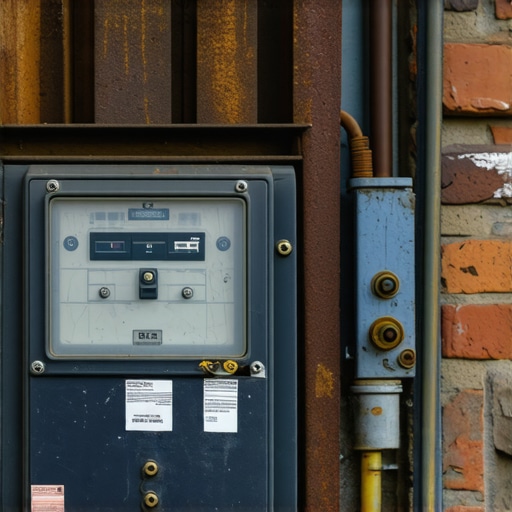
The Silent Killer Behind the Drywall
You don’t notice the electricity in your home until it tries to kill you or destroy your property. Most homeowners treat their electrical panel like a toaster—they assume if it’s there, it’s working. But as a forensic inspector who has spent three decades smelling charred insulation and poking through the remains of ‘mystery fires,’ I can tell you that your service entrance is likely a ticking clock. We are living in an era where we expect a 1970s infrastructure to handle a 2024 load. You want a sauna heater installation, a 200-mile-a-day EV charger installation, and a kitchen full of high-end appliances, yet you’re running it all through a service entrance that’s held together by hope and oxidized copper.
The Old Timer’s Lesson: Why the Details Matter
My journeyman, a grizzled guy who could tell a circuit’s voltage by the way the air felt, used to smack my hand if I stripped a wire with a pocket knife instead of a proper pair of dikes. ‘You nick that copper, you create a hot spot,’ he’d scream. ‘That tiny scratch is a bottleneck for electrons. Bottlenecks create resistance. Resistance creates heat. Heat creates a funeral.’ He wasn’t being dramatic. I’ve seen 4/0 aluminum service entrance cable snapped clean off at the meter lug because a previous installer didn’t use Monkey Shit (duct seal) to keep the moisture out, or because they over-torqued the lug, causing the metal to fatigue over years of thermal expansion. This isn’t just ‘handyman’ work; this is physics, and physics doesn’t take days off.
Sign 1: The Visual Autopsy—Corrosion and Cold Creep
If you open your panel door and see anything other than clean metal and organized wire, you’re in trouble. I’m not talking about a little dust. I’m talking about the white, powdery oxidation on aluminum conductors or the greenish patina on copper. This is often the result of a failing weatherhead or a cracked service mast. When water tracks down the inside of your service cable, it enters the main lugs. This is where Cold Creep becomes your enemy. Aluminum expands and contracts at a different rate than the steel or brass lugs holding it. Over decades, this movement loosens the connection. A loose connection is an arcing connection.
“Aluminum wire connections can overheat and cause a fire without tripping the circuit breaker.” – CPSC Safety Alert 516
When that connection loosens, the resistance jumps. I’ve pulled my Wiggy out to test a dead leg only to find the insulation has literally vaporized off the wire inside the pipe. If you see ‘pitting’ on your bus bars, your panel is already failing.
Sign 2: The Auditory Warning—The Sizzle of Resistance
You should never ‘hear’ your electricity. If your panel hums or crackles when the AC kicks on or when you start your kitchen range hood wiring test, you are hearing the sound of air being ionized. That ‘frying bacon’ sound is a series of micro-arcs. Every time it arcs, it carbonizes the surrounding material. Carbon is conductive. This creates a path for more electricity to leak, eventually leading to a catastrophic phase-to-phase short. I’ve stood in front of panels where my Tick Tracer (non-contact voltage tester) lit up three feet away from the enclosure because the magnetic field was so distorted by a failing main breaker. This isn’t just a nuisance; it’s a precursor to a ‘Widow Maker’ event where the panel cover becomes energized.
Sign 3: The Obsolescence Trap—Brand Shaming and Insurance Denials
If your home was built between 1960 and 1980, you might be sitting on a Federal Pacific Electric (FPE) or Zinsco panel. In the trade, we call these ‘fire starters.’ The FPE Stab-Lok breakers are notorious for failing to trip even under a massive overload. They jam. The internal switching mechanism seizes, and instead of cutting power, it just lets the wire melt until the house is gone.
“Overcurrent protection shall be provided in each ungrounded conductor and shall be located at the point where the conductors receive their supply.” – NEC Article 240.21
If your breaker refuses to trip, that ‘protection’ is a myth. Many insurance companies now refuse to renew policies for homes with these panels. Upgrading to a 200 amp panel install isn’t just about power; it’s about staying insurable. Modern smart meter installation requirements often force these upgrades anyway, as the old meter cans can’t house the new digital modules safely.
Sign 4: Capacity Exhaustion—The Modern Load Crisis
Your 100-amp service was designed for a world of incandescent bulbs and a single refrigerator. Today, you’re adding security camera wiring, Christmas light services that pull 15 amps on their own, and patio cover outlets for outdoor kitchens. The math simply doesn’t add up. When you add a subpanel installation to handle a new wing of the house without upgrading the main service, you are redlining your electrical system. You’ll notice lights flickering when the vacuum runs or the microwave starts. This is ‘voltage drop.’ It’s not just annoying; it ruins the sensitive electronics in your smart appliances. A 200 amp panel install provides the ‘headroom’ necessary to run a modern life without stressing the conductors to their thermal limits.
The Professional Path: Why Permits and Rough-ins Matter
I’ve walked into too many ‘Rough-ins’ where a homeowner tried to DIY a service entrance. They skip the permit pulling services because they think it’s just a tax. It’s not. That permit ensures an inspector—someone like me, but with a badge—checks your torque settings and your grounding electrode system. Without proper grounding (usually two copper-clad rods driven eight feet into the earth), your security camera wiring becomes a lightning rod for your whole house. When we perform a 200 amp panel install, we aren’t just swapping a box; we are re-engineering the safety heart of your home. We ensure the drip loop is correct so water doesn’t migrate, we apply the right anti-oxidant joint compound, and we make sure every Home Run is labeled and landed securely. Don’t bet your family’s safety on a YouTube tutorial and a cheap pair of pliers.