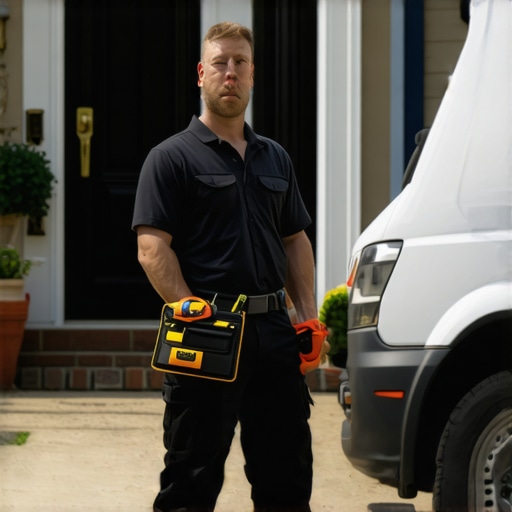
The Ticking Clock: Why Your Walls are Screaming for Help
The smell of ozone is a distinctive, metallic tang that most people mistake for a cleaning product. To me, it smells like a five-alarm fire waiting to happen. If you’re smelling it near your service panel, you don’t have time to browse through catalogs for pendant light hanging options. You have a critical failure in progress. Most homeowners think electricity is a static utility, but it’s a violent, thermal force. When you’re looking for same day service appointments, you aren’t just paying for a truck; you’re paying for a forensic expert who can find the Home Run that’s currently melting into a puddle of copper and carbon. Every second you wait, the resistance in that circuit increases, and according to Joule’s Law, the heat generated increases with the square of the current. You do the math.
I’ve walked into hundreds of ‘renovated’ properties where the aesthetic hides a nightmare. I remember one specific ‘flipping special’ in a mid-century colonial. The client called because their microwave kept tripping the breaker. I pulled out my Tick Tracer and found that the flipper had buried three live junction boxes behind a marble backsplash. They didn’t even use wire nuts; they just twisted the Romex together and wrapped it in masking tape. The tape had dried out, the wires were arcing, and the studs were charred black. This wasn’t just a circuit breaker replacement job; it was a race against a structural fire. That’s why thermal imaging inspections are no longer optional for me; I need to see the heat signatures before I even think about opening a wall.
The Mid-Century Menace: Aluminum and Faulty Panels
If your home was built between 1960 and 1980, you are likely living on top of a metallurgical time bomb. This was the era of aluminum wiring and the infamous Federal Pacific Electric (FPE) panels. The physics of failure here is fascinating and terrifying. Aluminum has a significantly higher coefficient of thermal expansion than copper. We call this Cold Creep. Every time you turn on a space heater or a heavy appliance, the wire expands. When you turn it off, it contracts. Over decades, this mechanical movement loosens the terminal screws. Once that connection is loose, you get an oxidation layer. Aluminum oxide is an insulator, not a conductor. This creates massive resistance, which creates heat, which leads to a fire.
“Aluminum wire connections can overheat and cause a fire without tripping the circuit breaker.” – CPSC Safety Alert 516
Then there’s the panel itself. Brands like Zinsco and FPE are the ‘Widow Makers’ of the industry. Their breakers are notorious for ‘jamming.’ In a healthy system, if a short circuit occurs, the breaker trips to protect the wire. In these old panels, the internal pivot points often seize up due to a combination of humidity and poor plating. I’ve seen FPE breakers that were literally welded to the bus bar while the Romex was glowing like a toaster filament. This is why a fuse box to breaker conversion or a total electrical panel upgrade isn’t an upsell; it’s a life-saving necessity. If your panel looks like it belongs in a museum, stop looking for DIY videos and get a Master Electrician on-site immediately.
The Industrial Grind: Restaurant Kitchen Electrical Emergencies
In a restaurant kitchen electrical environment, the stakes are even higher. You’re dealing with high-amperage equipment, grease-laden air, and constant moisture. Grease is a silent killer for electrical components. It gets into the sockets, coats the internal components of smoke detector installation units, and creates a bridge for electricity to travel where it shouldn’t. I’ve seen Wiggy testers go wild in commercial kitchens because the entire stainless steel prep table was energized due to a frayed cord on a mixer. When a commercial kitchen goes down, you’re losing thousands in revenue every hour. This requires augmented reality troubleshooting or high-end diagnostic tools to trace the fault through miles of conduit without tearing the kitchen apart during the dinner rush. We prioritize these calls because a 200-amp fault in a grease-heavy environment is an explosive combination.
Tactical Reliability and Modern Safety
For those who have served, we offer specialized military discount wiring services, because we value the discipline of doing things by the book. In my world, ‘the book’ is the National Electrical Code (NEC).
“The purpose of this Code is the practical safeguarding of persons and property from hazards arising from the use of electricity.” – NFPA 70: National Electrical Code
Whether we are doing a rough-in for a new addition or a final trim-out of a residential rewire, the torque on every single lug is checked and double-checked. We don’t just ‘snug’ it; we use a torque screwdriver to ensure it meets the manufacturer’s specifications. This prevents the loose connections that lead to the emergency calls we see every day.
What to Do While You Wait for Same-Day Service
If you see sparks or smell burning, do not wait. Go to your main disconnect and shut off the power to the entire building. Don’t worry about the refrigerator or the AC; worry about the structure. If you have a Tick Tracer (non-contact voltage tester), use it, but never trust your life to a cheap plastic tool. Wait for the professional who arrives with a real solenoid tester and an infrared camera. We will perform a forensic scan, looking for ‘hot spots’ that indicate failing insulation or overloaded circuits. Once the immediate danger is cleared, we can discuss the long-term fixes, like a full electrical panel upgrade or replacing those old ungrounded circuits. Electricity is a faithful servant but a cruel master. Treat it with the respect it deserves, and it will keep your lights on for another 50 years.