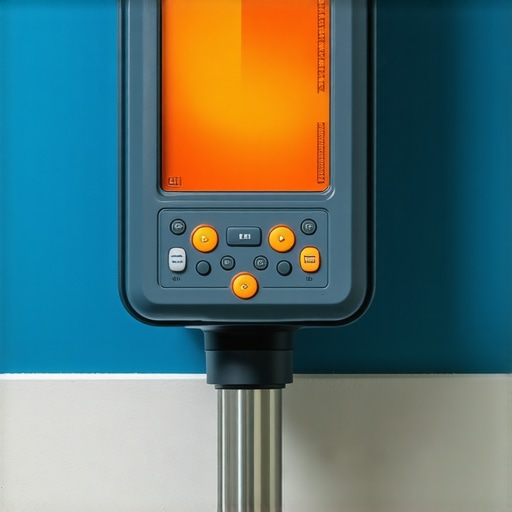
The Sensory Warning: What Your Eyes Are Missing
Electricity is a silent killer because it doesn’t always go out with a bang. It prefers to simmer. Before the smoke starts or the holiday emergency calls begin, there is heat. I’m not talking about the warmth of a toaster; I’m talking about localized resistance that reaches temperatures capable of liquefying insulation. You can walk past a panel a thousand times and never smell the ozone or see the discoloration, but the heat is there, radiating in a spectrum you can’t see without the right glass. As a master electrician with over three decades of tracing circuits, I’ve learned that by the time you smell the ‘fishy’ scent of burning phenolic resin, you’re already 90% of the way to a structure fire. This is why forensic thermography has moved from the laboratory to the field. Infrared (IR) scanning isn’t some high-tech gimmick used to pad a bill; it is the only way to perform a non-destructive autopsy on a live system before it actually dies.
The Old Timer’s Lesson: The Physics of a ‘Nick’
My journeyman used to smack my hand if I stripped a wire with a pocketknife instead of a dedicated set of dikes or wire strippers. ‘You nick the copper, you create a hot spot,’ he’d scream. He wasn’t just being a cranky old man; he was teaching me about cross-sectional area and resistance. When you nick a conductor, you reduce the area through which electrons can flow. This creates a bottleneck. In a high-demand scenario, like a data center power setup or a level 2 EV charger installation, that bottleneck generates intense localized heat. Years later, using a thermal imager, I saw exactly what he meant. A single nicked strand in a stranded 6-AWG wire was glowing at 240 degrees Fahrenheit while the rest of the conductor sat at a cool 95. That tiny point of resistance was a ticking time bomb, slowly baking the wire’s jacket until it turned to carbon. Once it’s carbonized, it’s no longer an insulator; it’s a path to ground.
“Thermal imaging can detect potential failures in electrical systems by identifying abnormally high temperatures caused by high resistance or excessive current flow.” – NFPA 70B: Recommended Practice for Electrical Equipment Maintenance
Component Zooming: The Forensic Breakdown of Resistance
To understand why your insurance provider is starting to demand IR scans, you have to look at the molecular level. Most people think of a wire as a solid pipe. It’s not. It’s a metallic crystal structure that expands and contracts every time you flip a switch. This is known as thermal cycling. In a home backup generator install, for example, the transfer switch might sit idle for months. But when it kicks in, it carries a massive load instantly. This sudden surge causes the metal to expand. If the lug wasn’t torqued to the exact inch-pound specification required by the manufacturer, that expansion causes the wire to shift. Over years, this leads to ‘cold creep’—where the metal literally deforms and moves away from the pressure of the screw. Now you have a loose connection. A loose connection is a high-resistance connection. High resistance equals heat. Using an IR camera during a virtual consultation wiring review or a physical site visit allows us to see this heat signature long before the breaker ever thinks about tripping. Most breakers are thermal-magnetic; they only trip when the internal bi-metal strip gets hot enough or a massive spike occurs. They won’t trip for a loose lug that’s slowly melting the bus bar.
The Insurance Audit: Why Your Carrier Cares
Insurance companies are tired of paying for ‘electrical mystery fires.’ They know that an annual audit of your electrical wiring services can mitigate 80% of fire risks. They are looking for the ‘Delta T’—the difference in temperature between two similar components. If Phase A is 20 degrees hotter than Phase B under the same load, you have an imbalance or a failing component. In industrial settings or homes with an equipotential grid for pools and spas, these imbalances can lead to stray voltage and hardware failure. Carriers are now prioritizing properties that can provide a certified thermographic report. It proves the system isn’t just ‘working,’ but that it is thermally stable. If you are looking for free electrical estimates, make sure you’re asking about thermal imaging. A visual inspection is just a guess; an IR scan is a diagnosis.
“A large percentage of the electrical fires that occur in the United States could be prevented by regular inspection and maintenance of the electrical system.” – CPSC Safety Alert: Aging Electrical Systems
The Fix: Beyond the Handyman Special
When an IR scan reveals a hot spot—maybe in a grounding electrode install or a main breaker—the solution isn’t just ‘tightening the screw.’ Often, the heat has already oxidized the metal. Once copper or aluminum oxidizes, it develops a layer of skin that is highly resistive. You can tighten it all you want, but you’re just squeezing the ‘rust.’ A professional home rewiring services team will disassemble the connection, clean the conductors to a bright finish, apply an antioxidant compound (often called ‘monkey shit’ in the trade, though that’s usually the duct seal), and then re-torque it using a calibrated torque wrench. This is the difference between a repair that lasts 20 years and one that fails next Tuesday. Don’t let a ‘handyman’ with a pair of pliers touch your panel. If they don’t own a Wiggy or a Tick Tracer, they shouldn’t be inside your data center power setup or your home’s main service. Sleep at night knowing your connections aren’t just tight—they’re thermally invisible. If you want to keep the lights on and the fire department away, make that IR scan a mandatory part of your annual safety ritual.