The Ghost in the Walls: Why Your Historic Home is a Silent Fire Trap
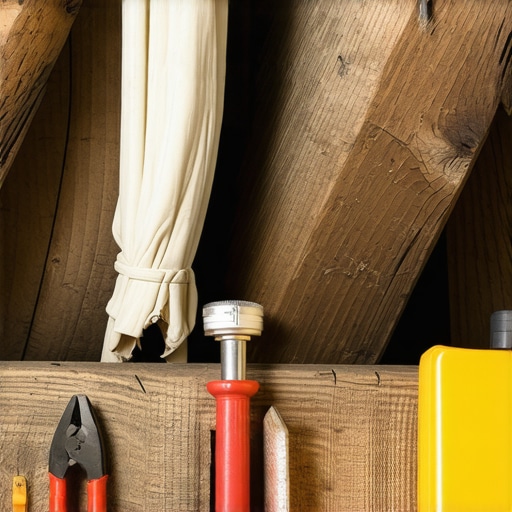
I remember my first week as an apprentice, working under a grizzly old-timer named Dutch. We were in the attic of a 1912 Victorian, and I was about to snip a wire with my dikes. Dutch grabbed my wrist so hard it bruised. ‘Boy,’ he growled, ‘you treat every wire like it’s a rattlesnake until you prove it’s dead with a Wiggy, and even then, you don’t trust it.’ He showed me a section of wire where the cotton braid had turned to dust; the only thing keeping the house from burning down was a quarter-inch of porcelain. That lesson stuck. When we talk about knob and tube (K&T) wiring, we aren’t just talking about old technology; we are talking about a system that was never designed for the thermal and electrical loads of the 21st century. If you are living in a home built before 1950, you are likely sleeping on a bed of tinder energized by 120 volts of electricity. Replacing it isn’t a weekend DIY project; it’s a forensic surgical procedure that requires a licensed master electrician who knows how to navigate the eccentricities of balloon framing and lath-and-plaster obstacles.
The Physics of Failure: Why Knob and Tube Overheats
To understand why K&T is dangerous, you have to understand the physics of its design. Unlike modern Romex or THHN wire, where the hot, neutral, and ground conductors are bundled together in a single jacket, K&T runs the hot and neutral wires separately. They are suspended on porcelain knobs and passed through porcelain tubes when crossing structural members. This was actually a clever design for 1920 because it allowed air to circulate around the conductors, dissipating heat. However, the system relies on that air space. The moment a modern homeowner pumps blown-in cellulose or fiberglass insulation into their walls to save on heating bills, they create a thermal blanket. This leads to ‘Joule heating,’ where the resistance of the wire generates heat that cannot escape. Over time, this heat causes the vulcanized rubber insulation to become brittle and flake off, leaving bare copper exposed. <blockquote>”Knob-and-tube wiring is not required to be removed from existing walls, but it shall not be covered by thermal insulation.” – <cite>NEC Article 394.12</cite></blockquote> When that insulation fails, any vibration—a door slamming, a heavy footstep—can cause the hot and neutral to touch, leading to a high-resistance arc that can ignite dry wooden lath in seconds.
The Forensic Inspection: Identifying the Danger Zones
Before you even think about a rough-in for a new system, you have to map the existing one. We start in the basement or the attic using a tick tracer (non-contact voltage tester) to identify which lines are still hot. One of the most common crimes I see in forensic inspections is the ‘Handyman Special’ splice. This is where someone has cut into a K&T line and spliced in a modern grounded outlet. The problem? K&T has no ground wire. These are often ‘bootleg grounds,’ where the neutral is tied to the ground screw. This might fool a cheap plug-in tester, but it won’t save your life during a ground fault. If you’re planning for ethernet wiring services or a speaker system setup in an old home, you cannot simply piggyback off these ancient circuits. The current draw from a modern whole house fan wiring project alone is enough to melt the terminals on a 100-year-old switch. We look for ‘widow makers’—wires that have been stripped and twisted together without a junction box, wrapped in nothing but friction tape that has long since lost its adhesive properties.
The Systematic Extraction: A Professional Protocol
The process of removal starts with a 60 amp panel upgrade or, more commonly, a full service heavy-up to 200 amps. Most historic homes are still struggling on an old 60-amp fuse box. You cannot run a modern lifestyle on 60 amps, especially if you’re looking into permanent holiday lighting or access control wiring for security. We identify the ‘home run’—the main line going back to the panel—and sever it. Once the system is de-energized, we don’t always pull every inch of old wire out; if it’s buried behind a pristine 19th-century crown molding, we cut it back, terminate it in a visible junction box, and label it as ‘ABANDONED.’ The goal is to replace the old two-wire system with modern 12/2 or 14/2 NM-B cable that includes a dedicated equipment grounding conductor. This is where certified journeyman services become essential. Fishing wire through lath and plaster requires a delicate touch; you aren’t just pulling wire, you are navigating around horizontal fire blocks and diagonal bracing that modern homes simply don’t have. If you’re also doing retail store wiring or commercial upgrades, you know that code compliance is non-negotiable for insurance purposes. <blockquote>”The combination of aged insulation and modern electrical loads creates a significant fire hazard in homes with knob-and-tube wiring.” – <cite>CPSC Safety Alert</cite></blockquote>
Upgrading for the Future: Beyond Basic Safety
Once the K&T is out, the home becomes a blank canvas for modern technology. This is the time to consider ethernet wiring services to every room, as lath and plaster walls are notorious for killing Wi-Fi signals. We also look at speaker system setup and permanent holiday lighting controllers. Because we are already opening small access points in the walls, the incremental cost of adding these luxuries is minimal. If your project requires weekend electrician services to minimize disruption to your family, ensure you are hiring a crew that understands the ‘forensic’ nature of old homes. They should be checking for ‘monkey shit’ (duct seal) used in old conduits and ensuring that all new penetrations are fire-stopped according to modern code. When we do a trim-out on a historic rewire, we use AFCI (Arc-Fault Circuit Interrupter) breakers. These are far more sensitive than standard breakers; they can detect the specific wave signature of an arc before a fire even starts. In a historic home, an AFCI breaker is the best insurance policy you can buy. You aren’t just paying for copper and plastic; you’re paying for the peace of mind that comes from knowing your home won’t become a statistic while you sleep. Don’t trust your heritage to a handyman; demand the expertise of a licensed master electrician who respects the history and the physics of your home. [HowTo Schema] {“@context”: “https://schema.org”, “@type”: “HowTo”, “name”: “How to Safely Remove Knob and Tube Wiring”, “step”: [{“@type”: “HowToStep”, “text”: “Conduct a full forensic inspection using a tick tracer and circuit mapper to identify all active K&T lines.”}, {“@type”: “HowToStep”, “text”: “Perform a panel upgrade, typically replacing an old 60-amp fuse box with a 200-amp breaker panel.”}, {“@type”: “HowToStep”, “text”: “De-energize the K&T home runs and verify with a Wiggy or multimeter.”}, {“@type”: “HowToStep”, “text”: “Fish modern grounded Romex through walls, bypassing old porcelain insulators.”}, {“@type”: “HowToStep”, “text”: “Install AFCI breakers to provide maximum protection against future arc faults.”}]}