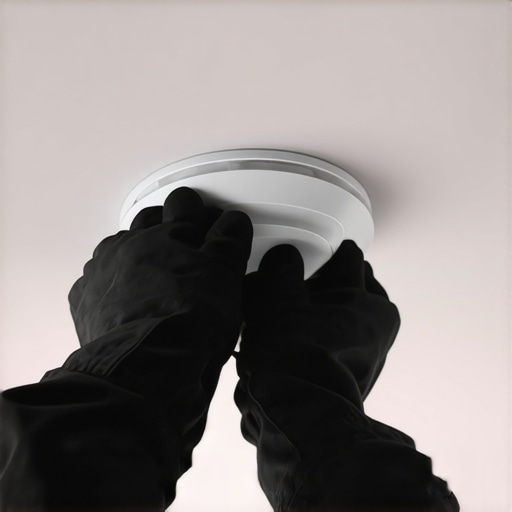
The rhythmic, persistent chirp of a failing smoke detector isn’t just an annoyance designed to ruin your sleep; it is the death rattle of a critical life-safety component. When I walk into a house where the homeowner has pulled the alarm off the ceiling and tossed it into a drawer because of a ‘nuisance trip,’ I don’t see a DIY fix—I see a forensic scene waiting to happen. In thirty-five years of pulling 14/2 Romex through crawlspaces and diagnosing fried service masts, I’ve learned that electricity is lazier than a summer apprentice, but fire is faster than any circuit breaker ever designed. If your smoke detector is failing, the timeline for a fix isn’t ‘next Tuesday.’ It’s right now.
The Old Timer’s Lesson: The High Cost of a Nicked Wire
My old journeyman used to have a nasty habit of smacking my hand with his dikes if he saw me stripping wire with a pocket knife. ‘You nick that copper, you create a hot spot,’ he’d bark. He wasn’t being a jerk for the sake of it. He was teaching me about the physics of resistance. When you nick a conductor, you reduce its cross-sectional area, creating a bottleneck for electrons. That bottleneck generates heat. Over years of thermal expansion and contraction—the ‘breathing’ of the house—that nick becomes a fracture. Eventually, it arcs. I’ve seen smoke detectors fail not because of the sensor, but because the 120V hardwired connection was mangled during the rough-in, leading to a carbon-tracked failure inside the ceiling box. This is why NEC code updates now mandate specific torque settings for terminals; if it isn’t torqued to spec, it’s a fire hazard. Even a tiny error during pendant light hanging or a smart lighting installation can compromise the integrity of the entire branch circuit, affecting your life-safety devices.
“Smoke alarms shall be replaced when they fail to respond to operability tests, but shall not remain in service longer than 10 years from the date of manufacture.” – NFPA 72 National Fire Alarm and Signaling Code
The Forensic Breakdown: Why Detectors Die Before Their Time
When I perform an autopsy on a failed smoke detector, I’m looking for more than just a dead 9V battery. In older homes, particularly those still dealing with the remnants of knob and tube removal projects, the infrastructure itself is the enemy. In a house built between 1900 and 1950, you often find a lack of a dedicated equipment grounding conductor. This creates a ‘floating’ electrical environment. Modern interconnected smoke alarms rely on a third wire—the red traveler—to communicate. Without a solid ground path, induced voltages from nearby home automation setup components or even a data closet organization can send ‘ghost’ signals down that line. This results in the entire house screaming at 3 AM for no reason. But it’s the physical failure of the sensing chamber that is truly terrifying. Most homeowners use ionization alarms, which use a tiny speck of Americium-241 to ionize the air. Over time, household dust, microscopic pet dander, and cooking grease bridge the gap in that chamber. This creates a parasitic load that drains the battery and eventually blinds the sensor. If that sensor is blind, you have zero seconds of warning when a lithium-ion battery in the garage enters thermal runaway.
The ‘Time Bomb’ in Mid-Century Infrastructure
If your home was built in the 70s, you might be sitting on a service entrance upgrade waiting to happen. Many of these homes still have Federal Pacific or Zinsco panels where the bus bars are corroding behind the deadfront. When these panels fail to trip during an overcurrent event, the wires in your walls become the fuse. A faulty smoke detector is often the only thing standing between a minor electrical fault and a total loss. When we do a fire alarm system install, we aren’t just twisting wire nuts. We are calculating the load and ensuring that the life-safety branch is isolated from high-draw appliances. In tiny home wiring, this is even more critical due to the lack of cubic volume; smoke fills the space in seconds, not minutes. If you are running three phase power services in a light commercial setting or a home workshop, the vibration from heavy machinery can actually loosen the friction-fit connections on cheap, builder-grade alarms. You need a Master Electrician to check the torque on those bases with a Wiggy or a high-quality multimeter to ensure the voltage isn’t sagging.
“Aluminum wire connections can overheat and cause a fire without tripping the circuit breaker.” – CPSC Safety Alert 516
The Anatomy of a Same-Day Repair
Why is it mandatory to call for service the same day? Because of the ‘Flashover’ phenomenon. Modern homes are filled with synthetic materials—polyurethane foam in your sofa, polyester in your curtains. These materials reach flashover—the point where everything in the room ignites simultaneously—in under four minutes. In the days of knob and tube wiring, you had closer to 15 minutes because houses were built with real wood and cotton. You no longer have the luxury of time. When I arrive for a same-day call, I don’t just swap the unit. I use a tick tracer to verify the presence of voltage, check the neutral-to-ground bond at the panel, and often use ‘monkey shit’ (duct seal) to plug the hole in the ceiling box. Why? Because attic air leaking into the back of a smoke detector can cause condensation on the logic board, leading to a premature failure. We also look at the service entrance upgrade requirements; if your grounding electrode system is compromised, your smoke detectors are susceptible to surge damage from every passing thunderstorm.
The Technical Fix vs. The Handyman Special
I’ve seen ‘handyman’ fixes where they’ve tapped a smoke detector off a switched bathroom fan circuit. Every time someone takes a shower and turns off the light, the alarm loses its primary power and starts chirping because it’s running on the backup battery. That is a code violation that can cost lives. A professional fire alarm system install ensures that the alarms are on a dedicated or appropriately shared circuit per NEC 210.12. Furthermore, if you’re doing a tiny home wiring project, every inch of space matters. You cannot afford to have a ‘dead air’ space where smoke can’t reach the sensor. We use forensic tools to ensure the placement is optimal, away from the turbulent air of ceiling fans or HVAC vents. Don’t gamble with your family’s safety by waiting for a weekend opening. If that unit is chirping or failing to test, it is a localized emergency. We treat it with the same urgency as a sparking bus bar or a glowing lug. Sleep tonight knowing your system was installed and tested by someone who respects the lethality of 120 volts.