The Invisible Enemy: Why Your Nose Knows Before Your Breaker Does
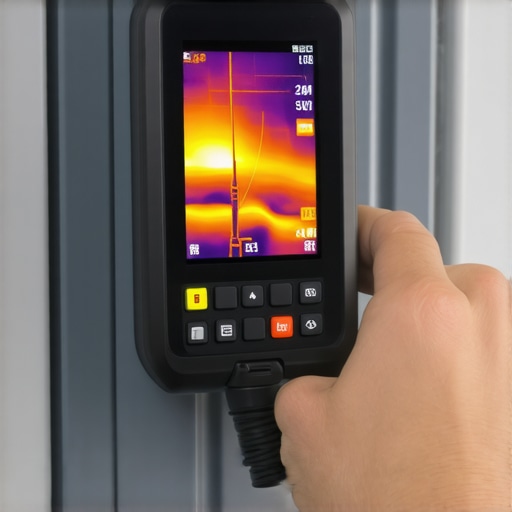
I’ve spent thirty-five years smelling houses before I even step through the threshold. There’s a specific, metallic tang to ozone—the scent of oxygen being ripped apart by an electrical arc—that tells me exactly how much trouble a homeowner is in. But sometimes, the danger doesn’t have a smell yet. Sometimes, the hazard is a silent, cold-blooded killer sitting behind a layer of fresh drywall and eggshell-finish paint. I walked into a ‘fully renovated’ mid-century ranch last month where the flipper had buried a high-load junction box behind a custom walnut backsplash in the kitchen. The homeowner complained of a ‘warm spot’ near the spice rack. I didn’t reach for my Wiggy or my Tick Tracer first; I reached for the thermal imager. On the screen, that ‘warm spot’ wasn’t just warm. It was a 210-degree bloom of white-hot thermal energy, a localized sun radiating through the timber. The wire nuts were melting, the insulation was charring, and the house was about forty-eight hours away from a structure fire. This is the reality of forensic electrical inspection: what you can’t see will absolutely burn your life to the ground.
“Aluminum wire connections can overheat and cause a fire without tripping the circuit breaker.” – CPSC Safety Alert 516
The Physics of the ‘Cold Creep’ and Thermal Runaway
To understand why infrared thermography is the gold standard for safety, we have to look at the physics of a failing connection. In homes built between 1960 and 1980, we deal with the ghost of aluminum wiring. Aluminum is a temperamental beast. It has a high coefficient of thermal expansion, meaning it grows and shrinks significantly more than copper when current flows through it. This leads to a phenomenon we call ‘Cold Creep.’ Every time you turn on your kitchen range hood wiring or a heavy appliance, the wire heats up and expands. When it cools, it doesn’t quite return to its original shape. Over a decade, the screw on that terminal becomes loose. Once the connection is loose, resistance increases. In the world of Ohm’s Law, resistance equals heat. This heat causes further oxidation—a non-conductive layer that forms on the metal—which increases resistance even more. This is a feedback loop known as thermal runaway. By the time a standard breaker trips, the wire has usually already melted through its jacket and started a fire in the wall cavity. This is why annual maintenance contracts are not a luxury; they are a forensic necessity for aging infrastructure.
The Forensic Autopsy: Finding the Hidden Glow
When I conduct a forensic sweep, I’m looking for emissivity anomalies. If I’m inspecting a transformer installation or a main service panel, I’m looking for delta-T—the temperature difference between phases. If Phase A is sitting at 95 degrees and Phase B is screaming at 165 degrees, we have a problem. This often points to a loose bonding jumper or an unbalanced load that’s stressing the neutral. During a recent solar panel electrical hookup inspection, I found a back-fed breaker that was glowing like a cigar tip on the IR camera. The installer hadn’t torqued the lugs to the manufacturer’s inch-pound specifications. In his haste to finish the rough-in, he’d left a high-resistance bridge. Without the infrared camera, that panel would have eventually exploded, likely taking the expensive solar inverter with it. We don’t just look at the big stuff, either. Even a recessed lighting installation can be a hazard if the thermal cut-off switch is bypassed or if insulation is packed too tightly around a non-IC rated housing. The camera sees the heat trapped in the ceiling joists long before the smoke detector sounds.
“Failure to maintain tight electrical connections can lead to increased resistance and eventual catastrophic failure of the equipment and surrounding structures.” – NFPA 70E Standard for Electrical Safety
The Risk of the Modern Load: EV Chargers and Generators
Our homes weren’t designed for the way we live today. We’re plugging in Teslas and installing generator transfer switches on panels that were originally designed for a few light bulbs and a toaster. When you add a heavy continuous load, any existing weakness in the system is magnified. This is why a virtual consultation wiring check is only the first step; it can identify obvious code violations, but it can’t feel the heat. I’ve seen temporary power services on construction sites where the home run lines were so hot they were soft to the touch because the ‘electrician’ didn’t account for voltage drop over a 200-foot run. If you’re installing a PA system installation for a commercial space or a massive home theater, you’re adding harmonics to the line. Harmonics cause the neutral wire to heat up even if the breakers aren’t overloaded. Infrared allows us to see that invisible heat on the neutral bus before it burns the ‘monkey shit’ (duct seal) right out of the conduit. If you’re skipping the forensic check, you’re just gambling with the fire department’s response time. Whether it’s a simple bonding jumper services call or a massive industrial overhaul, the thermal signature never lies. You can hide a bad splice behind a wall, but you can’t hide the infrared energy it emits. We use these tools because, in this trade, ‘looks good from my house’ is a phrase that kills people. When we trim-out a job, we torque every screw, we check every phase, and we verify it with the camera. That is the only way you sleep at night.