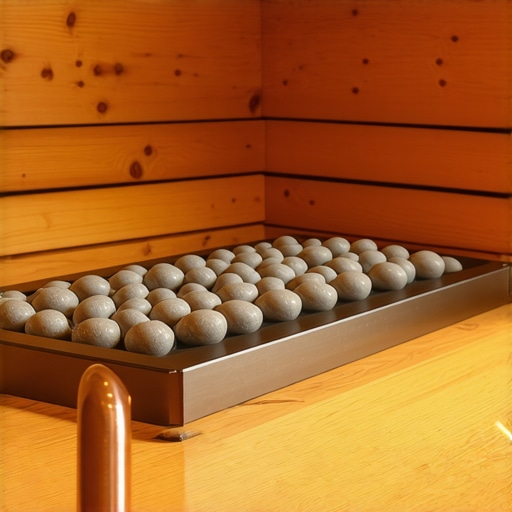
The Deadly Illusion of the Wooden Box
Most folks view a sauna as a sanctuary of cedar and steam, a place to sweat out the stress of the day. As a forensic electrical inspector who has spent three decades looking at the charred remains of ‘sanctuaries,’ I see a sauna for what it really is: a high-voltage heating element trapped in a moisture-rich environment. It is a recipe for disaster if the grounding and bonding aren’t handled with surgical precision. My old journeyman used to smack my hand if I stripped a wire with a knife. ‘You nick the copper, you create a hot spot,’ he’d scream. He was right. That tiny nick, under the heavy load of a 9kW heater, becomes a point of resistance, heat, and eventual failure. In a room where you are bare-skinned and soaking wet, that failure doesn’t just trip a breaker—it turns the floor into a conductor.
“Aluminum wire connections can overheat and cause a fire without tripping the circuit breaker.” – CPSC Safety Alert 516
The Physics of the Wet Path: Why Grounding Isn’t Optional
When we talk about grounding a sauna heater, we aren’t just following some bureaucratic code for the sake of it. We are manipulating physics to save your life. Electricity is lazy; it seeks the path of least resistance back to the source. In a dry living room, that path is usually the copper wire. But in a sauna, the humidity rises, and a layer of conductive moisture coats everything. If your heater’s chassis isn’t properly grounded, and a heating element develops a pinhole leak in its sheath, the entire metal casing of the heater becomes ‘hot.’ If you reach out to splash water on the rocks and touch that casing, you become the path to ground. This is why electrical inspections are vital before you ever strike a match or turn a dial.
We use a Tick Tracer or a Wiggy to check for stray voltage, but even a seasoned pro can miss something if the Rough-in was botched. The grounding wire, typically a green insulated copper lead, must be bonded to the house’s main grounding system. This ensures that if a fault occurs, the current has a low-resistance path to trigger the overcurrent protection device (the breaker) instantly. Without it, the fault just sits there, energizing the heater frame, waiting for a human to complete the circuit. This isn’t theoretical. I’ve seen Widow Maker scenarios where a DIYer used Romex not rated for high-heat environments, and the insulation melted inside the conduit, energizing the entire metallic flex line.
The Equipotential Grid: Borrowing from Pool Safety
In the trade, we often look at saunas through the lens of swimming pool bonding. In a pool, we create an equipotential grid—a web of copper that ties all metallic parts together so they stay at the same electrical potential. While you might not be burying a mesh grid under your sauna floor, the principle remains the same. Every metallic object near the heater—the guardrail, the light fixtures, even the drain—should be at the same potential. If they aren’t, a voltage differential can exist between them. If you touch the heater with one hand and a metallic pathway lighting install fixture with the other, that differential flows through your chest. This is why equipotential grid logic is non-negotiable in high-moisture zones.
“All through-wall lighting assemblies, wet-niche, dry-niche, or no-niche luminaires shall be connected to an equipment grounding conductor.” – NEC Article 680.23
Load Calculations: Don’t Starve the Beast
One of the biggest mistakes I see during a Trim-out is a failure to perform proper electrical load calculations. A sauna heater is a continuous load. If the nameplate says 30 amps, you can’t just slap it on a 30-amp breaker with #10 wire and call it a day. The NEC requires us to size the circuit at 125% of the continuous load. If you undersize the wire, the copper begins to degrade through a process of thermal cycling. Every time that heater kicks on, the wire expands. When it kicks off, it contracts. Over time, this loosens the lugs at the breaker. I’ve pulled covers off panels where the Home Run for a sauna was so hot it had melted the plastic off the adjacent breakers. If you’re running a commercial setup with three phase power services, the stakes are even higher because a dropped phase can burn out a multi-thousand-dollar heater in minutes.
The Role of Surge Protection and Sub-Panels
People ask me all the time if a surge protector installation is necessary for a sauna. My answer: Do you like replacing $500 control boards? Modern saunas aren’t just rocks and coils anymore; they have Wi-Fi-enabled touchscreens and sensitive logic boards. A spike from a nearby lightning strike or a utility transformer failure can fry those components instantly. While the grounding wire protects *you*, the surge protector protects the *equipment*. Furthermore, if the sauna is a standalone structure, you’re likely looking at a transformer installation or at least a dedicated sub-panel. You need to ensure the neutral and ground are *not* bonded at that sub-panel, or you’ll create a parallel path for neutral current, which is a major code violation and a massive safety risk.
Finishing the Job: Beyond the Heater
The safety doesn’t stop at the heater lugs. Think about the bollard light installation outside the sauna or the pathway lighting install leading back to the house. All of these external circuits need to be GFCI-protected and properly buried. I always use Monkey Shit (duct seal) where the conduit enters the sauna structure to prevent moisture from traveling back down the pipe into the electrical box. Moisture in a junction box leads to oxidation, and oxidation leads to arcing. Arcing leads to me showing up with a clipboard and a fire marshal. Whether you are doing office lighting upgrades or installing a backyard spa, the rules of physics don’t change. Respect the current, torque your lugs to spec, and never, ever skip the ground. Sleep better at night knowing your sanctuary isn’t a ticking time bomb.