The 60Hz Death Rattle: Why Your Premium Gear Sounds Like a Weed Whacker
You spent fifteen grand on a 4K laser projector and a set of towers that look like they belong in a museum, but the second you power them on, you hear it. That low, visceral hum. It’s the sound of 60Hz interference, and in my 35 years of chasing ghosts in wiring, it’s the most common symptom of a system that’s been installed by someone who treats electricity like a hobby rather than a lethal force of physics. My old journeyman, Ed, used to smack my hand with a pair of dikes if he saw me stripping a conductor with a utility knife. ‘You nick that copper, you create a hot spot, and you invite the noise,’ he’d scream over the sound of a hammer drill. He was right. That tiny nick changes the resistance of the wire, creating a bottleneck where heat builds and signal integrity dies. When we talk about grounding a home theater, we aren’t just talking about preventing a fire; we are talking about creating a zero-impedance path for electrical trash to leave your sensitive electronics.
“Equipment intended to be grounded shall be connected to the equipment grounding conductor in a manner that will ensure a low-impedance path for ground-fault current.” – NEC 250.4(A)(2)
The Anatomy of a Ground Loop: A Forensic Breakdown
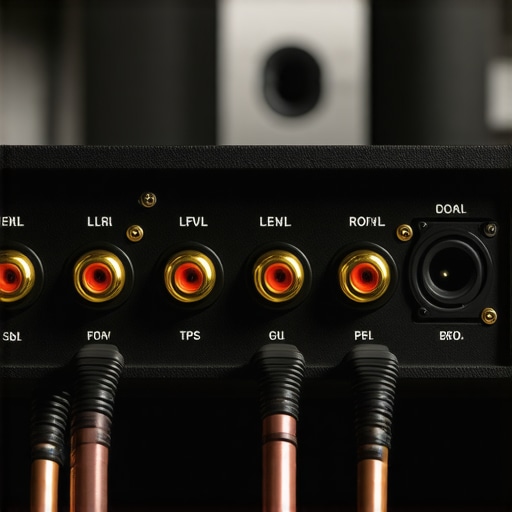
In mid-century homes, especially those built between 1960 and 1980, the electrical system is often a ticking time bomb for high-end audio. We see a lot of aluminum wiring from this era, which is prone to ‘cold creep’—the physical expansion and contraction of the metal that eventually loosens terminal screws. When a connection looses its torque, resistance climbs. In a home theater, the biggest enemy is the ground loop. This happens when your components are plugged into different circuits, creating multiple paths to the ground. Because no two ground paths have the exact same resistance, a small amount of current flows through your RCA or HDMI cables to find the ‘better’ ground. This is the hum. It’s not just noise; it’s a symptom of a systemic failure in your home’s electrical topography. To solve this, you need more than a fancy power strip. You need a dedicated home run of 12/2 Romex back to the main panel, ensuring all your gear shares a single, solid reference point. This is why a professional power quality analysis is the first step I take before even unboxing a speaker. I’ve seen data center power setup protocols applied to residential theaters because, at the end of the day, a high-end processor is just a specialized computer that hates dirty power.
[image_placeholder_1]
The Myth of the ‘Isolated’ Ground Rod
I’ve walked into multi-million dollar ‘renovated’ homes where an ‘audiophile’ contractor installed a separate ground rod specifically for the theater, completely disconnected from the main house ground. Let me be clear: that is a widow maker. If lightning strikes nearby, or if a transformer fails, that separate rod creates a massive potential difference between your theater and the rest of the house. You aren’t just risking your gear; you’re risking an arc flash in your living room. The National Electrical Code is very specific about bonding all grounding electrodes together. If you want a ‘clean’ ground, you don’t isolate it from the earth; you isolate the noise from the signal. This is where arc flash studies in industrial settings teach us about residential safety—maintaining a single point of ground is the only way to ensure that a fault doesn’t turn your rack into a welder. I’ve used drone thermography scans to inspect exterior service masts and meter cans in coastal areas where salt air has rotted the bonding jumper. When that bond fails, your home theater becomes the easiest path to ground for the entire street’s electrical noise.
Component Zooming: The Physics of Resistance and EMI
Let’s get into the weeds. When we do a rough-in for a theater, we have to consider the ‘skin effect’ and electromagnetic interference (EMI). Electricity doesn’t just flow through a wire; it creates a field around it. If you run your speaker wires parallel to your 120V power lines, you’re basically building a transformer that injects noise directly into your signal. We use CAT6 cabling services not just for data, but for balanced signal transmission that rejects this interference. But even the best cable can’t fix a bad panel. I’ve seen old Federal Pacific or Zinsco panels where the bus bars are so corroded that the breakers don’t even trip—they just melt. In those cases, I’m not just recommending a spa grounding services-level upgrade; I’m telling the homeowner to replace the whole thing before the house burns down. We use a Wiggy (a solenoid voltmeter) to test for phantom voltage. If my Wiggy vibrates when I touch it to a neutral wire, I know we have a shared neutral somewhere that’s dumping noise into the theater circuit. This often happens with track lighting services or driveway sensor lights where a lazy electrician grabbed the nearest white wire to finish the job.
“Aluminum wire connections can overheat and cause a fire without tripping the circuit breaker.” – CPSC Safety Alert 516
The Practical Fix: From Trim-out to Total Clarity
To get that pitch-black noise floor, you need to treat your theater like a laboratory. During the trim-out phase, every outlet should be an industrial-grade, isolated ground receptacle. This ensures that the ground pin only connects to the green wire running back to the panel, not the metal box or the conduit. We also look at the ‘monkey shit’—that’s the duct seal we use to plug conduits to prevent air movement and moisture from corroding connections. For homeowners who want the best, we look at the entire property’s infrastructure. Is your doorbell camera install or temporary power services for a backyard project introducing spikes? Even a doorbell camera install on a cheap transformer can bleed high-frequency switching noise back into your main lines. By utilizing drone thermography scans, we can find the hot spots in your main lugs before they fail. If the lug is glowing under my thermal camera, your sound quality is the least of your worries. Torque everything to spec—most breakers require about 20 to 25 inch-pounds—and use an anti-oxidant compound on any aluminum-to-copper transitions to prevent the galvanic reaction that causes resistance to skyrocket. When your grounding is torqued and bonded correctly, the hum disappears, the soundstage opens up, and you can finally sleep at night knowing your house isn’t one surge away from a forensic investigation.