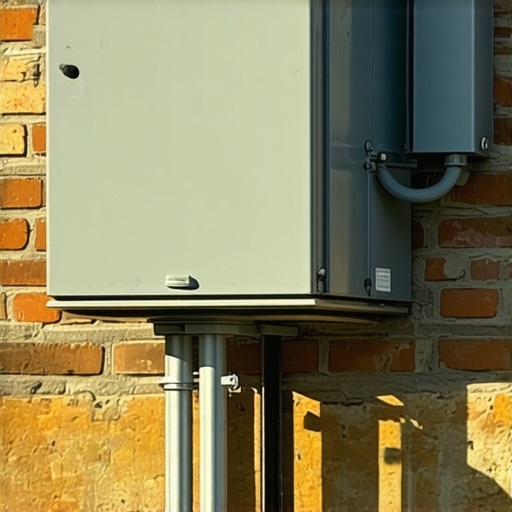
The 60-Hertz Growl: Why Your Transformer Is Screaming For Help
Listen closely. That low-frequency vibration isn’t just background noise; it’s the sound of a mechanical struggle happening at the atomic level inside that metal box. As an inspector who has spent three decades chasing ghosts in commercial electrical services and residential attics, I can tell you that a transformer doesn’t just start buzzing because it’s bored. It’s usually the result of magnetostriction, component fatigue, or a gross violation of physics by a cut-rate installer. When you hear that hum, you’re hearing the electrical equivalent of a car engine running without oil. It might work for a while, but the heat is building, the insulation is degrading, and the end is inevitable.
I remember a specific ‘flipper special’ I encountered in a commercial office refresh. I walked into the server room and heard a sound like a swarm of angry hornets. I pulled out my tick tracer, and the thing lit up before I even touched the cabinet. I opened the panel and found a low voltage transformer for the access control wiring buried behind a stack of loose insulation, literally vibrating against a metal stud. The flipper had used drywall screws to mount it, and over three months, the vibration had backed those screws out until the transformer was dancing. If I hadn’t found it with my tracer, that vibration eventually would have rubbed the insulation raw on the primary leads, turning the entire metal stud frame of the building into a live conductor.
The Physics of the Hum: Magnetostriction and Lamination
To understand the noise, you have to zoom in on the core. A transformer works by taking 120V or 277V AC and running it through a primary coil. This creates a magnetic field that expands and contracts 60 times a second. This field is captured by a core made of thin sheets of silicon steel, known as laminations. Magnetostriction is the phenomenon where these steel sheets actually change shape slightly when they are magnetized. They stretch and shrink. If those laminations aren’t clamped tight or if the varnish holding them together has reached its thermal limit and cracked, they start slapping against each other. That’s your 60-hertz hum. It’s a mechanical failure caused by an electrical reality.
“Aluminum wire connections can overheat and cause a fire without tripping the circuit breaker.” – CPSC Safety Alert 516
While that alert refers to wiring, the principle of thermal expansion is what kills transformers. When a transformer is overloaded—say, during a massive holiday light installation where someone kept adding strands without checking the VA rating—the core gets hot. Really hot. This heat causes the laminations to expand beyond their design spec. Once the core cools down, those sheets don’t always settle back into their original tight bond. You now have a gap. That gap allows the sheets to vibrate. Once that process starts, there is no ‘fixing’ it. You aren’t going to glue those laminations back together in the field. You’re looking at a full transformer installation to replace the damaged unit.
Forensic Indicators: Identifying the Source of the Noise
When I’m called out for a 24 hour emergency electrician call because a ‘box is making noise,’ I follow a strict diagnostic path. First, I check the load. If you’ve got a transformer rated for 100VA and you’re pulling 95VA, you’re pushing it. In the heat of summer, especially with deck lighting services where the ambient temperature is already high, that transformer is going to cook. Resistance increases with heat, and as resistance goes up, the transformer has to work harder, increasing the magnetic flux and the noise.
I also look for the ‘Handyman Special’ mounting. Is the transformer screwed directly to a resonant surface like a thin metal cabinet or a hollow wooden beam? That surface acts like the body of an acoustic guitar, amplifying a minor hum into a house-shaking drone. In commercial electrical services, we use vibration analysis services or simply isolation mounts—rubber grommets that break the mechanical path of the vibration. If your transformer is quiet when you pull it off the wall but screams when you mount it, the problem isn’t the electrics; it’s the acoustics.
The Role of Harmonics and Energy Storage Systems
In modern homes with energy storage systems or complex LED drivers, we’re seeing a new culprit: harmonics. Total Harmonic Distortion (THD) happens when non-linear loads (like cheap LED power supplies or certain EV chargers) pull current in pulses rather than a smooth wave. This ‘dirty’ power causes the transformer core to saturate and vibrate at frequencies higher than 60Hz. It’s a harsher, more metallic sound. This isn’t just annoying; it causes excessive heat in the neutral conductors and can lead to a widow maker scenario where a neutral wire is carrying significant voltage even when you think the circuit is balanced.
“All energized parts to which an employee might be exposed shall be put into an electrically safe work condition before an employee works on or near them.” – NFPA 70E 110.1
When I’m doing a rough-in for a landscape system, I always over-spec the transformer. If the client wants 200 watts of lights, I install a 300-watt stainless steel unit. This keeps the core well below its saturation point. I also make sure to use ‘monkey shit’ (duct seal) at the conduit entries to prevent moisture from migrating into the enclosure. Moisture leads to oxidation on the laminations, which forces them apart and starts the buzzing cycle.
Swimming Pool Bonding and Stray Current
One of the most dangerous causes of a buzzing transformer involves swimming pool bonding. If you have a low-voltage lighting transformer near a pool and the bonding grid is compromised, the transformer enclosure might become a path for stray current. This creates a massive magnetic imbalance. If you touch that buzzing transformer while standing on wet concrete and feel a tingle, don’t just ‘check it later.’ Shut off the main breaker immediately. This is why we use a Wiggy or a high-quality multimeter to check for voltage between the enclosure and a known ground. A tick tracer is great for a quick check, but it won’t tell you the whole story.
The Fix: Beyond the Band-Aid
If your transformer is buzzing, the autopsy usually points to one of three things: overload, poor mounting, or internal lamination failure. Here is how I handle it:
- Load Test: Use an amp-clamp on the secondary side. If you’re over 80% of the rated capacity, you need to shed load or upgrade the transformer.
- Mechanical Isolation: Install neoprene washers between the transformer and the mounting surface. If the noise stops, you’re done.
- Tighten the Lugs: Sometimes it’s not the core; it’s a loose wire dancing in a terminal. Grab your screwdrivers and ensure every connection is torqued to spec. Loose connections create arcing, and arcing creates noise.
- Check the Lamination: If the unit is old and the noise is coming from inside the potted or wrapped core, it’s a paperweight. Replace it before the internal heat causes a primary-to-secondary short.
Electricity isn’t a hobby, and it isn’t something you ‘feel your way’ through. It follows the laws of physics, and it has no mercy for ‘creative’ wiring. Whether it’s access control wiring or a complex commercial setup, the noise is a warning. Treat it with the respect it deserves, or you’ll be calling me out for a forensic fire investigation instead of a simple replacement. Sleep better knowing your connections are torqued, your load is balanced, and your transformer is running cool and quiet.