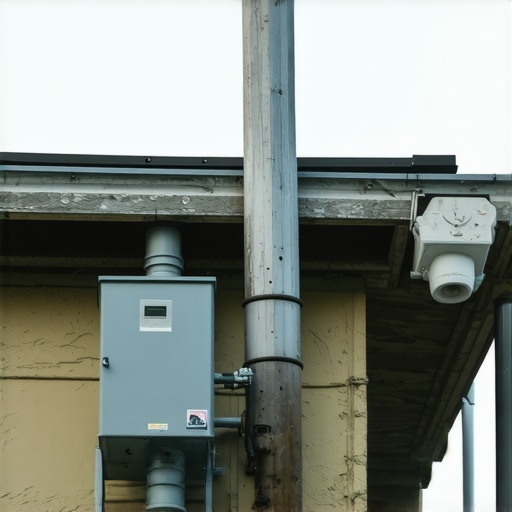
The 1940s Relic: Why Your 60-Amp Service is a Ticking Time Bomb
Walk into any post-war bungalow or a mid-century colonial still rocking a 60-amp fuse box, and you aren’t just looking at history; you are looking at a system pushed past its physical breaking point. I remember my old journeyman, a man who had been pulling wire since the Truman administration, watching me use a pocket knife to strip insulation on a rough-in. He’d reach out with his heavy lineman’s pliers and smack my knuckles. ‘You nick that copper, kid, and you’ve just built a fuse where you don’t want one,’ he’d growl. He wasn’t being mean; he was teaching me about localized resistance—the same resistance that turns an undersized service mast into a vertical heating element when a homeowner tries to run a modern HVAC and a dryer on 1950s infrastructure. This is the reality of troubleshooting old systems: the failure isn’t just in the box; it’s in the entire path from the utility pole to your panel.
The Physics of the Service Mast: Why Size Matters
When a homeowner asks for an EV charger installation or a kitchen remodel, they often think they can just swap the panel. But the service mast—that pipe sticking out of your roof—is the bottleneck. In the era of knob and tube removal, the standard was a 1-inch or 1.25-inch rigid metal conduit. Those pipes were designed to hold two #6 AWG copper wires and a neutral. Today, a 200-amp service requires 2/0 copper or 4/0 aluminum. You cannot physically cram those conductors into an old 1-inch mast. It’s like trying to shove a bowling ball through a garden hose. If you try to force it, you’ll skin the insulation, creating a ‘widow maker’—a live short to the conduit that can energize your entire gutter system.
“Aluminum wire connections can overheat and cause a fire without tripping the circuit breaker.” – CPSC Safety Alert 516
Most 60-amp services are fed by weathered, brittle conductors that have been baked by the sun for 70 years. The insulation, often old cloth or early thermoplastic, becomes so fragile that just touching it causes it to flake off like dead skin. This is why a meter socket replacement is non-negotiable. The lugs inside those old sockets are often pitted from decades of micro-arcing. When I pull the meter and see that cherry-red oxidation, I know the home is one humid night away from a catastrophic failure. I’ve seen meter cans where the ‘monkey shit’ (duct seal) has dried up, allowing water to track down the service entrance cable right into the main lugs. The result? A slow-motion metallurgical disaster.
The Cold Creep and Thermal Expansion Nightmare
In mid-century homes, we often find the transition to aluminum wiring. Aluminum isn’t inherently evil, but it suffers from ‘Cold Creep.’ As electricity flows, the wire heats up and expands; when the load drops, it cools and contracts. Because aluminum expands at a different rate than the steel screws in an old 60-amp lug, the connection eventually vibrates itself loose. This creates a high-resistance gap. You’ll smell it before you see it—that ozone, fishy stench of melting phenolic plastic. This is why we insist on bonded insured electrical professionals for these upgrades. A handyman won’t use a torque wrench to meet NEC 110.14(D) requirements; a Master Electrician knows that if it isn’t torqued to spec, it’s a fire hazard.
“The service-entrance conductors shall be of a size sufficient to carry the load as calculated in accordance with Article 220.” – NEC Section 230.42
Beyond the Panel: Grounding and Bonding
When we pull a new service mast, we aren’t just replacing a pipe. We are rebuilding the home’s defense system. Most 60-amp systems have a single, corroded ground rod—if they have one at all. Modern code requires a much more robust grounding electrode system. We’re talking two copper-clad rods driven eight feet into the dirt, spaced six feet apart, and bonded to the incoming water service. This isn’t an upsell; it’s what protects your sensitive electronics, from your speaker system setup to your smart fridge, from lightning surges and utility spikes. Without proper grounding, even the best surge protector is just an expensive power strip.
Industrial Standards in a Residential World
I bring the same intensity to a residential heavy-up that I do to commercial electrical services. This includes lockout tagout training protocols during the swap. When we cut the power, we ensure that the system is truly dead and tagged out so no one—utility or otherwise—re-energizes the line while we are mid-pull. We also look at power factor correction for larger estates, ensuring that the heavy inductive loads of pool pumps and multi-stage AC units aren’t wasting energy and heating up your new 200-amp bus bars. Our lifetime workmanship guarantee reflects this level of forensic detail. We don’t just want the lights to turn on; we want the lugs to be as cool as the ambient air after four hours of peak load.
The Verdict: Why You Can’t Cut Corners
Upgrading from 60 amps to 200 amps is an autopsy of your home’s electrical past. You’ll find ‘bootleg grounds,’ charred Romex from 1960s DIY projects, and masts that are rusted through at the roof line. Replacing the mast, the weatherhead, the meter socket, and the grounding system is the only way to ensure your home can handle the 21st century. Don’t let a ‘trunk slammer’ tell you that your old mast is ‘fine.’ If it’s 60-amp era, it’s a relic, and in the world of high-voltage physics, relics are dangerous. Sleep at night knowing every lug is torqued, every wire is sized for the load, and your service entrance is built to last another fifty years. Electricity isn’t a hobby—it’s a force of nature that we contain with steel, copper, and code compliance. { “@context”: “https://schema.org”, “@type”: “HowTo”, “name”: “Upgrading a 60-Amp Electrical Service”, “description”: “A comprehensive guide on why a full service mast replacement is necessary when upgrading from 60 to 200 amps.”, “step”: [ { “@type”: “HowToStep”, “text”: “Perform a load calculation to determine if a 200-amp upgrade is required for modern appliances and EV charging.” }, { “@type”: “HowToStep”, “text”: “Inspect the existing service mast diameter and condition to ensure compliance with current wire fill capacities.” }, { “@type”: “HowToStep”, “text”: “Remove the existing 60-amp meter socket and identify any corrosion or oxidation on the service lateral.” }, { “@type”: “HowToStep”, “text”: “Install a new, code-compliant rigid metal conduit mast with a properly oriented weatherhead and drip loop.” }, { “@type”: “HowToStep”, “text”: “Drive new grounding electrodes and bond to the main water service to ensure system safety.” } ] }