The Smell of a House Trying to Die
You probably think your home is safe because the lights turn on when you flick the switch. That’s the same logic people use right before their 1970s split-level turns into a Roman candle. I’ve spent 35 years pulling Romex through spider-infested crawlspaces and staring at structured wiring panels that look like a bird’s nest made of fire-starters. Most homeowners settle for a ‘visual inspection’ when they buy a house. That’s like checking a car’s safety by looking at the paint job. If you aren’t pulling the dead-front off the panel, you aren’t inspecting anything; you’re just guessing. And in this trade, a bad guess smells like ozone and charred hemlock.
The Old Timer’s Lesson: The Sin of the Nicked Copper
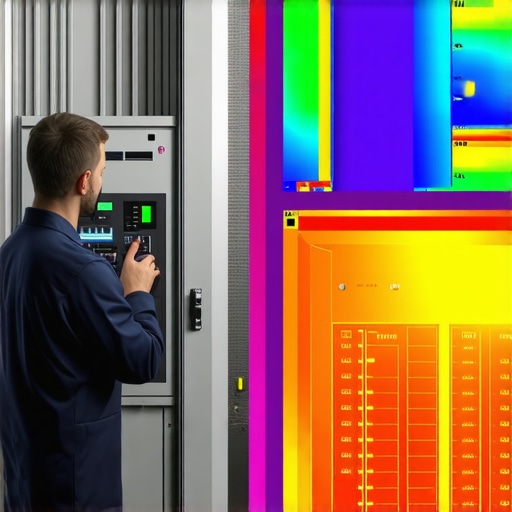
My journeyman, a grizzly old bastard named Miller, used to smack my hand with his dikes if he saw me stripping wire with a pocket knife. ‘You nick that copper, kid, and you’ve just built a heater,’ he’d scream. He wasn’t just being mean. He understood the physics of resistance. When you score a conductor, you reduce its cross-sectional area at that exact point. As current flows, that bottleneck generates heat—physics doesn’t care about your DIY pride. That tiny nick becomes a hot spot, and under the load of a modern EV charger installation, that hot spot will eventually melt the wire nut, ignite the insulation, and find a way to breathe. A visual inspection never sees the nicked wire inside the junction box; a deep electrical audit finds it through thermal imaging and circuit path analysis.
The Blueprint of a Time Bomb: Mid-Century Hazards
If your home was built between 1960 and 1980, you aren’t living in a ‘vintage gem’; you’re living in a laboratory for Cold Creep. This was the era of the great aluminum experiment. Because copper prices spiked, builders swapped it for aluminum. The problem? Aluminum and copper have different coefficients of thermal expansion. This leads to a phenomenon we call Cold Creep. Every time you run your dryer or oven, the wire heats up and expands. When you turn it off, it contracts. Over time, the aluminum wire literally crawls out from under the terminal screw. This creates a loose connection, which leads to arcing.
“Aluminum wire connections can overheat and cause a fire without tripping the circuit breaker.” — CPSC Safety Alert 516
Then there’s the brand shaming. If I walk into a garage and see a Federal Pacific Electric (FPE) or Zinsco logo, my Tick Tracer stays in my pocket because I already know the answer: replace it. FPE ‘Stab-Lok’ breakers are notorious for ‘jamming.’ They won’t trip even when the wire is melting into a puddle of slag. They weld themselves to the bus bar. A deep audit involves a forensic look at these bus bars for signs of pitting and galvanic corrosion, something no visual walkthrough will ever catch.
Component Zooming: The Physics of the Grounding Electrode
Most people think the third prong on their outlet is just a suggestion. It’s actually your only line of defense against becoming part of the circuit. A grounding electrode install isn’t just sticking a copper rod in the dirt. It’s about soil resistivity. In a deep audit, we check the resistance to ground. If you have dry, sandy soil, that eight-foot rod might be useless. We look for electrolytic action where the copper meets the steel of your water main. If the grounding electrode has corroded away, your entire electrical system is ‘floating.’ This is why your low voltage lighting flickers when the fridge kicks on, and it’s why a surge will fry your $4,000 OLED TV instead of heading into the earth.
Why Load Calculations Matter for Modern Life
We live in a high-draw world now. Your 1974 panel was designed for a toaster and a few 60-watt bulbs. Now, you’re asking it to handle a standby generator install, a 14-30 RV hookup installation, and two Tesla chargers. This is where NEC code updates become a survival manual rather than a suggestion. During an electrical safety audit, I perform a Manual J-style load calculation. I’m looking at the Demand Factor. If your service mast is only rated for 100 amps and you’re pulling 95 amps every time the AC and the EV charger run simultaneously, you are annealing the main lugs. I’ve seen main lugs glowing cherry red inside a panel that looked perfectly ‘fine’ from the outside. That’s the difference between a ‘drive-by’ and a forensic audit.
The Forensic Breakdown: The Deep Audit Process
When I perform electrical wiring services, I’m not just looking for rough-in errors; I’m looking for the ‘Handyman Special.’ This usually involves temporary power services that became permanent or home runs that were spliced illegally in a ceiling void. A deep audit includes: 1. Torque Testing: We use a calibrated torque screwdriver to ensure every lug meets the manufacturer’s spec. 2. Insulation Resistance Testing (Megger): We push high voltage through the wires (with devices disconnected) to see if the insulation is breaking down. 3. Harmonic Distortion Analysis: We check if your cheap LED drivers are polluting your power quality.
“The installer shall use a calibrated torque tool where a torque value is indicated on the equipment…” — NEC 110.14(D)
I’ve used my Wiggy (solenoid voltmeter) to find ‘ghost voltages’ that a digital meter would miss. I’ve found Monkey Shit (duct seal) stuffed into conduits to hide the fact that water was leaking from the service head directly into the main breaker. These are the things that cause ‘unexplained’ house fires three years after a visual home inspection said everything was ‘satisfactory.’
The Verdict: Sleep at Night or Gamble with Copper
Electricity is a patient killer. It doesn’t need to strike today. It can wait for a humid night when the salt air (if you’re near the coast) finally bridges the gap in your corroded meter can, or for the coldest day of winter when your heater finally draws enough current to turn that loose neutral into a blowtorch. Investing in electrical wiring services for a deep audit isn’t about passing an inspection; it’s about ensuring the structured wiring panels and service entries are actually torqued to spec. Don’t treat your family’s safety as a hobby. Get an audit, follow the NEC code updates, and make sure your home’s heart isn’t a ticking time bomb of 1970s metallurgy and ‘good enough’ craftsmanship.