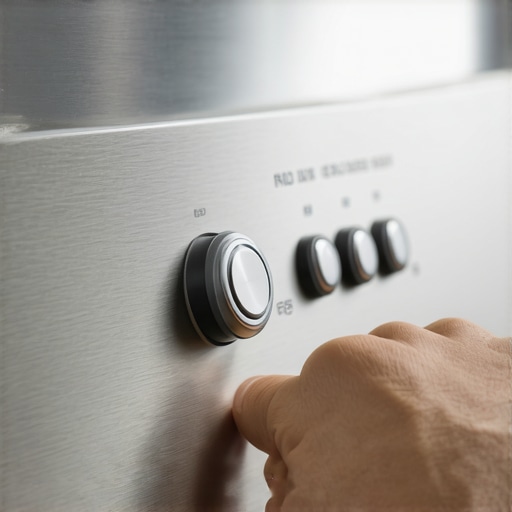
The Ghost in the Ventilation: Why Your Fan is Stuck
You click the switch for ‘High,’ and nothing happens. You click ‘Low,’ and it sounds like a dying blender. Most homeowners think they just have a bad button, but as someone who has spent three decades sniffing out electrical gremlins in the dark, I can tell you the truth is usually much filthier and more dangerous. When a range hood fan refuses to change speeds, you aren’t just dealing with a mechanical nuisance; you’re looking at a failure of the electrical system’s ability to manage resistance and heat. My first boss used to say that a wire nut is a promise, and if you don’t twist the copper first, you’re a liar. I once saw a ‘liar’s connection’ in a range hood melt a plastic housing into a puddle of black bubbling goo because the constant vibration of the motor shook those loose wires into a miniature arc-welder. That’s the reality of kitchen wiring—vibration, grease, and heat.
The Forensic Breakdown: The Triac and the Capacitor
To understand why the speed won’t change, we have to perform an autopsy on the control board. Most modern hoods use a solid-state device called a Triac. Think of a Triac as a high-speed gatekeeper that opens and closes hundreds of times a second to ‘slice’ the AC sine wave. When you want a lower speed, the Triac chops more of the wave out. The problem? These components are sensitive to heat and voltage spikes. If you’ve recently had a circuit breaker replacement or a smart meter installation that caused a momentary surge, that Triac might have ‘failed shorted,’ locking your fan on one speed indefinitely. Then there is the motor start capacitor. This is the heavy lifter. In the world of electrical physics, motors need a phase shift to create torque. If the dielectric material inside that capacitor leaks—a process accelerated by the 140-degree air rising from your stove—the motor loses its ability to handle different windings. It’s like trying to start a car in fifth gear; the motor just hums and generates heat until the thermal overload kicks in.
“Aluminum wire connections can overheat and cause a fire without tripping the circuit breaker.” – CPSC Safety Alert 516
The Grease Factor: Conductive Contamination
In thirty years of fire damage wiring restoration, I’ve seen how ‘Monkey Shit’ (duct seal) and electrical tape fail in the face of vaporized bacon grease. Grease is a silent killer. It finds its way into the control housing and coats the copper traces on the circuit board. Over time, that grease becomes acidic and conductive. It creates a ‘carbon track’—a path for electricity where none should exist. This can bypass the speed control resistors entirely. I’ve been called out for insurance claim electrical work where a simple range hood became the ignition point for a house fire because grease-clogged bearings caused the motor to draw double its rated amperage. The home theater wiring in the next room was ruined not by fire, but by the acidic smoke that range hood pushed into the wall cavities before it died.
The Solution: Beyond the Handyman Special
Don’t let a handyman ‘rough-in’ a fix with electrical tape and a prayer. If your fan is stuck, the first step is a virtual consultation wiring review to see if the issue is the motor or the board. If the motor is pulling too many amps, you might need three phase power services for commercial setups or a dedicated 20-amp circuit for high-end residential units. We often find that senior citizens are living with these fire hazards because they’re afraid of the cost, which is why we offer senior discount services and help navigating rebate assistance programs for energy-efficient ventilation upgrades. If your house has older wiring, we might even suggest a battery backup wiring system to protect these sensitive electronics from the dirty power that causes Triac failure in the first place.
“The technical term for a circuit that is nearly but not quite broken is ‘a fire waiting to happen’.” – NFPA 70E Safety Manual
Final Inspection
Before you go out and buy a new hood, check your ‘Tick Tracer’ at the outlet. If the neutral is loose, your fan won’t have the ‘return path’ it needs to modulate speed. Electricity isn’t a hobby; it’s a force of nature that wants to get to the ground through your stove if you give it the chance. Treat your kitchen with the respect it deserves, and keep your fans spinning safely.