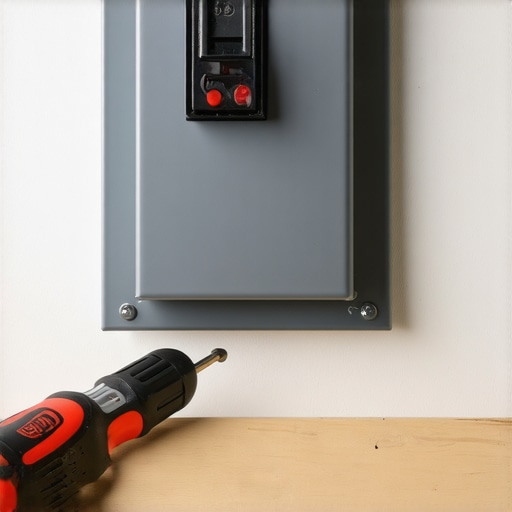
The Sound of Impending Failure: Why Your Transfer Switch is Screaming
That low-frequency, teeth-rattling 60Hz hum isn’t just a background noise; in my thirty-five years of inspecting systems, I’ve learned that a buzzing transfer switch is usually a mechanical cry for help. When the power goes out and your standby generator kicks in, the transfer switch is the literal heart of your backup system. It is the gatekeeper that prevents you from electrocuting a utility worker down the street by backfeeding the grid. But when that gatekeeper starts buzzing like a disturbed hornet’s nest, something in the physics of the device has gone sideways. Most homeowners ignore it until the lights flicker and the smell of toasted phenolic resin starts wafting up the basement stairs. By then, you’re not just looking at a simple fix; you’re looking at an after hours electrical repair that could have been avoided with a bit of forensic attention.
The Old Timer’s Lesson: The Nick that Bites Back
My old journeyman, a grizzly guy who could bend conduit with his bare hands if he was mad enough, used to smack my hand if he saw me stripping Romex with a pocket knife instead of a proper pair of dikes or wire strippers. ‘You nick the copper, you create a hot spot,’ he’d bark. He wasn’t just being a jerk. That tiny nick reduces the cross-sectional area of the conductor, increasing resistance. In a transfer switch, resistance equals heat, and heat equals expansion. I once spent six hours chasing a ‘buzz’ in a 1970s subpanel installation only to find that a previous ‘handyman’ had nicked the insulation so badly that the conductor was vibrating against the metal casing like a tuning fork. It’s the small technical failures—the ones you can’t see without a tick tracer or a Wiggy—that lead to the catastrophic failures we see in forensic reports.
The Forensic Breakdown: The Physics of the Buzz
To understand the buzz, we have to look at the ‘Component Zooming’ of the contactor. Inside your transfer switch is an electromagnetic solenoid. When voltage is applied, it creates a magnetic field that pulls a set of heavy-duty contacts closed. This is the ‘clunk’ you hear when the power shifts. However, this magnetic field is oscillating at 60 cycles per second. To keep the contacts from vibrating, engineers use something called a ‘shading ring’—a small loop of copper embedded in the face of the electromagnet. If that shading ring cracks due to thermal expansion or poor manufacturing, the magnetic pull drops to zero 120 times a second. The result? The contacts chatter. This ‘chatter’ creates micro-arcs, which pit the surface of the silver-alloy contacts, creating even more resistance and more heat. This is the Hysteresis Loop in action, where energy is lost as heat and vibration rather than motion.
“Transfer equipment shall be designed and installed to prevent the inadvertent interconnection of all sources of supply.” – NFPA 70 (National Electrical Code) Article 702.5
If you are seeing this in a commercial electrical services environment, the stakes are even higher. A buzzing switch in a data center power setup can introduce harmonics into the line that sensitive servers simply cannot handle. We often see this in mid-century buildings where the original garage wiring services were never upgraded to handle the inductive loads of modern machinery. The steel laminations of the solenoid core can also become loose over time. These are thin plates of steel stacked together; if the rivets loosen, they vibrate against each other, creating that classic ‘transformer hum’ that drives people crazy.
Environmental Enemies: Corrosion and the ‘Monkey Shit’ Factor
In homes built between 1960 and 1980, we often find that the transfer switch was tucked away in a damp corner of the garage or basement. Moisture is the enemy of the solenoid. It gets into the laminations and causes rust, which forces the plates apart—a process known as ‘oxide jacking.’ This increases the air gap in the magnetic circuit, making the buzz even louder. When I do a rough-in or a trim-out for a new generator, I always ensure the conduit entries are sealed with ‘monkey shit’ (duct seal) to prevent moist air from migrating from the outside emergency exit lighting circuits or the meter can into the switch enclosure. Without that seal, you’re just inviting the buzz to start within five years of installation.
The Solution: Beyond the Quick Fix
So, what do you do when the humming won’t stop? First, we check the voltage. If your generator’s voltage regulator is failing, it might be sending ‘dirty’ power with a low voltage to the coil. A coil designed for 120V that only receives 95V won’t have the strength to hold the contacts tight, leading to a loud buzz. This is where whole house surge protection becomes vital; it can help stabilize the environment, but it won’t fix a mechanical failure. If the contacts are pitted, the switch must be replaced. We also look at the torque. Every lug in that switch has a specific inch-pound rating. If they aren’t torqued to spec, the wire itself will vibrate under load, a phenomenon known as Lorentz Force. This is why we don’t just ‘snug it up’; we use a calibrated torque wrench to ensure the connection is solid.
“Aluminum wire connections can overheat and cause a fire without tripping the circuit breaker if the mechanical connection is compromised by thermal cycling.” – CPSC Safety Alert 516
For those worried about the cost of a full replacement, many companies offer financing electrical upgrades to move from a failing manual switch to a modern, quiet automatic transfer switch (ATS). Whether you are dealing with a complex fiber optic cabling hub or just trying to keep the fridge running during a storm, the integrity of your transfer switch is non-negotiable. If you need a track lighting services update or a full heavy-up, always start with the heart of the system.
Sleep Better Knowing Your Lugs are Torqued
At the end of the day, electricity is a lazy beast that wants to take the easiest path to ground, and it will shake your house down to find it. If your transfer switch is buzzing, it’s telling you that the path isn’t as clear as it should be. Don’t wait for the ‘fishy smell’ of burning plastic. Get a forensic inspection, check the laminations, and ensure your backup power is actually ready to back you up. Electricity isn’t a hobby—it’s a force of nature that requires respect and a very tight wrench. “