The Sound of a Sleeping Dragon
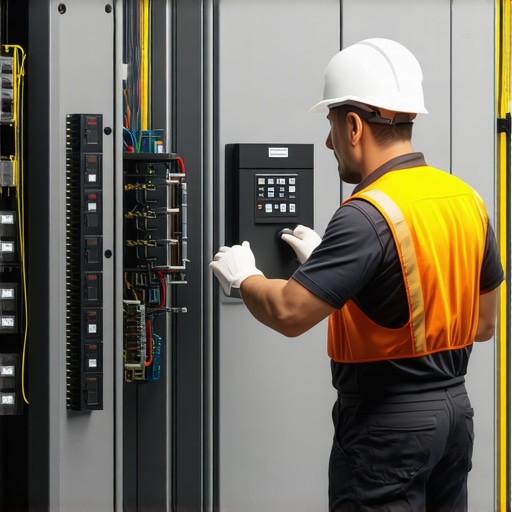
You don’t hear a looming arc flash until it’s too late, but if you’ve spent thirty years in this trade, you can feel it. It’s that low-frequency vibration in the soles of your boots when you stand in front of a 480-volt switchgear. It’s the smell of ozone—sharp, metallic, and unforgiving. Most facility managers look at an electrical room and see a necessary expense. I look at it and see a controlled explosion waiting for a reason to happen. When I was a green apprentice, my mentor used to carry a wooden yardstick. He’d use it to point at lugs because he didn’t trust his own nervous system near a live bus bar. He told me, ‘Kid, the moment you stop fearing that hum in the gear, you’re just a walking resistor.’ He was right. That fear is what keeps you alive, and an updated arc flash study is the only map you have to navigate that danger.
The Anatomy of an Electrical Autopsy
When an arc flash occurs, we aren’t just talking about a spark. We are talking about a phase-to-phase or phase-to-ground fault that ionizes the air, turning it into a plasma conductor. In a millisecond, the temperature can hit 35,000 degrees Fahrenheit—four times hotter than the surface of the sun. The copper conductors don’t just melt; they vaporize, expanding to 67,000 times their original volume. This is the ‘Forensic Breakdown’ of a disaster. If your facility hasn’t had an arc flash study in the last five years, or if you’ve recently completed a major transformer installation, those hazard labels on your gear are essentially lying to you. A label that says ‘Category 2’ might actually be a ‘Category Danger’ because the utility company changed the source impedance upstream, increasing the available fault current. You’re sending a tech in with a Tick Tracer and basic PPE into a situation that requires a full blast suit.
“The employer shall provide, and the employee shall use, protective equipment that is appropriate for the specific parts of the body to be protected and for the work to be performed.” – NFPA 70E Standard for Electrical Safety in the Workplace
Component Zooming: The Physics of the Failure
Why does an old study fail? Let’s talk about the Home Run and the ‘Window of Death.’ An arc flash study calculates ‘Incident Energy,’ which is a product of the bolted fault current and the time it takes for the overcurrent protective device to trip. If you’ve added parking lot lighting or a massive workshop electrical setup, you’ve changed the load profile. Even more critical is the mechanical state of your breakers. Inside an old molded-case circuit breaker, the grease on the pivot points can undergo ‘Cold Creep’ or simply harden into a shellac-like substance over twenty years. If that breaker takes an extra three cycles to clear a fault because the mechanism is sluggish, the energy release doesn’t just increase linearly—it spikes. You’ve moved from a survivable event to a catastrophic one. This is why thermal imaging inspections are vital; they identify high-resistance connections—those ‘hot spots’—before they bridge the gap and trigger the plasma event.
The Modern Infrastructure Trap
Modern facilities are more complex than ever. We are seeing microgrid integration and home backup generator install projects at the commercial level that introduce bidirectional current flow. Your traditional protection settings aren’t designed for that. If your facility manager is relying on a study from 2015, they are ignoring the fact that the ‘Available Fault Current’ is a moving target. We’re now seeing AI fault detection systems that can sense the unique harmonic signature of a ‘sputtering’ arc before it becomes a full-blown flash. But these systems are only as good as the data you feed them. Without an updated study, your electric gate opener at the perimeter or that specialized kitchen range hood wiring in the cafeteria could be tied to a subpanel with an unknown short-circuit current rating (SCCR). When the pool pump electrical system shorts out due to salt-air corrosion, the surge travels back to the main, and if the coordination is off, the main blows instead of the branch breaker. That’s a failure of engineering, not just equipment.
“Aluminum wire connections can overheat and cause a fire without tripping the circuit breaker.” – CPSC Safety Alert 516
The Solution: Beyond the Label
An arc flash study isn’t just about printing stickers. It’s a comprehensive audit of your facility’s nervous system. It involves checking the torque on every lug, ensuring the Monkey Shit (duct seal) is preventing moisture from entering the switchgear, and verifying that the grounding electrode system hasn’t rotted away. When we perform these studies, we often find ‘Widow Makers’—ungrounded circuits or bootleg grounds hidden behind the rough-in phase of a previous renovation. We use a Wiggy to check for phantom voltage and then we dig into the coordination curves. The ‘Fix’ is ensuring that your protection levels are tiered. You want the fault at the transformer installation to stay there, not migrate. If you’re managing a facility, you don’t want to be the one explaining to OSHA why a technician was wearing the wrong gloves because the study was ‘grandfathered in.’ Update the study, perform the thermal imaging inspections, and use Dikes to prune back the hazards before they prune your bottom line. You’ll sleep a lot better when you know your breakers will actually trip when the dragon wakes up.