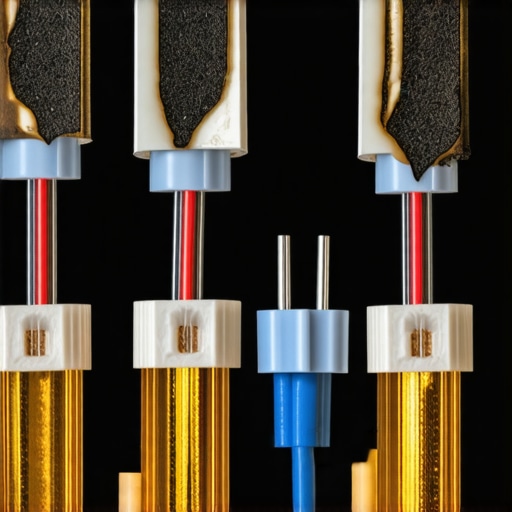
The Sensory Warning: When Your Kitchen Smells Like More Than Just Dinner
You’re standing at the stove, searing a steak, and there it is. Not the aroma of Maillard reaction, but the unmistakable, acrid stench of ozone and scorched PVC. Most homeowners ignore it for a week, thinking it’s a cleaning chemical or the fan motor breaking in. But as a forensic inspector who has spent three decades dragging a Wiggy through cramped crawlspaces, I know that smell is the sound of a countdown. It’s the smell of Resistance Heating. When you decide to tackle a kitchen range hood install as a weekend warrior project, you aren’t just mounting a box; you are interfacing with a high-vibration, high-heat environment that will punish any shortcut you take. I walked into a ‘fully renovated’ kitchen last month where the flipper had buried live junction boxes behind the backsplash. I found them with my tick tracer glowing red before I even touched the wall. Behind the vent shroud, the Romex jacket had turned into a brittle, blackened husk. The DIYer had used undersized wire nuts and failed to secure the cable, allowing the vibration of the fan to turn a minor loose connection into a miniature arc welder. This is why electrical wiring services aren’t a luxury; they are fire insurance.
The Forensic Breakdown: The Physics of the Melt
Why does a simple fan lead to melted plastic? It starts with Ohmic Heating. Every connection point in an electrical circuit is a potential point of resistance. In a perfect world, your resistance is zero. In a DIY world, resistance is often the result of poor stripping technique. My journeyman used to smack my hand if I stripped a wire with a knife. If you nick the copper, you create a localized ‘bottleneck.’ As electrons struggle to pass through that reduced cross-section of wire, they generate heat. Over time, this heat causes the metal to expand and contract—a process known as thermal cycling.
“Aluminum wire connections can overheat and cause a fire without tripping the circuit breaker.” – CPSC Safety Alert 516
While most modern hoods use copper, the principle remains: loose connections create heat, and heat increases resistance, creating a runaway thermal loop. When you’re performing a rough-in for a kitchen, every torque spec matters. If those wire nuts aren’t twisted until the conductors themselves start to braid, you’ve built a heater, not a circuit. This is particularly dangerous in range hoods because of the grease. Kitchen grease is a conductive contaminant when it’s carbonized. Once that grease gets inside a loose wire nut, it provides a path for tracking, leading to a sustained arc that won’t always trip a standard breaker until the house is already filling with smoke.
The Vibration Factor and ‘Cold Creep’
A range hood isn’t a static device like a doorbell camera install. It houses a high-speed centrifugal blower. This creates constant micro-vibrations. If you didn’t use a proper cable clamp where the Romex enters the chassis, those vibrations are transferred directly to the wire terminations. This leads to Mechanical Creep, where the wire literally wiggles its way out from under a screw terminal or out of a push-in connector. This is why I always tell clients that home rewiring services should include dedicated circuits for heavy kitchen appliances. Many DIYers try to tap into the nearest outlet circuit—which is already loaded with a toaster and a coffee maker. You end up with a circuit that is perpetually running at 80% capacity, softening the insulation before the fan even turns on. For those in mid-century homes, you’re likely dealing with old insulation that flakes off if you even look at it wrong. If you’re doing office lighting upgrades or low voltage lighting, the stakes are lower, but in the kitchen, you’re dealing with 15-20 amps of raw potential sitting right next to a gas line.
The Necessity of the Equipotential Grid
Modern kitchens are a forest of stainless steel. If a DIY range hood wire melts and touches the metal chassis, and your grounding system is compromised, the entire hood becomes ‘hot.’ I’ve seen cases where a homeowner touched the range hood and the gas range at the same time and became the path to ground. This is why we talk about the equipotential grid and proper bonding. It’s not just about the black and white wires; it’s about ensuring that every piece of metal in that kitchen is at the same electrical potential. If you’re already looking at a meter base replacement or a garage wiring services overhaul, don’t skimp on the kitchen’s grounding path. I’ve seen ‘handymen’ snip the ground wire because it was ‘in the way’ of the mounting bracket. That is a widow maker move. Every smart home wiring project needs a solid foundation of electrical wiring services to ensure that your high-tech gadgets don’t end up as charred Silicon Valley remains.
“The grounding electrode conductor shall be installed in one continuous length without splice or joint.” – NEC 250.64(C)
When you ignore these fundamentals during a kitchen range hood wiring job, you are betting your life on a 50-cent plastic connector.
The Professional Path to Safety
So, how do you avoid a meltdown? It starts with the rough-in. Ensure you have enough slack—no ‘short-wiring’ where you’re fighting to get the nut on. Use dikes to clean up your ends and ensure no stray strands are hanging out of the connector. If you see ‘monkey shit’ (duct seal) around old wires, it’s a sign someone was trying to stop a draft or hide a mess. Clean it out. Check your torque. If you aren’t using a torque screwdriver on your terminal blocks, you’re guessing. And in my 35 years, guessing is how you end up calling a forensic inspector like me to tell the insurance company why your kitchen is a blackened pit. Whether it’s garage wiring services or office lighting upgrades, treat every wire as if it’s trying to kill you. Because if you give it an inch of resistance, it will. Sleep better at night knowing your connections are torqued, your grounds are bonded, and your range hood is venting smoke, not creating it.